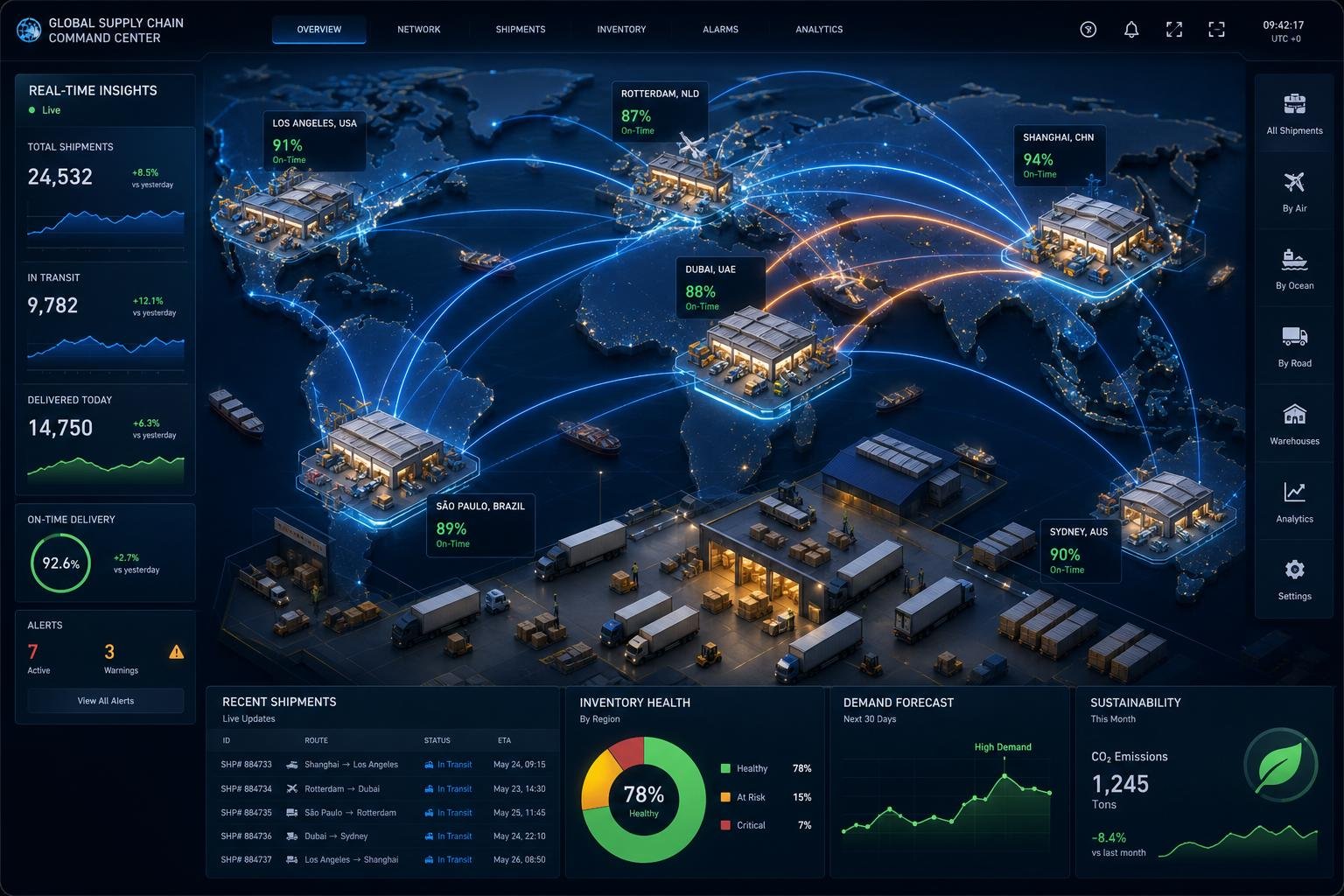
Databricks is pitching Genie as a way to move supply chains away from retrospective reporting and towards faster, conversation-based decision-making, arguing that many firms still struggle not with a shortage of data, but with the inability to connect the right signals quickly enough to act.
The company says supply-chain teams have spent years building portals, dashboards and ERP links, yet disruption remains difficult to anticipate because key indicators are scattered across s...
Continue Reading This Article
Enjoy this article as well as all of our content, including reports, news, tips and more.
By registering or signing into your SRM Today account, you agree to SRM Today's Terms of Use and consent to the processing of your personal information as described in our Privacy Policy.
ystems. Lead-time drift, stock movement, weather patterns, commodity prices and supplier performance may all be available somewhere in the enterprise, but Databricks argues that they are often too fragmented for executives to use in real time.
That challenge is especially acute for senior leaders overseeing large, international supplier networks. Databricks suggests that a chief supply chain officer cannot realistically track hundreds of suppliers across multiple countries by manually checking every feed and report. Conventional business intelligence tools, it says, tend to explain what has already happened rather than what is beginning to go wrong.
Genie is designed to sit on top of Databricks data and let business users ask questions in plain language. According to Databricks’ documentation, the interface is intended as a simpler entry point for non-technical staff, giving them access to AI dashboards, natural-language data queries and custom applications without requiring knowledge of notebooks, compute or SQL. The company also says the product can be configured with domain-specific datasets, sample queries and guidance so it reflects an organisation’s terminology.
In the supply-chain example Databricks uses, a leader could ask which lower-tier suppliers have seen lead times rise by more than 15% over the past two months, then follow up with questions about inventory cover or financial exposure if delays worsen. The company says those answers can be generated from a customer’s own ERP, contract and production data, rather than from generic models or static reports.
Databricks is also emphasising scenario planning. It says Genie can help users test “what if” questions, such as the impact of a further delay in supplier deliveries, and then share consistent responses across procurement, operations and finance. That, the company argues, could reduce the time between spotting a problem and deciding how to respond from days to minutes.
The broader appeal is less about automation than comprehension. Databricks is effectively arguing that supply-chain resilience depends on making hidden trends visible early enough for leaders to intervene, rather than waiting for a formal review after the damage is done. In that telling, the competitive advantage lies not only in having more data, but in making it understandable to the people who need it most.
Source: Noah Wire Services