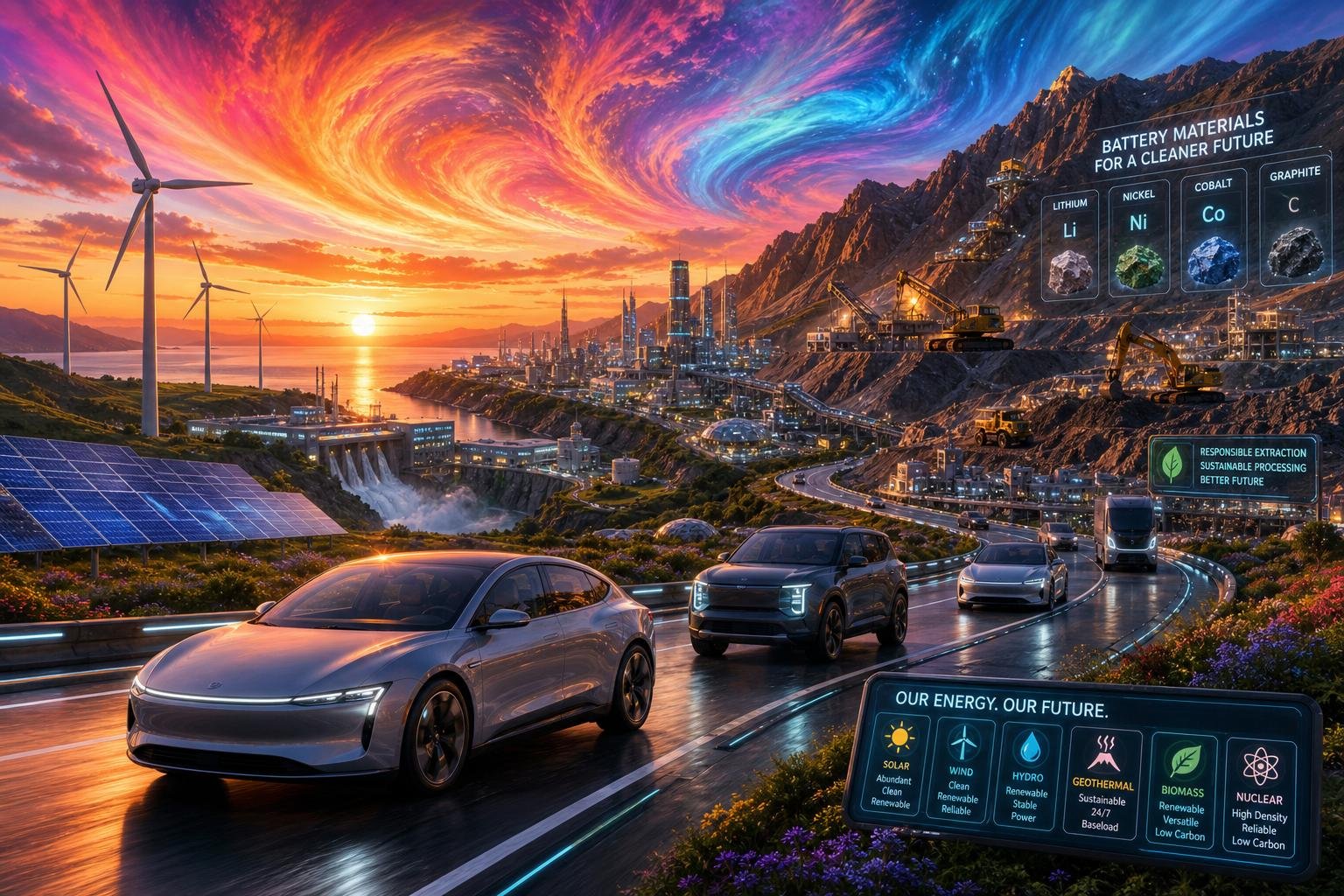
The race to lock in battery materials and manufacturing capacity is increasingly turning ordinary supply contracts into deeper industrial alliances, as automakers, energy storage firms and lithium producers seek greater control over a volatile and strategically important part of the clean-energy economy.
What was once a straightforward purchase agreement is now often a multi-layered arrangement that can include equity investment, joint technology development and long-term proce...
Continue Reading This Article
Enjoy this article as well as all of our content, including reports, news, tips and more.
By registering or signing into your SRM Today account, you agree to SRM Today's Terms of Use and consent to the processing of your personal information as described in our Privacy Policy.
ssing commitments. According to recent company disclosures and industry reports, these deals are becoming central to how manufacturers secure the raw materials and cell supply needed for electric vehicles and grid-scale storage.
One of the clearest examples came in April, when Lion Energy took an equity stake in American Battery Factory, backing a planned lithium iron phosphate, or LFP, gigafactory in Tucson, Arizona. The partnership gives Lion more than 4.5GWh of initial offtake from the plant, underscoring how buyers are increasingly willing to move beyond procurement and into ownership to guarantee domestic supply.
That pattern is also visible in Europe. Vulcan Energy recently said it had formed a strategic partnership with Siemens to support the commercial rollout of lithium production in Germany’s Upper Rhine Valley by 2028. Siemens is set to play a dual role as both technology partner and investor, helping with financing while positioning itself as a preferred supplier for future facilities.
Large automakers have been following a similar logic. General Motors has a multi-year sourcing agreement with Livent for battery-grade lithium hydroxide, with supplies due over six years from 2025 and a plan to shift all processing to North America. GM has linked the deal to its broader target of building 1 million electric vehicles in North America by the end of 2025.
Tesla, meanwhile, has continued to build out its supply web. Earlier agreements with Piedmont Lithium covered spodumene concentrate from North American Lithium, while more recent reporting says Tesla is also the buyer in LG Energy Solution’s $4.3 billion LFP battery supply deal, under which LG will retool its Lansing, Michigan plant to make prismatic cells for Tesla’s Megapack 3 storage system from 2027.
The scale of these arrangements reflects how quickly battery demand has outgrown the old commodity model. A single gigafactory can absorb vast quantities of lithium feedstock, forcing companies to prioritise certainty of supply, price stability and proximity to processing capacity. For producers, that has meant moving further up the value chain, offering not just raw material but refining, technical support and project development expertise.
North America has become a particular focus. Companies are increasingly seeking domestic supply chains to reduce exposure to geopolitical risk, improve logistics and meet growing expectations around local content. At the same time, battery makers are under pressure to show that their sourcing is cleaner and more traceable, which is pushing contracts to include environmental targets, carbon reduction commitments and community provisions.
The financial market is also adapting. Investors have tended to reward miners and project developers that secure long-term offtake agreements, since such contracts offer more predictable revenues than spot-market sales. In a sector often defined by price swings, that stability has become a valuable asset in its own right.
The result is a battery industry being reshaped not just by chemistry and engineering, but by the architecture of its partnerships. As companies race to secure supply for the next generation of vehicles and storage systems, the most important deals are becoming less about buying material and more about building entire ecosystems around it.
Source: Noah Wire Services