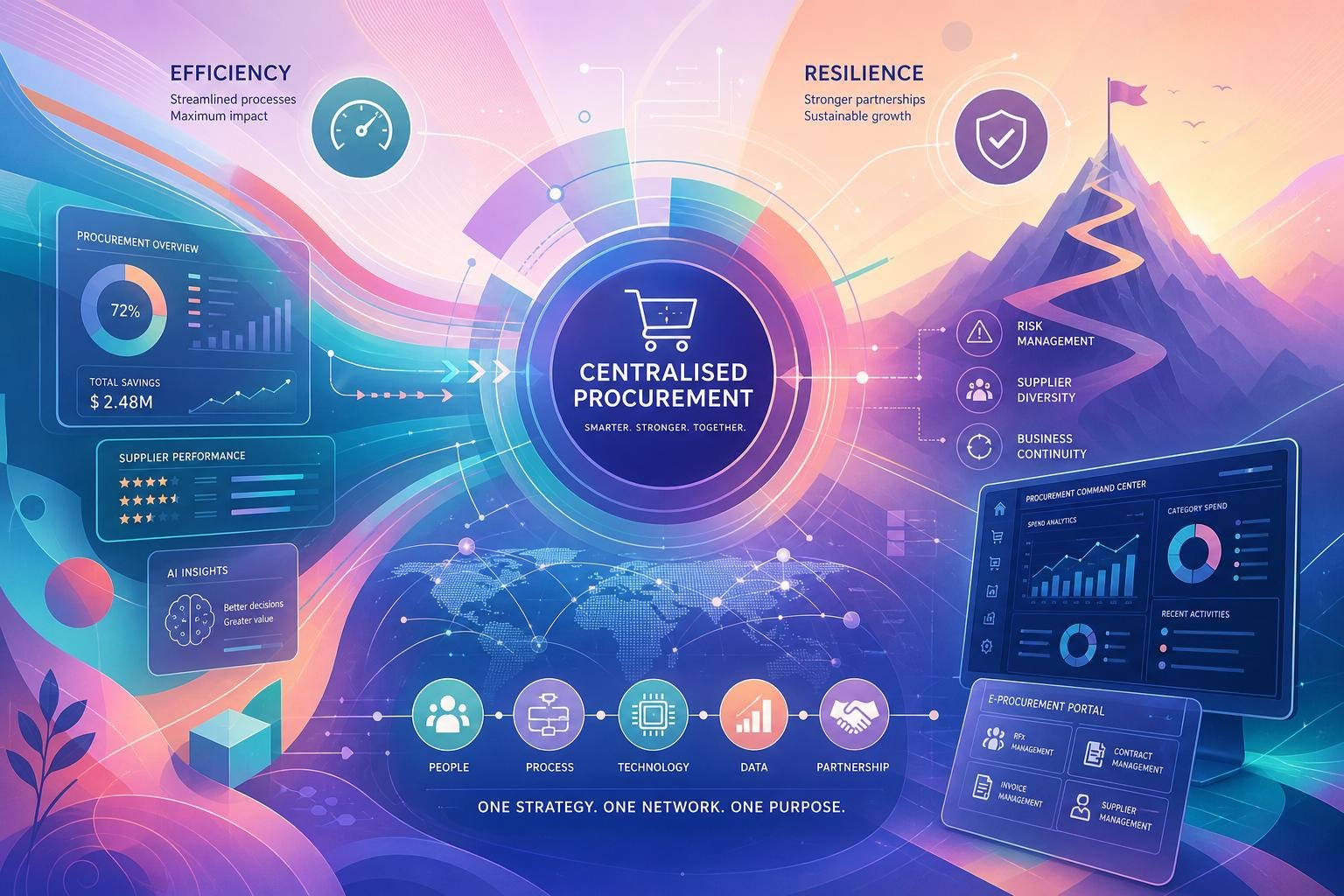
Businesses are finding that procurement can no longer be treated as a back-office cost centre. As Deloitte has argued in recent commentary, the function is increasingly being asked to deliver strategic value, not just savings, and that shift is reshaping how companies think about group purchasing, supplier management and technology investment.
The case for collaborative procurement is straightforward. When teams buy in isolation, organisations tend to accumulate duplicate vendo...
Continue Reading This Article
Enjoy this article as well as all of our content, including reports, news, tips and more.
By registering or signing into your SRM Today account, you agree to SRM Today's Terms of Use and consent to the processing of your personal information as described in our Privacy Policy.
rs, inconsistent pricing and patchy oversight of spending. That fragmentation makes it harder to negotiate effectively, monitor contract compliance or spot where money is leaking out of the business. By contrast, shared purchasing structures bring demand together, giving procurement leaders more leverage and a clearer view of what the company is actually buying.
That matters at a time when costs remain stubbornly high. Deloitte has said procurement inefficiencies can push purchasing costs up by as much as 15%, while the Hackett Group has found that world-class procurement organisations operate at roughly 21% lower cost than typical teams. The gap is not just about volume discounts. It also reflects stronger process discipline, better supplier coordination and less time wasted on manual administration.
In practice, collaborative procurement usually means centralising buying decisions across departments, sites or business units. Rather than allowing each team to source its own supplies, organisations set common supplier lists, standard approval routes and shared contract terms. That can be especially valuable in multi-site sectors such as hospitality, healthcare, construction and education, where repeated purchases of similar goods can quickly become expensive if every location negotiates separately.
The rise of procurement technology is accelerating that change. Deloitte’s 2025 Global Chief Procurement Officer Survey found that leading organisations are increasing investment in digital transformation, with top performers allocating as much as 24% of their budgets to procurement technology. Much of that spending is going into generative AI, agentic AI and automation tools designed to shorten purchasing cycles, improve compliance and give managers real-time visibility over spend.
That digital shift is also changing the role of the procurement team itself. Rather than simply processing orders, procurement leaders are increasingly expected to shape resilience, improve margins and support broader business strategy. Deloitte’s work on procurement transformation suggests that this requires stronger talent, more integrated workflows and closer links between procurement and finance.
The operational benefits are clear. Shared dashboards, automated approvals and centralised contract records can reduce maverick spending, cut down on duplicate paperwork and speed up purchasing decisions. Automated workflows also help businesses avoid the bottlenecks that come with endless email chains and manual sign-offs. In larger organisations, those delays can affect project delivery, inventory levels and supplier relationships.
Supplier management is another area where collaboration pays off. When spending data is fragmented, procurement teams struggle to measure vendor performance or enforce contract terms consistently. A shared procurement model makes it easier to track delivery reliability, identify price differences between suppliers and negotiate from a stronger position. It also gives finance teams more confidence in forecasting, because they can see which categories are growing and where budgets are being eroded.
Deloitte’s procurement operations work has pointed to a broader benefit as well: improved resilience. More coordinated purchasing can help businesses avoid production delays, strengthen supplier reliability and improve inventory planning. In an environment where material and service costs remain under pressure, that kind of discipline is becoming a margin issue, not just an administrative one.
The point is not that every business needs the same procurement model. Smaller organisations may not need complex platforms or elaborate governance structures. But for growing companies, particularly those with multiple locations or dispersed teams, collaborative procurement offers a practical way to reduce waste, improve accountability and gain better control over spending.
As procurement continues to evolve, the competitive edge is likely to belong to businesses that treat buying as a shared capability rather than a collection of isolated decisions.
Source: Noah Wire Services