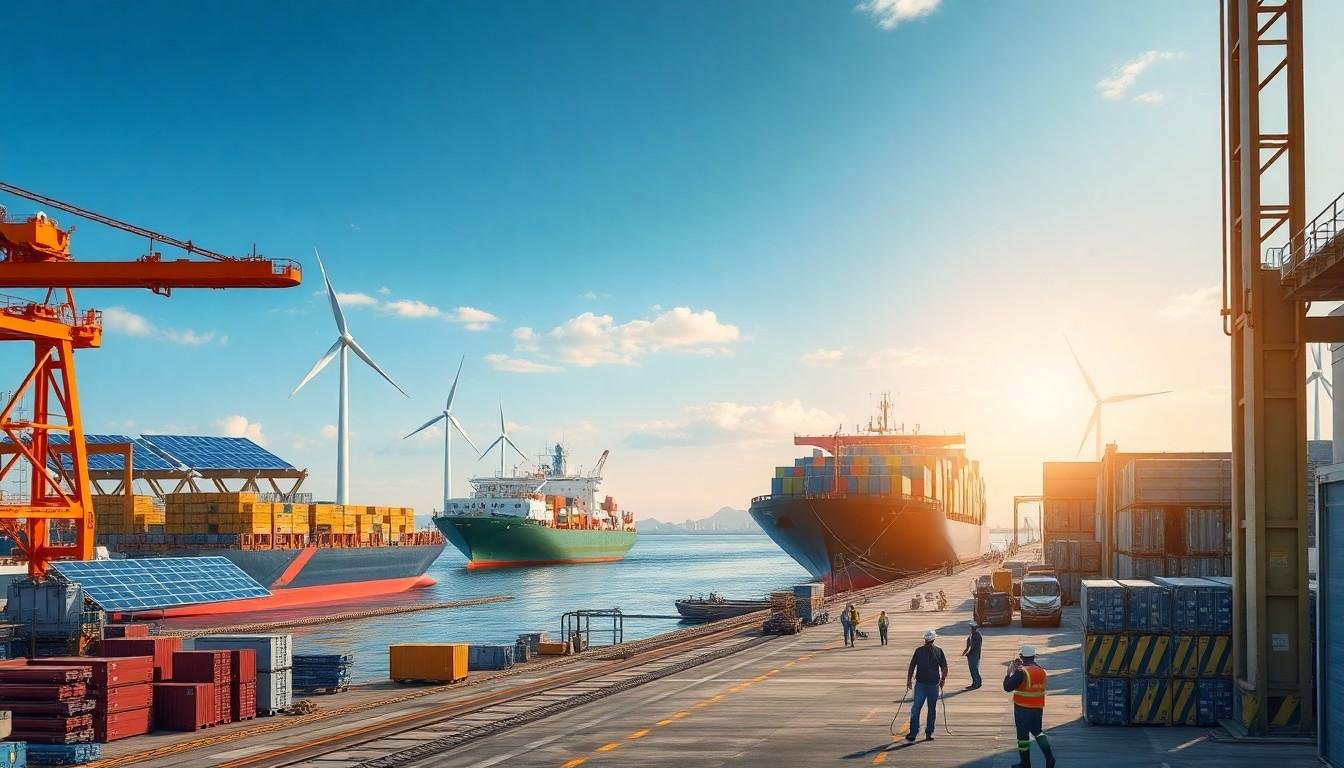
China is using the latest edition of its flagship supply chain expo to present itself not simply as a manufacturing base, but as a force shaping how global industry adapts to a more fragmented and technology-driven era.
At the fourth China International Supply Chain Expo in Beijing, more than 1,200 exhibitors from 85 countries, regions and international organisations are taking part, with foreign firms making up more than 36 per cent of the total. The event is billed as the wor...
Continue Reading This Article
Enjoy this article as well as all of our content, including reports, news, tips and more.
By registering or signing into your SRM Today account, you agree to SRM Today's Terms of Use and consent to the processing of your personal information as described in our Privacy Policy.
ld’s first national-level expo devoted entirely to supply chains, and its layout reflects that ambition: rather than showcasing products in isolation, companies are presenting whole industrial links, from raw materials to final delivery.
The message running through the event is summed up by a four-part framework: green development, ecosystem-building, artificial intelligence and resilience. In the clean energy halls, the emphasis is on how China’s industrial scale is helping to lower costs and widen access. By the end of May 2026, China’s total installed power generation capacity had reached 4.01 billion kilowatts, with non-fossil sources accounting for 62 per cent of the total, up from 25 per cent in 2010. Over the past decade, China says it has worked with more than 100 countries and regions on green energy projects and helped push down the average cost of wind and solar projects globally by more than 60 per cent and 80 per cent respectively.
That trend is visible in the companies on display. Renewable energy equipment makers, battery groups, car manufacturers and materials suppliers are sharing exhibition space in an attempt to show how closely linked the clean transport and power sectors have become. Industry figures quoted at the expo argue that China’s dense supplier network, manufacturing depth and pricing power are helping to speed the global transition to cleaner energy systems.
The second theme is ecosystem integration. Rather than treating supply chains as linear routes from factory to customer, the expo is structured to highlight the interdependence of upstream, midstream and downstream players. Honeywell, which is attending for the fourth time, brought nearly 100 local supply chain partners to exhibit alongside it, while McDonald’s China, Syngenta Group and McCain used last year’s event to deepen talks that have now developed into a formal pilot project on potato sourcing. Analysts cited at the expo say China is increasingly acting as an organiser of industrial networks, not just a production stop within them.
Artificial intelligence has been given a bigger role than in previous years. For the first time, the expo includes a dedicated AI zone featuring companies such as Alibaba, Intel, Nvidia and Qualcomm. Chinese industry figures say the technology is already moving supply chains beyond basic connectivity, improving coordination, prediction and decision-making. China now has more than 6,000 AI enterprises, and its core AI sector is expected to exceed 1.2 trillion yuan, or about $176 billion, as domestic large models gain traction in the open-source space. Separately, a government plan issued this year sets out a push to integrate AI more deeply into the energy sector, with targets for 2027 and 2030 that include a stronger innovation system and wider use of AI-enabled operations.
The final message is resilience. The China Council for the Promotion of International Trade used the expo to release a report showing that while its promotion, connectivity and innovation indicators have reached record levels, resilience has not yet returned to its previous peak. That warning comes against a backdrop of rising protectionism and geopolitical tension. Chinese officials say the country’s large market and integrated industrial base are helping to steady global production, while foreign executives at the expo describe China as a stable and increasingly important partner for long-term supply chain planning.
Source: Noah Wire Services