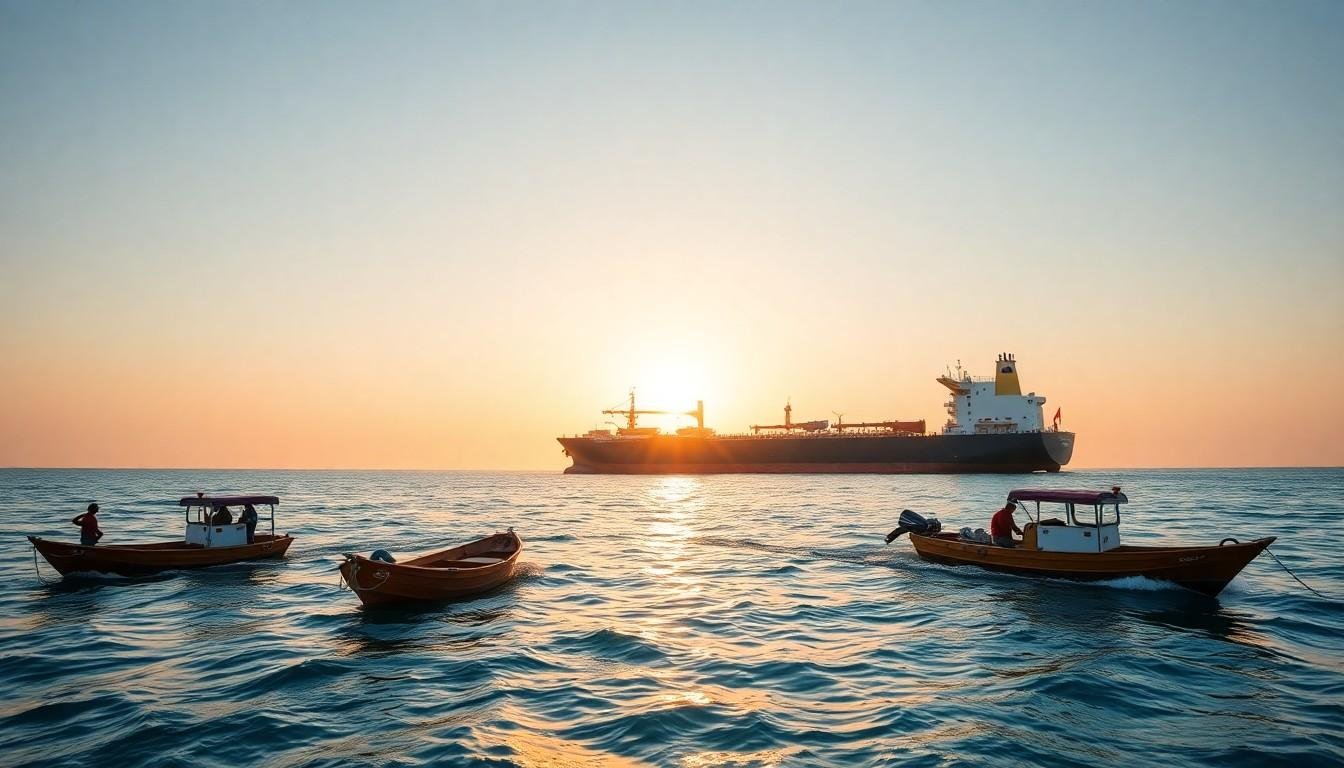
German shipping group Hapag-Lloyd has warned that the Strait of Hormuz is entering a prolonged period of disruption, as military escalation, overlapping navigation directives and renewed Iranian oil movements combine to unsettle one of the world’s most important energy routes.
A company spokesperson told Fox News Digital that the carrier now regards the situation in the Persian Gulf as a persistent one rather than a short-lived emergency, saying it has had to make repeated se...
Continue Reading This Article
Enjoy this article as well as all of our content, including reports, news, tips and more.
By registering or signing into your SRM Today account, you agree to SRM Today's Terms of Use and consent to the processing of your personal information as described in our Privacy Policy.
curity assessments with authorities, maritime partners and crews on board. The company said every voyage is being judged individually, with safety for seafarers treated as the overriding concern.
The warning comes against a backdrop of renewed conflict around the waterway. According to the reporting, US Central Command carried out strikes on Iranian targets, including Qeshm Island on 26 June, after a vessel was hit in the strait. Iran’s Islamic Revolutionary Guard Corps then responded by striking US military sites in Kuwait and Bahrain, deepening fears that commercial shipping could be caught in the crossfire.
At the same time, maritime intelligence firms say Tehran has restarted large-scale crude movements from Kharg Island. Windward AI said loading resumed at the T-Jetty and Western Terminal, while Vortexa estimated that about 4.12 million barrels of wet cargo were being shipped, including roughly 3.91 million barrels of crude oil. That suggests Iran’s export cycle is again moving, even as wider conditions remain unstable.
Industry reporting has described the transit lane as increasingly fractured, with one route effectively operating under Iranian oversight in the north and another under US protection further south. Pre-war passage patterns have largely broken down because of mine risk and the shifting security picture. Iranian officials have also indicated that passage through the strait must be coordinated with the IRGC, adding another layer of uncertainty for ship operators.
Hapag-Lloyd said it had already managed to move vessels that were caught by a temporary closure and were waiting in the Gulf, and the company later reported that one of its ships had crossed the strait safely. Even so, it has not signalled an imminent return to routine operations. In February, the company said it had suspended all transits through the waterway after an official closure, and more recent comments suggest that caution remains in place despite talk of a reopening.
The carrier also pushed back against any suggestion that passage through the waterway could be turned into a revenue stream. Its spokesperson said it would be fundamentally wrong to charge fees for transit through international waters, drawing a distinction between the Hormuz crossing and canals such as Suez or Panama, where charges are tied to major infrastructure.
Source: Noah Wire Services