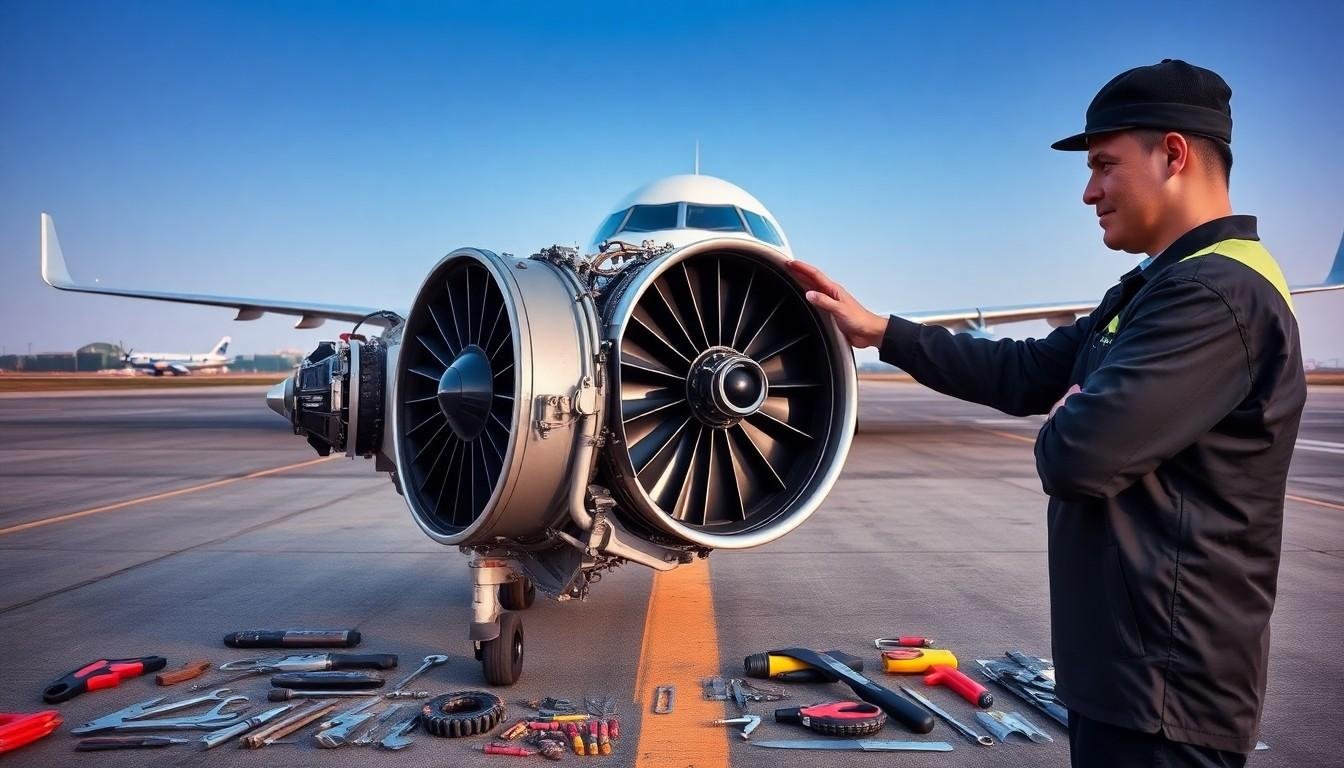
Global demand for engine maintenance is still climbing, but the repair network is struggling to keep pace because the parts needed to finish the work are not arriving quickly enough. That imbalance is now one of the clearest pressure points in the aviation aftermarket, as airlines try to keep aircraft in service through an extended period of supply-chain disruption.
According to AerFin, the most acute constraint in the mature-engine market remains the shortage of high-pressure ...
Continue Reading This Article
Enjoy this article as well as all of our content, including reports, news, tips and more.
By registering or signing into your SRM Today account, you agree to SRM Today's Terms of Use and consent to the processing of your personal information as described in our Privacy Policy.
turbine blades for the CFM56, where demand for replacement material is outstripping supply. The company says this has pushed turnaround times well beyond pre-pandemic norms, while operators of V2500 SelectOne engines are also facing tighter conditions as aircraft transitions are expected to rise sharply later in 2026.
The problem is not simply one of shop capacity. Engine shop visits are increasing across major maintenance providers, but that is not being matched by a corresponding rise in teardowns, leaving the pool of used serviceable material thin. That in turn is forcing shops to rely more heavily on newly manufactured core parts, which are both more expensive and more exposed to original equipment manufacturer production delays. AerFin also says some larger MROs are prioritising their own fleet customers, further reducing third-party availability and shifting more work towards independent repair specialists.
Turnaround times are stretching accordingly. AerFin puts full CFM56 overhauls at about 90 to 120 days, versus roughly 60 days before the pandemic, while light work remains closer to 45 days. For the V2500, the company cites 60 to 70 days for a full overhaul. Older widebody platforms such as the PW4000 and CF6 are now often taking more than 120 days, and Pratt & Whitney’s PW1100G-JM geared turbofan can take 260 to 365 days. By contrast, industry practice before 2020 was considerably faster, particularly on CFM56 and V2500 engines.
The wider industry picture points in the same direction. In a study released on June 24, the International Air Transport Association said urgent action is needed to ease bottlenecks affecting latest-generation single-aisle engines, including the CFM LEAP and Pratt & Whitney GTF. IATA said durability issues, spare parts shortages, limited spare engine availability and restricted aftermarket access are disrupting airline operations, and called for more approved repair options and fairer access to MRO capacity.
Repair complexity is also rising. The newest engines are more efficient, but their advanced materials and construction make them harder to fix outside OEM-approved processes. AerFin says the most difficult work now centres on turbine components, combustors and composite fan blades, where specialised alloys and thermal coatings limit the number of repair techniques that can be used. That leaves operators more dependent on specialist partners and, in some cases, pushes up material costs.
KPMG has similarly described MRO as a structural bottleneck, driven by fleet growth, delivery delays and the lower durability profile of newer engines, while also warning that some regional capacity is under-used because of capability and economics mismatches. Other industry analysis has pointed to shortages of raw materials such as titanium and composites, with repair lead times in some cases doubling from the 30-to-45-day range to 90 to 120 days.
For AerFin, the conclusion is that planning around materials and asset lifecycles matters as much as securing a shop slot. The company argues that access to quality used serviceable material, together with strategic teardowns and stronger supply-chain partnerships, will be essential to reducing dependence on constrained OEM production lines and improving predictability for operators, lessors and MROs alike.
Source: Noah Wire Services