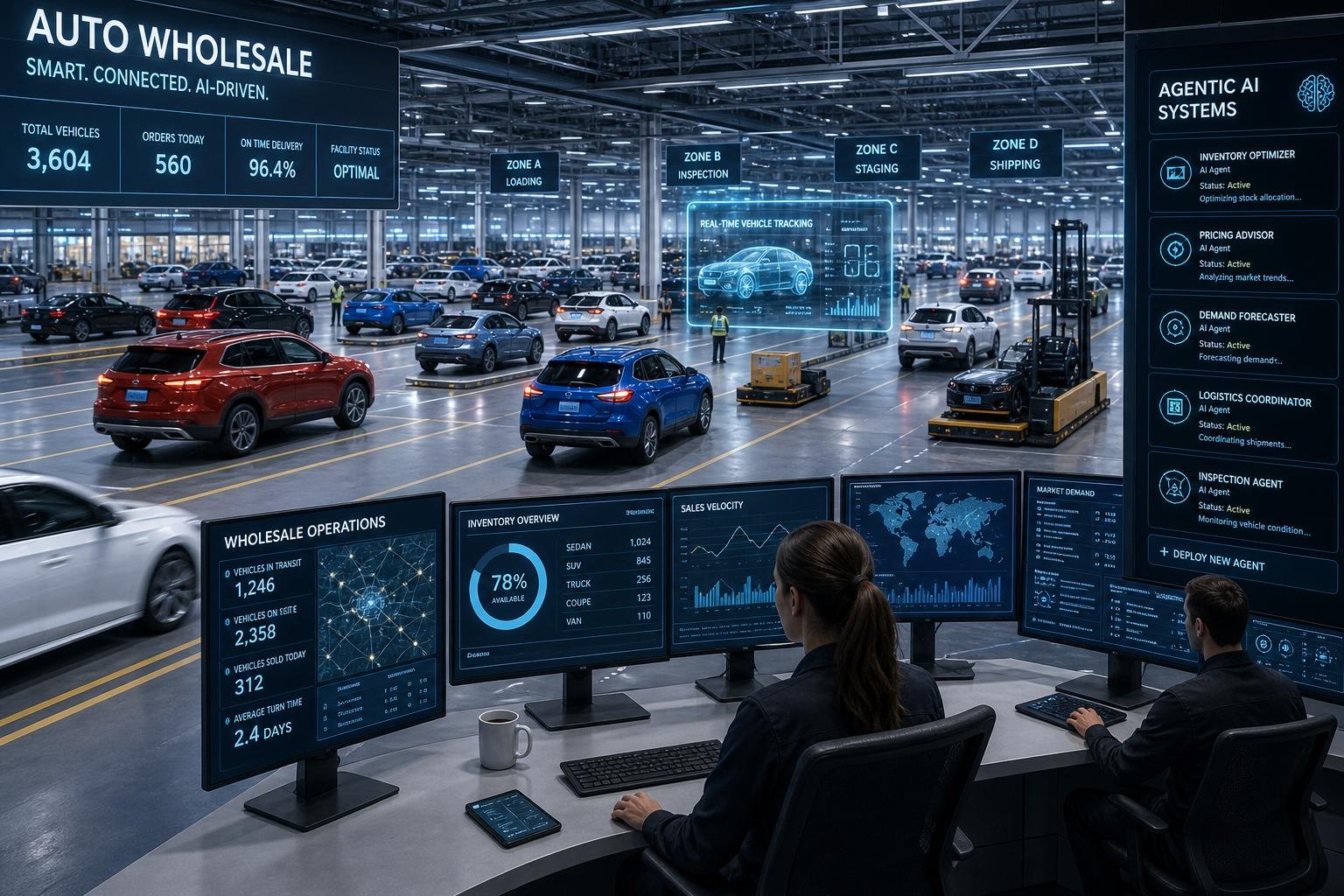
Agentic AI is moving from theory into the operational core of automotive wholesale, as dealers and fleet managers increasingly use software not simply to surface information but to act on it. In Fleet Management Weekly, Charles Daniel argues that the market’s real constraint is no longer access to digital auctions or data feeds, but the speed at which organisations can turn that data into decisions and execution.
That shift matters because the industry has already passed thro...
Continue Reading This Article
Enjoy this article as well as all of our content, including reports, news, tips and more.
By registering or signing into your SRM Today account, you agree to SRM Today's Terms of Use and consent to the processing of your personal information as described in our Privacy Policy.
ugh one major transformation: from physical auction lanes to screens. The next phase is being defined by systems that can reason, bid and trigger downstream actions with limited human intervention. Daniel describes a world in which autonomous agents watch inventory, assess margin, factor in transport and local volatility, and then pivot to the next-best option when a bid is lost.
The broader market suggests this is no longer a speculative idea. Inride recently launched Trade Agent AI, a platform it says can identify hidden trade-in opportunities inside dealership databases and contact vehicle owners automatically. Cox Automotive has also said it has rolled out 17 enterprise products using agentic AI in less than a year, spanning shopping, auctions, fleet services and dealership operations. (prnewswire.com)
The argument is not just about acquisition. Daniel’s article focuses on what he calls the operational gap between winning a vehicle and getting it ready for its next use. That window, he suggests, is where margin is quietly lost through dispatch delays, title handling and service-bay bottlenecks. In his model, agentic systems would reserve transport, create a work order from digital damage data and prepare the facility before the car arrives.
That vision matches a wider industry conversation about unified data and governance. TechRadar has noted that agentic AI is only as effective as the systems underneath it, while also warning that transparency, accountability and clear limits are becoming more important as automation takes on more initiative. In other words, autonomous tools may accelerate execution, but they also increase the need for oversight. (techradar.com)
Vendors are already applying similar ideas across the retail side of automotive. Toma, for example, positions its AI around inbound lead handling, service scheduling and missed-call recovery, framing the technology as a way to keep customer conversations moving without losing human escalation where needed. The theme is consistent: the prize is not merely automation, but continuity across each stage of the workflow. (toma.com)
For fleet executives, Daniel’s conclusion is that the role is changing as quickly as the tooling. The value, he suggests, is shifting away from spotting an isolated bargain and towards setting rules for a network of agents that can execute strategy at scale. If the industry follows that path, competitive advantage will depend less on who clicks fastest and more on who can build the strongest bridge between digital intent and physical operations.
Source: Noah Wire Services