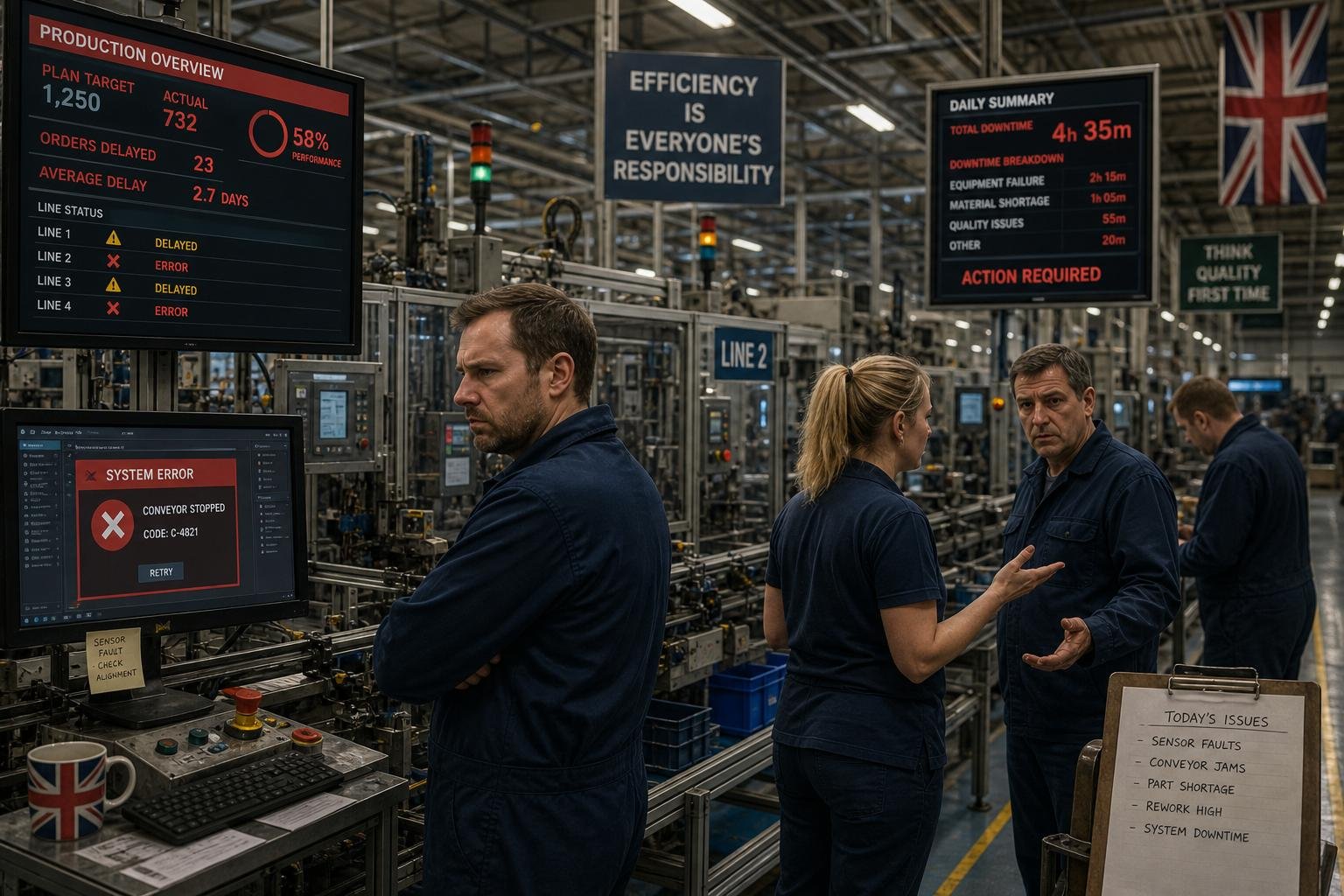
UK manufacturers are still losing valuable production time to manual reporting and fragmented systems, according to new research from OFS, underscoring how much day-to-day work remains analogue despite years of digital investment.
The study, based on responses from 500 manufacturing professionals, found that operators spend an average of 21 minutes on each shift logging information, transcribing data and preparing reports. In a typical three-shift operation, OFS says that adds ...
Continue Reading This Article
Enjoy this article as well as all of our content, including reports, news, tips and more.
By registering or signing into your SRM Today account, you agree to SRM Today's Terms of Use and consent to the processing of your personal information as described in our Privacy Policy.
up to more than an hour a day, or around 380 hours a year, being consumed by administration rather than frontline problem-solving.
The findings suggest that digitisation has often stopped at the dashboard. OFS said fewer than one in 10 manufacturers described their reporting as fully automated, while most still devote up to half an hour per shift to manual tasks. In many cases, the research found, data is collected but not readily usable by the people closest to production.
That visibility gap appears to have operational consequences. OFS said only 26% of operators have full real-time access to production performance data, and almost a third depend on managers or supervisors to retrieve information for them. The company added that fewer than 40% of the operational data gathered by manufacturers is used by frontline teams, with nearly a third saying operators make decisions using just a quarter or less of the available information.
The knock-on effects are familiar across the sector: slower identification of faults, delayed intervention and higher costs. OFS reported that only around a third of production issues become visible to senior managers immediately through real-time data, while more than one in five take longer than a shift to surface. Some are not flagged for several days.
Nearly half of manufacturers surveyed said they had already experienced downtime linked to delayed visibility and unresolved problems. A further 41% reported rising operating costs, while about a third said the delays had led to missed delivery deadlines and lost revenue.
James Magee, chief executive of OFS, said manufacturers often believe they have modernised because information eventually appears in a dashboard, but the reality on the shop floor can remain heavily manual. He said the issue is not always the amount of data collected, but whether it can be used quickly enough by the people running production.
The broader picture points to a sector still wrestling with hidden inefficiencies. Separate research from Fluke Corporation has suggested unplanned downtime alone can cost UK manufacturers up to £736 million a week, while other surveys have found staff spending significant portions of their working day on low-value tasks or searching for tools and components.
Taken together, the findings indicate that many factories are still paying a high price for poor data flow and slow decision-making. For manufacturers under pressure from costs, delivery deadlines and labour constraints, the problem is not simply collecting information, but turning it into action fast enough to keep lines moving.
Source: Noah Wire Services