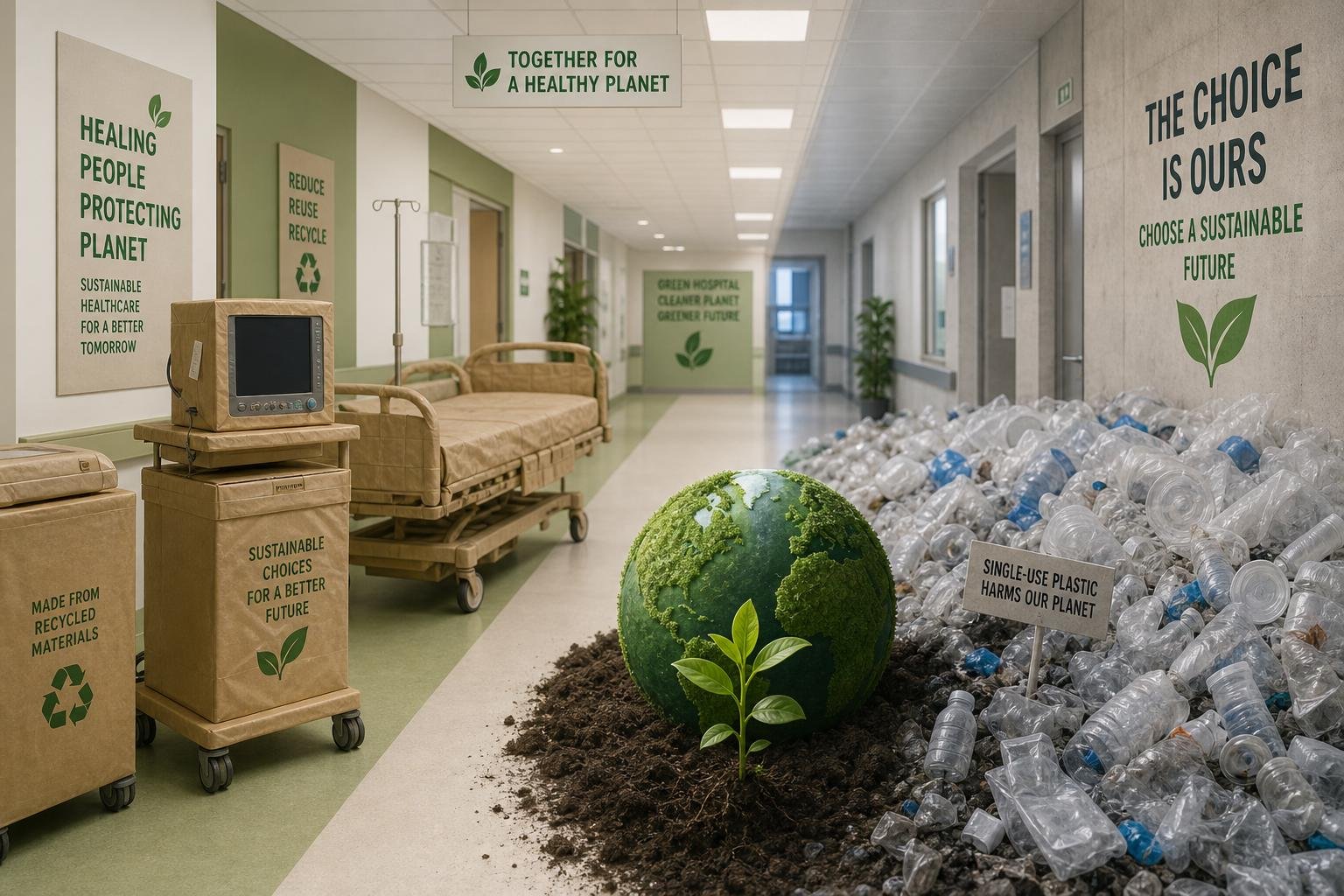
Hospitals in the United States are estimated to produce about 14,000 tons of waste a day, and packaging accounts for a sizeable share of that burden. Yet the same materials that protect sterile supplies and help health systems meet regulatory requirements are increasingly being rethought as part of a broader push to cut costs and curb landfill waste.
That shift matters because medical packaging sits at the intersection of safety, logistics and sustainability. Disposable wraps, ...
Continue Reading This Article
Enjoy this article as well as all of our content, including reports, news, tips and more.
By registering or signing into your SRM Today account, you agree to SRM Today's Terms of Use and consent to the processing of your personal information as described in our Privacy Policy.
pouches, trays and blister packs remain essential in clinical settings, but waste disposal is becoming more expensive, particularly for regulated streams that need specialist handling. Health systems are also under growing pressure from regulators, investors and communities to show credible progress on environmental, social and governance goals.
The industry response is moving beyond broad commitments and towards practical design changes. According to the CAS article on sustainable medical packaging, one of the biggest advances is the move towards recyclable and mono-material formats, which make sorting and recovery easier by removing mixed layers that typically complicate recycling. In some cases, packaging built around a single plastic family can still deliver the sterile barrier performance healthcare requires.
Other suppliers are experimenting with biodegradable and compostable alternatives, although adoption remains constrained by sterility, safety and regulatory rules. Lightweighting is another route gaining traction: even small reductions in material use can translate into lower shipping emissions and less overall waste when multiplied across large hospital supply chains.
Design is proving just as important as material choice. Right-sizing packages to fit the product, rather than legacy specifications, can reduce unnecessary void fill and oversized secondary wraps. Healthcare Plastics Recycling Council guidance also underlines the importance of clearer recycling labels and proper sorting, since contamination remains one of the biggest barriers to diverting healthcare plastics away from landfill.
The search for circularity is also producing more ambitious models. Sustainability MEA reported on a partnership involving Coveris, SABIC, Zuyderland Medical Centre and Artivion that has turned non-contaminated hospital plastic waste into new medical-grade packaging materials. The project is being presented as a closed-loop recycling system for healthcare packaging, a sign that used materials can, in some settings, be fed back into high-value applications rather than discarded.
Major packaging firms are also positioning themselves around that opportunity. DuPont says its Tyvek sterile packaging material, used in healthcare for decades, is designed for recyclability and supports circularity efforts. SupplyOne, meanwhile, offers medical packaging products aimed at sterile protection, clean storage and transport, reflecting the continuing demand for formats that balance compliance with operational efficiency.
For health systems, the operational challenge is to turn promising ideas into procurement practice. That starts with auditing packaging waste by category, identifying which products generate the most material and where reduction would be least disruptive. It also means working with suppliers that are willing to redesign high-volume items, and making sustainability a formal part of purchasing decisions rather than an optional extra.
Distribution networks can help accelerate that change. By curating suppliers that already meet quality and compliance standards, they reduce the burden on procurement teams that might otherwise have to assess every vendor from scratch. Platforms that surface sustainability information alongside product specifications can also make it easier for buyers to choose lower-waste options without sacrificing performance or patient safety.
The broader message is that sustainable medical packaging is no longer a speculative idea. The tools now exist to reduce material use, improve recyclability and build more accountable supply chains. The harder work lies in aligning procurement, regulation and clinical needs so that environmental progress becomes part of everyday sourcing rather than a separate initiative.
Source: Noah Wire Services