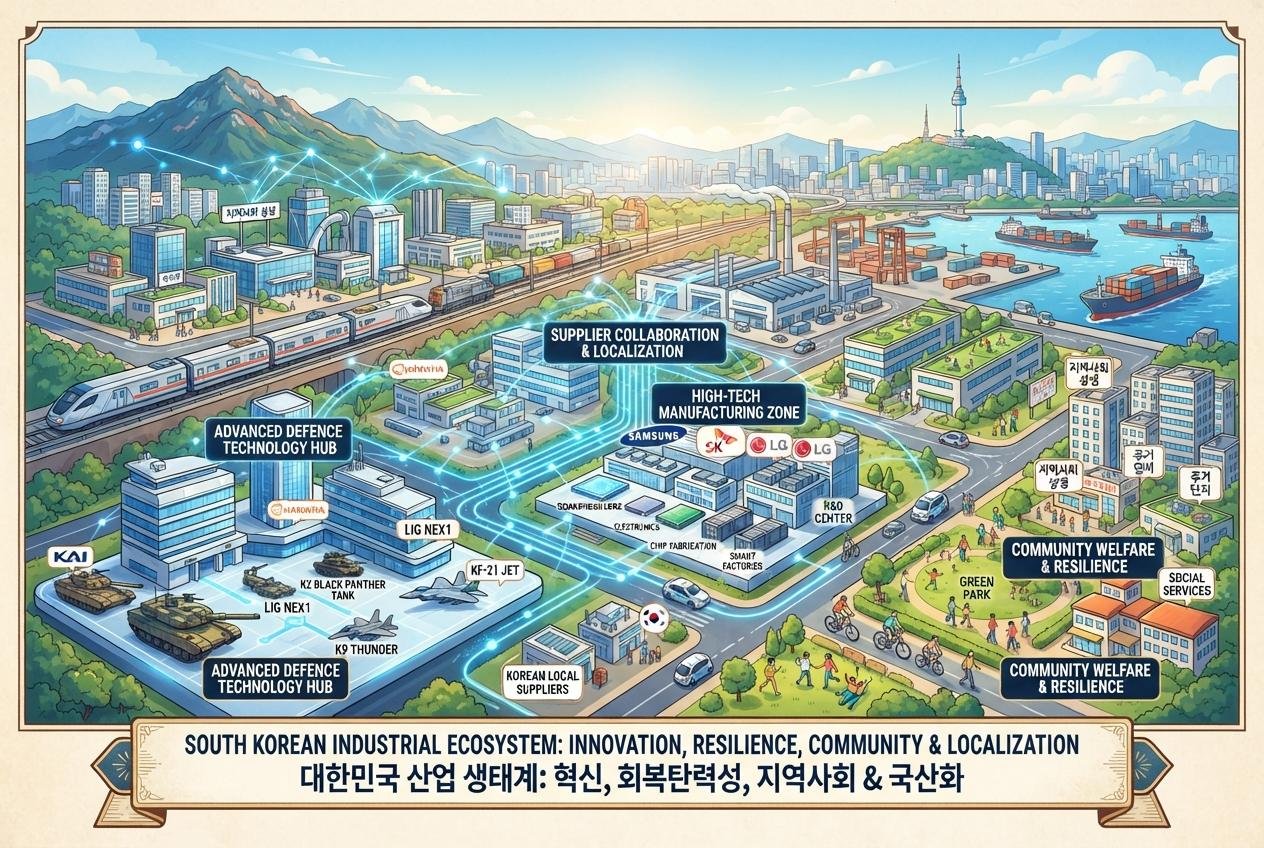
Hanwha is pushing a broader model of industrial cooperation that goes beyond price negotiations and financial backing, arguing that the strength of its suppliers is inseparable from its own competitiveness and from the resilience of South Korea’s defence and manufacturing base.
At a win-win cooperation declaration ceremony at Hanwha Aerospace’s Changwon plant, attended by 56 partner firms and officials from central and local government, the company set out measures to suppo...
Continue Reading This Article
Enjoy this article as well as all of our content, including reports, news, tips and more.
By registering or signing into your SRM Today account, you agree to SRM Today's Terms of Use and consent to the processing of your personal information as described in our Privacy Policy.
rt the development of advanced defence technologies and the localisation of key components. According to Hanwha, the centrepiece is a 30 billion won innovation performance-sharing scheme, under which it will cover the full research and development costs for suppliers working on advanced projects and parts localisation.
Hanwha Aerospace also signed cooperation agreements with 49 key partners in aircraft engine manufacturing and related bodies in Changwon. The company said it will provide tailored technical and job training, R&D funding, infrastructure support and improvements to trading conditions. It has also formed a consortium with 39 suppliers and testing and certification institutions to accelerate the domestic production of aircraft engine materials and components.
The group’s strategy is not limited to aerospace. Hanwha Systems said it will expand its integrated management support programme by 300% and widen fair trade agreements to 120 companies, with a focus on joint technology development in areas such as artificial intelligence and unmanned systems.
Hanwha Ocean, meanwhile, is concentrating on supplier stability and workforce welfare. The company raised partner unit prices by about 7% in 2023, followed by increases of 5% in 2024 and 3% in 2025. It has also decided to apply the same performance bonus ratio to partner employees as it does to its own staff, a move it says should help improve conditions and support the retention of skilled workers in shipbuilding.
Alongside that, Hanwha Ocean has made health, safety and environmental management a priority since its launch, with major facility investment intended to reduce operational risks. After announcing 1.9 trillion won of safety spending for 2024, the company said it is carrying through with 5.351 trillion won in 2024, 6.025 trillion won in 2025 and a planned 7.641 trillion won in 2026.
Taken together, the group’s latest measures point to a deliberate attempt to build a more integrated industrial ecosystem, in which technology, safety and supplier welfare are treated as strategic assets rather than peripheral costs.
Source: Noah Wire Services