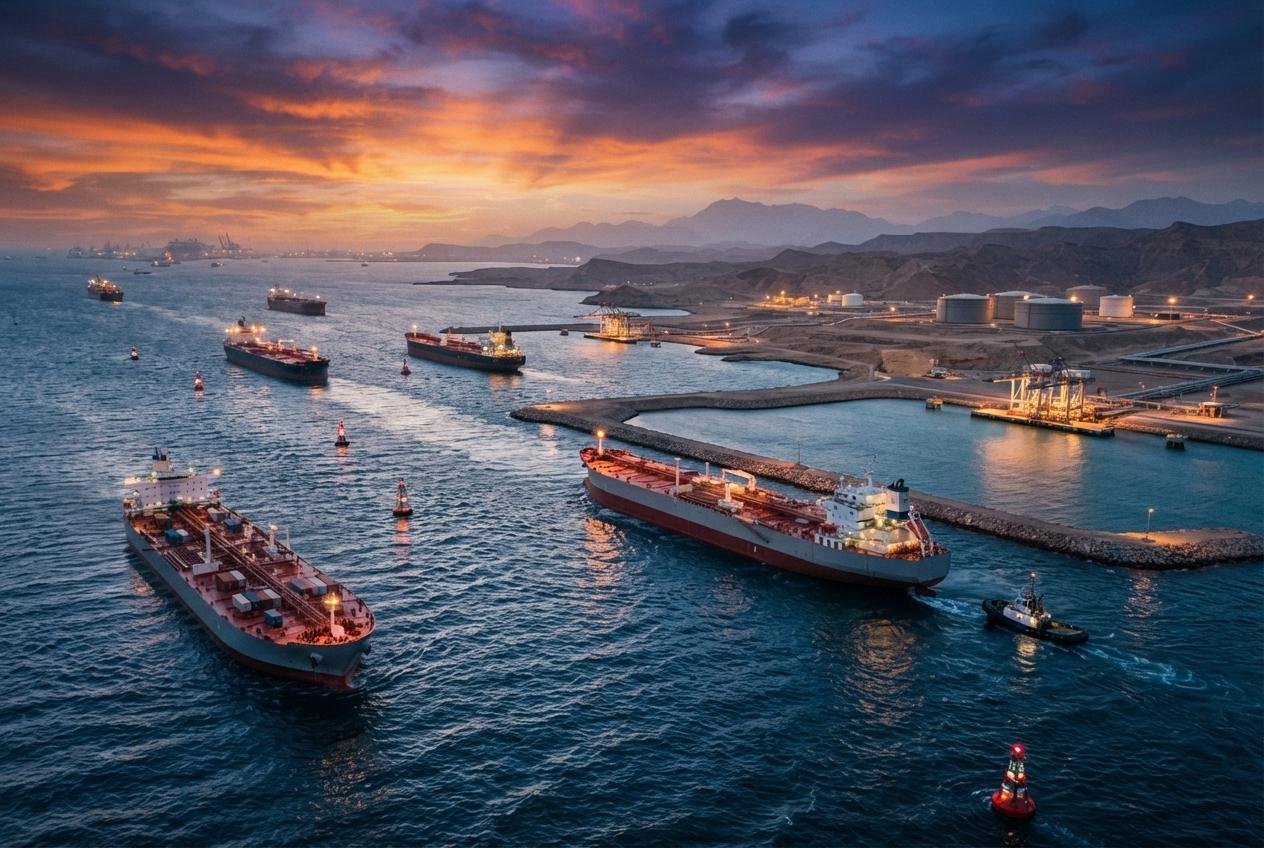
The latest strain on the Strait of Hormuz is prompting Gulf producers to rely more heavily on bypass routes, but the implications for travel are more complex than the headline warnings about higher fares suggest.
According to the International Monetary Fund, Gulf energy exporters have spent years building alternative channels that reduce the shock of disruption at the narrow waterway, long regarded as one of the world’s most sensitive oil chokepoints. Saudi Arabia and the Uni...
Continue Reading This Article
Enjoy this article as well as all of our content, including reports, news, tips and more.
By registering or signing into your SRM Today account, you agree to SRM Today's Terms of Use and consent to the processing of your personal information as described in our Privacy Policy.
ted Arab Emirates already have operational crude pipelines that can divert some exports away from Hormuz, though the International Energy Agency has said that existing bypass capacity still covers only a fraction of the region’s pre-crisis flow.
That limitation matters for airlines and holidaymakers because aviation is deeply exposed to fuel volatility. Fuel typically ranks among the biggest costs for carriers, and long-haul operators are often the most vulnerable when oil and jet fuel prices swing sharply. The travel industry is therefore watching not only whether exports can be re-routed, but also how much those routes add in transport, handling and insurance costs before crude even reaches refineries.
Saudi Arabia’s East-West Pipeline, which links its oil fields to the Red Sea port of Yanbu, remains one of the region’s most important escape valves. The UAE has also invested heavily in a pipeline to Fujairah, outside the Strait of Hormuz, to strengthen export resilience. Iraq has been exploring additional corridors towards Turkey, Syria and Jordan, while Jordan’s Aqaba route has been discussed as a possible transit point for wider regional flows. Yet these projects are unevenly developed, and several Gulf states still have no meaningful alternative to Hormuz.
That means the strategic shift away from the strait does not remove risk; it redistributes it. The Royal Bank of Canada’s capital markets team warned earlier this year that prolonged disruption could send oil above $100 a barrel and push gas prices to their highest level since early 2023. Nobuo Tanaka, the former head of the International Energy Agency, has also said the closure has already triggered price swings, refinery outages and export stoppages across the Gulf.
For aviation, the picture is more immediate. Emirates, Qatar Airways and Etihad are among the carriers most exposed because of their reliance on long-haul international networks. Qatar’s liquefied natural gas exports cannot be diverted by pipeline in the way crude can, and the OECD has noted that LNG shipments remain especially vulnerable to maritime disruption. That adds another layer of uncertainty to regional operating costs, even where oil flows are partially insulated.
In practice, passengers are likely to feel the effects first through fare pressure on routes between Europe, Asia and North America, where fuel burn is highest. Airlines may try to absorb some of the hit in the short term, but sustained increases usually feed through into ticket pricing, cargo charges and, eventually, wider travel costs.
The broader lesson is that the Gulf’s efforts to bypass Hormuz have made the energy system more resilient, but not cheaper. Alternative routes can reduce exposure to a single chokepoint, yet they also bring longer distances, more complex logistics and higher operating expenses. For travellers, that means the cost of geopolitical uncertainty may be reflected not just in oil markets, but in the price of the next long-haul flight.
Source: Noah Wire Services