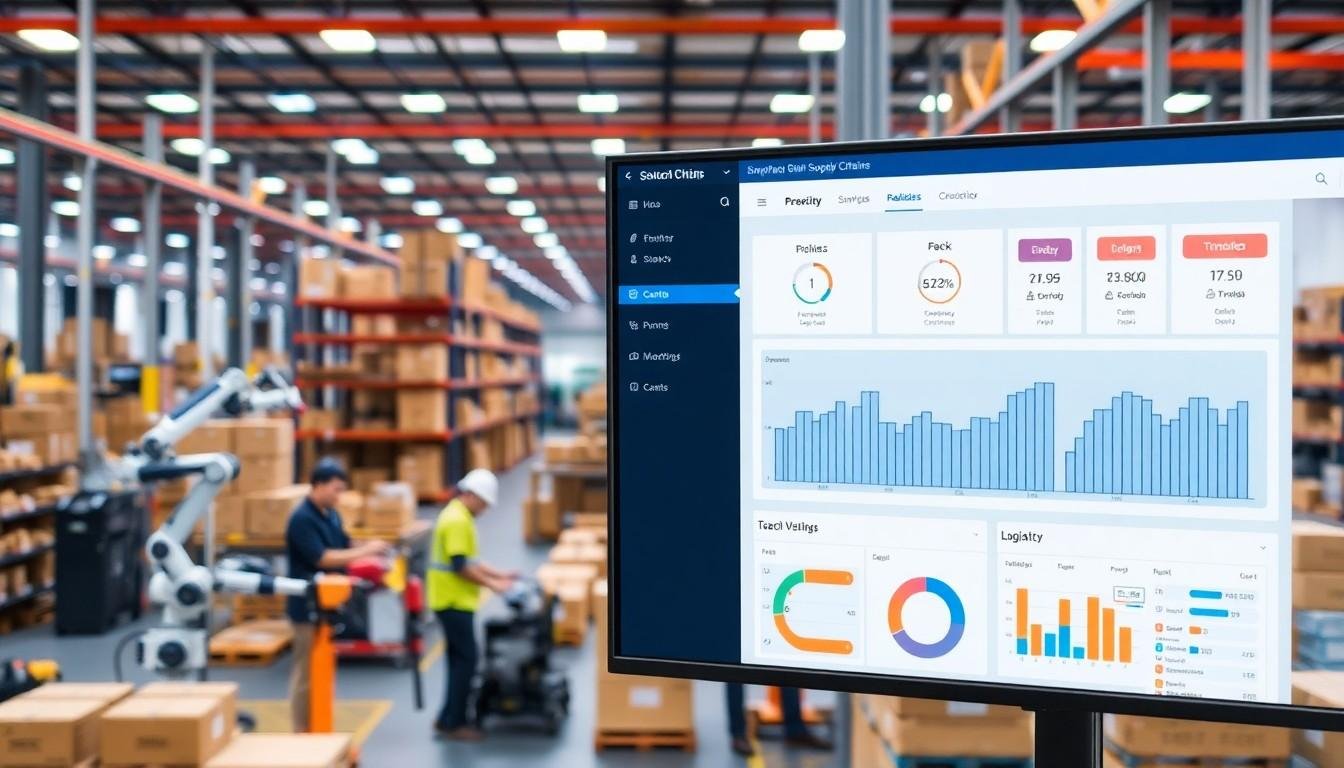
Supplier relationship management is becoming a competitive weapon for manufacturers as procurement teams face volatile supply chains, shifting regulation, sustainability targets and persistent cost pressure. In that environment, the ability to see more clearly across supplier networks, make decisions faster and collaborate more effectively can shape both resilience and performance.
That is the case made by QAD, which says its SRM platform is designed to bring supplier data, sou...
Continue Reading This Article
Enjoy this article as well as all of our content, including reports, news, tips and more.
By registering or signing into your SRM Today account, you agree to SRM Today's Terms of Use and consent to the processing of your personal information as described in our Privacy Policy.
rcing activity and collaboration into one environment. The company argues that replacing spreadsheets, emails and disconnected systems can help procurement teams move beyond administrative tasks and into a more strategic role, particularly as automation and emerging agentic AI tools begin to influence manufacturing operations.
The broader appeal of supplier relationship management software lies in its ability to consolidate supplier onboarding, qualification, RFQs, performance tracking and risk oversight. It can also support ESG and compliance work, while giving procurement teams a more complete view of what is happening across the supply base. Other enterprise software groups, including SAP, GEP and Informatica, make similar claims for their own supplier management tools, pointing to centralised data, stronger collaboration and better decision-making as recurring benefits.
QAD’s latest customer example is Convotherm, a foodservice equipment maker and a brand within Welbilt Deutschland GmbH. According to the company, Convotherm had been relying on manual sourcing methods built around spreadsheets, email chains and fragmented supplier records, which limited transparency and slowed procurement work.
After introducing QAD SRM Supplier Data Management, Sourcing and Collaboration capabilities, the manufacturer says it sharply improved efficiency. The company claims RFQ processing time fell by 90%, from around an hour to about five minutes, while participation widened from roughly five suppliers to as many as 50. QAD also says the implementation delivered a 3.2-times return on investment in the first year and improved compliance and audit readiness.
Stefan Sadler, sourcing leader at Welbilt Deutschland GmbH, was quoted by QAD as saying: “Previously, the tender process took about one hour. In SRM, this process was reduced to a good five minutes. And the quality of prices and suppliers also increased.”
Convotherm is not the only manufacturer cited by QAD as benefiting from the system. In earlier material, the company pointed to KION Group AG, which it said improved RFQ efficiency by 90% and cut spend by 32% using its Auctions tool. QAD has also highlighted other industrial users, including Hanon Systems, Muhr & Bender, Phoenix Contact, Heroal and AVL, as examples of firms using SRM to standardise sourcing, speed up deployment and widen supplier collaboration.
Taken together, the examples reflect a wider shift in manufacturing procurement: from chasing transactions to managing supplier relationships as a source of value. For companies navigating higher uncertainty, the attraction of SRM is not just administrative tidiness but a more controlled, data-driven way of working with the businesses on which production depends.
Source: Noah Wire Services