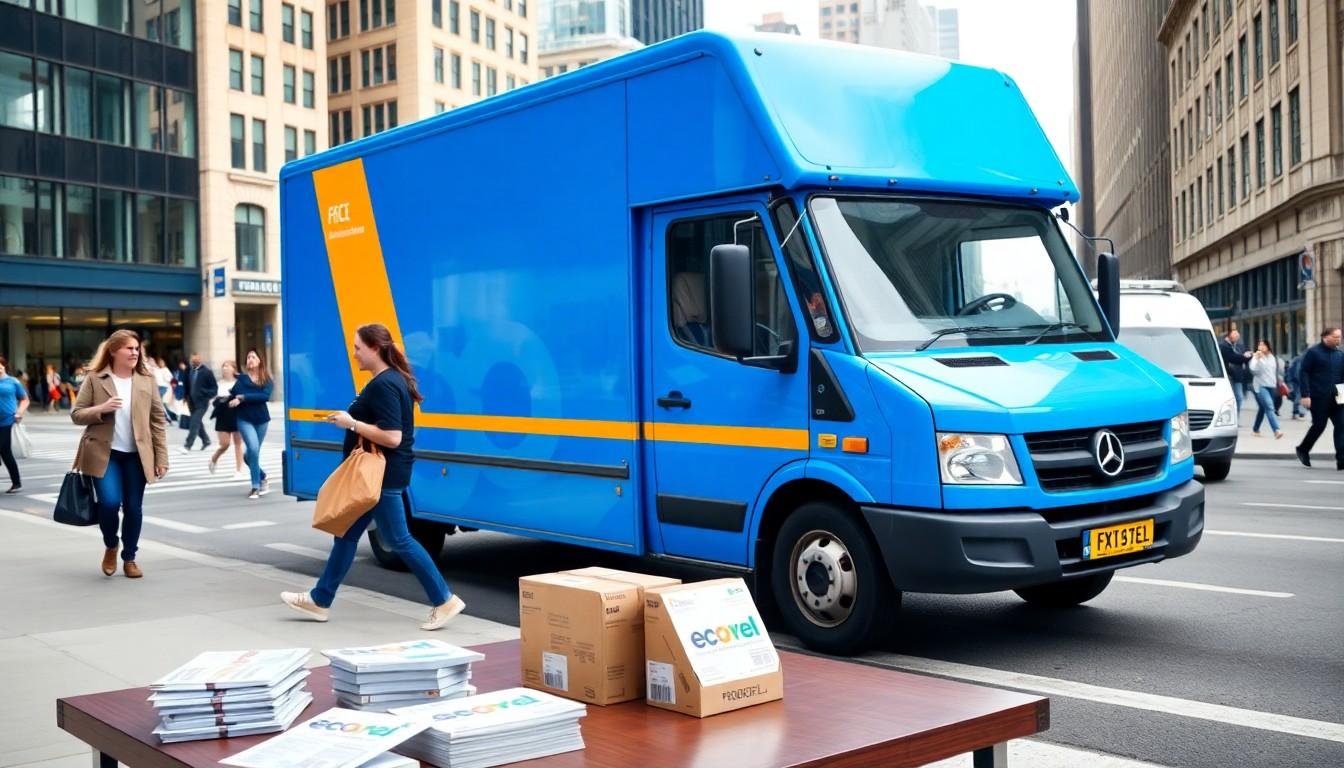
Amazon and Walmart are both pushing beyond their traditional retail roles, signalling a broader reinvention of how major chains expect to make money.
Amazon has launched Amazon Supply Chain Services, opening its logistics network to outside businesses, including firms that do not sell on its marketplace. The service gives companies access to ground and air freight, fulfilment and shipping, while Amazon Freight has also broadened into less-than-truckload deliveries for shippers ...
Continue Reading This Article
Enjoy this article as well as all of our content, including reports, news, tips and more.
By registering or signing into your SRM Today account, you agree to SRM Today's Terms of Use and consent to the processing of your personal information as described in our Privacy Policy.
of any size. Amazon says the aim is to help businesses move goods more quickly and reliably across channels, turning the company’s delivery muscle into a standalone service rather than just a support function for its own retail operation.
Walmart is making a similar move on the media side. In June, the company said it would acquire Vibe.co, a self-serve connected TV advertising platform, building on the advertising business it has been assembling around Vizio and Walmart Connect. Walmart says the deal is intended to make TV advertising easier for small and mid-sized businesses by combining Vibe.co’s tools with its commerce audience data and measurement capabilities.
The common thread is control. For years, retailers focused on efficiency by outsourcing parts of the customer journey. Now the largest players are bringing more of those pieces in-house, whether in logistics, advertising or discovery, in order to own the data and the margin that come with them.
That shift is especially visible at Walmart. With more than 4,600 stores in the United States and a footprint that reaches the vast majority of the population, the company has little room left to grow by simply adding locations. Its advertising arm has become one of the clearest growth engines: Walmart Connect generated $6.4 billion in revenue in its latest fiscal year, up 46 per cent, according to the company’s figures.
Amazon is pursuing a different but related path. Its e-commerce business remains dominant, with a U.S. market share of roughly 37.6 per cent, while its advertising operation produced $68 billion in fiscal 2025, up 22 per cent. Yet the company’s most valuable expansion has increasingly come from businesses built alongside retail rather than inside it. Amazon Web Services generated $128.7 billion in 2025 and accounted for 57 per cent of Amazon’s operating profit, underlining how far the company’s centre of gravity has moved beyond online shopping.
The same logic is shaping other parts of retail. Gap, Sephora and Home Depot have all built creator storefront platforms rather than relying solely on third-party discovery tools. By keeping shoppers inside their own ecosystems, they retain more customer data and more control over how products are promoted.
Physical retail is also still evolving through more traditional routes. Brands continue to experiment with experiential formats such as cafés and lifestyle spaces, while store-within-a-store partnerships remain popular. IKEA has shop-in-shops inside select Best Buy outlets, and Target has partnered with Warby Parker in some locations. Home Depot has also leaned on vertical acquisitions to strengthen its supply chain, buying suppliers and service businesses that support its contractor base.
But the risks of expansion are real. Walmart’s earlier Vudu streaming venture never became a major growth driver, and its retreat from Walmart Health showed how difficult it can be to move into businesses with very different economics. CVS and Walgreens have faced similar problems after expensive bets on primary care clinics and healthcare services ran into reimbursement pressures, operating costs and regulatory complexity.
That caution helps explain why today’s expansion efforts are more tightly linked to each company’s existing strengths. Retail’s new revenue pools , advertising, marketplaces, logistics, sourcing and financial services , already made up 15 per cent of sales and 25 per cent of profits in 2024, according to industry estimates. By 2030, they could represent close to half of sector profits.
For Amazon and Walmart, the message is clear: the store is no longer enough. The winners are likely to be the retailers that can turn their scale, data and infrastructure into multiple businesses at once, while avoiding the temptation to grow into categories that do not fit.
Source: Noah Wire Services