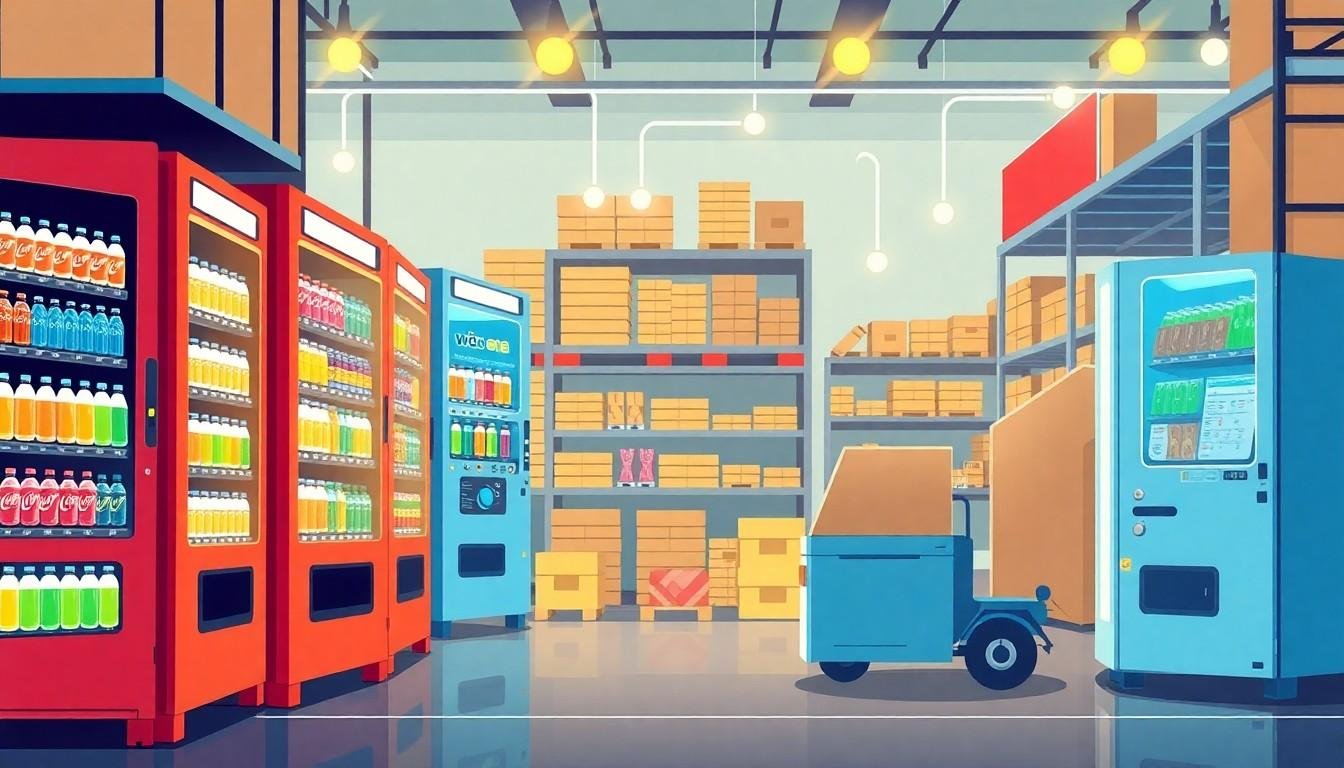
JO ANN INTERNATIONAL GROUP INC. says it is exploring a digital operating model for its smart-retail business, bringing equipment information, stock records, staff actions and supply-chain activity into closer alignment. The company presents the work as a gradual development programme, not as a fully deployed platform, and has not published performance data or detailed technical specifications.
The proposed system would give managers a clearer view of vending equipment across di...
Continue Reading This Article
Enjoy this article as well as all of our content, including reports, news, tips and more.
By registering or signing into your SRM Today account, you agree to SRM Today's Terms of Use and consent to the processing of your personal information as described in our Privacy Policy.
fferent locations, including its operating condition, sales and maintenance needs. JA says this information could help local teams organise inspections, respond to faults and coordinate work across regions. The company profile describes smart vending, digital retail systems, automated operations and supply-chain coordination as areas of focus, while cautioning that these are development directions rather than evidence that every capability is already in service.
The rationale reflects a wider shift in retail technology: connecting systems can be more useful than accumulating standalone tools. Deloitte’s analysis of connected-store operations describes how retailers can link inventory, sales and workforce information, then use that shared view to coordinate staff responses. It also advocates building such capabilities incrementally. That industry perspective helps explain the logic behind JA’s plans, but does not verify that the company has implemented them.
Inventory management is a central part of the proposal. JA says it intends to combine sales and stock data to support replenishment decisions, potentially using alerts when a machine’s supply of a product approaches a preset threshold. Staff would still need to confirm the alert against local demand, equipment conditions and delivery arrangements.
Research conducted in a vending context suggests that forecasting can benefit from more than historical sales alone. A University of Johannesburg study examined machine-learning approaches for predicting stock requirements across a warehouse serving about 1,500 connected vending machines. It reported improved forecasting when contextual factors, including weekdays, holidays and deviations in sales, were included. The findings illustrate the potential of data-led replenishment, but concern a separate research project and do not show that JA uses those methods or has comparable data.
JA also envisages linking operational problems to specific work: low stock could trigger replenishment, equipment faults could be assigned for technical inspection, and delayed deliveries could require supply-chain coordination. The company says future functions may include task creation, staff assignment, progress records and reporting of outcomes. In principle, this would make responsibilities easier to follow; whether it improves efficiency in practice will depend on how reliably information is collected and acted upon.
The company’s broader ambitions include connecting vending equipment with warehouses, transport and local operating teams. Its website identifies Angola as an important starting point for expansion in Africa and describes plans to develop local vending networks. These are company statements about its direction, rather than independently verified evidence of the scale or results of its operations.
Making such connections dependable involves practical foundations as well as analytics. GS1’s guidance on retail and supply-chain architecture explains how consistent product identifiers and structured information can help organisations track goods between sale, storage and delivery. JA has not said that its systems use GS1 standards, but the principles underline why equipment, suppliers and logistics providers need to refer to products and stock movements consistently.
Security is another consideration as connected devices share more information. The US National Institute of Standards and Technology’s guidance for consumer Internet of Things products highlights protections such as controlling access, safeguarding data in transit and on devices, validating information exchanged between components and maintaining secure software updates. JA says it will consider compatibility, permissions, data formats, update frequency and security as its framework develops. No independent assessment of its equipment or safeguards has been supplied.
The company’s stated ambition is to combine equipment management, stock monitoring, staff workflows, data analysis and logistics coordination as its business develops. Its profile and website outline that direction, but do not provide evidence that a complete operating platform is in use or report measurable outcomes. The distinction matters: connected retail systems can support better visibility and coordination, but their value depends on dependable data, secure integration and effective local execution.
Source: Noah Wire Services