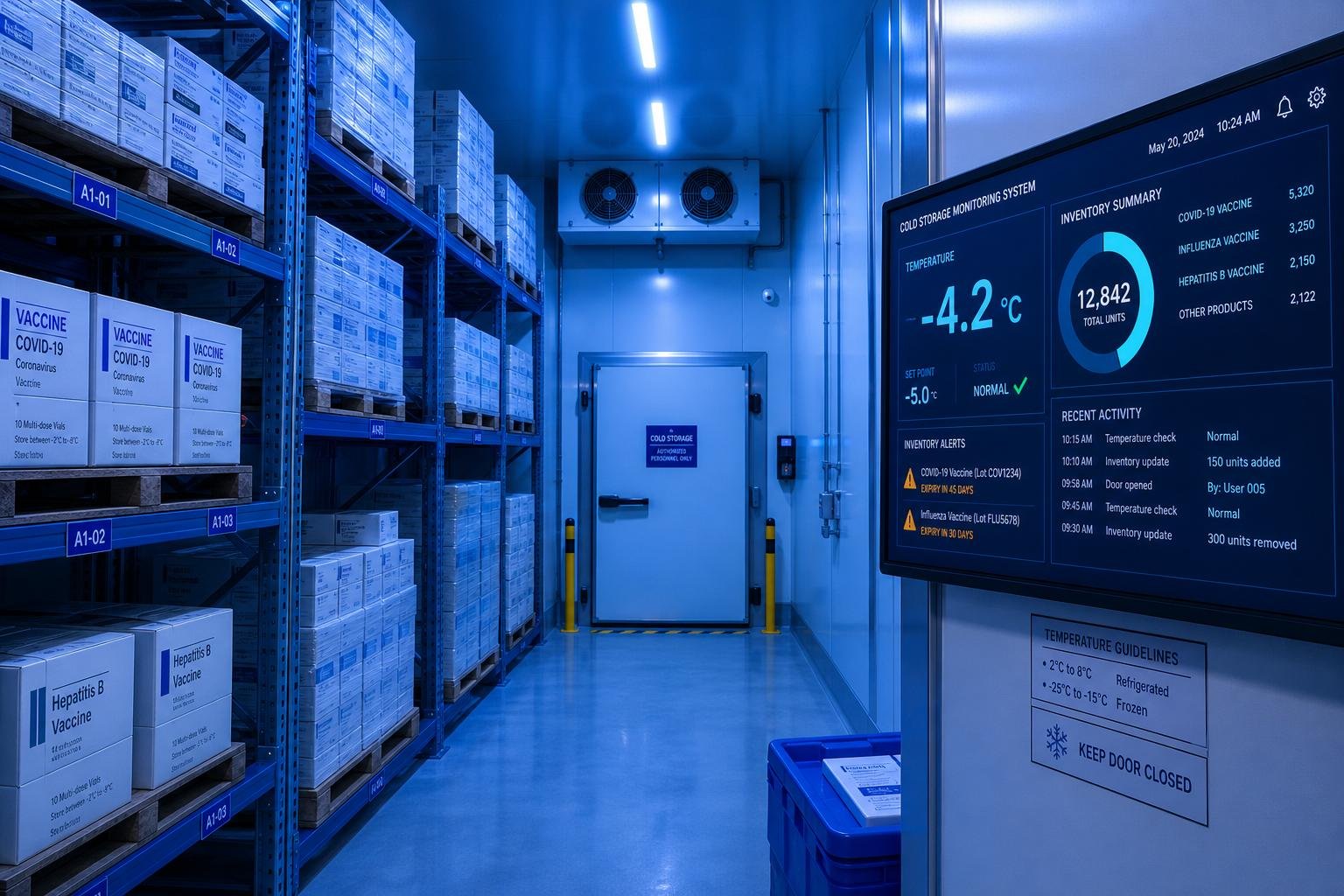
India’s pharmaceutical cold chain is moving into a more demanding phase, shaped by the rise of biologics, vaccines, specialty medicines, cell and gene therapies, and stricter expectations around quality and traceability. The industry’s next decade is likely to be defined less by warehouse expansion alone and more by how well companies, regulators and training bodies can build an ecosystem that combines compliance, digital tools, skilled people and operational discipline.
Th...
Continue Reading This Article
Enjoy this article as well as all of our content, including reports, news, tips and more.
By registering or signing into your SRM Today account, you agree to SRM Today's Terms of Use and consent to the processing of your personal information as described in our Privacy Policy.
at shift is already visible in the wider market. Industry reports on India’s cold chain sector point to strong growth in the years ahead, supported by private investment, public policy and greater demand for temperature-sensitive distribution. At the same time, analysts say the market remains uneven, with infrastructure, utilisation and service standards varying widely across the country. In pharmaceuticals, that imbalance is especially consequential because even brief temperature deviations can affect product safety and efficacy.
The National Accreditation Body for Cold Chain Management, or NAB-CCM, is positioning itself as part of the solution. In its view, the sector needs more than equipment and facilities; it needs a practical forum where industry participants, academia and regulators can work through implementation issues, workforce development and standards for good distribution practice. The body says its focus includes roundtables, training frameworks and knowledge-sharing designed to improve resilience and compliance across the chain.
Execution remains one of the biggest vulnerabilities. Common risks include temperature excursions, inconsistent monitoring, documentation weaknesses and limited accountability in day-to-day operations. As products become more complex and valuable, the industry’s failure points are increasingly operational rather than purely infrastructural. In a country as geographically varied as India, with extreme weather, transport delays, power reliability concerns and uneven awareness across regions, maintaining integrity from plant to patient requires validated packaging, real-time visibility and contingency planning.
Training is emerging as a central issue. The sector’s physical capacity may be expanding faster than its specialist talent base, leaving a gap in workforce competency. That is prompting calls for more structured certification and practical learning, particularly in areas such as handling, risk management and compliance. Observers across the cold logistics space say the same challenge is echoed in adjacent segments, from perishable food to quick commerce, where speed, reliability and service quality are reshaping expectations.
Technology is also altering the picture. Pharmaceutical companies are gradually adopting real-time monitoring, internet-connected devices and digital documentation, but the industry still has room to deepen integration across the supply chain. The next step, according to sector participants, is not simply installing more systems but ensuring data integrity, interoperability and effective use. Artificial intelligence and predictive analytics are likely to play a larger role in route optimisation, excursion prediction, inventory planning and equipment maintenance, helping operators move from reactive firefighting to preventive control.
Sustainability is another pressure point. Cold chain operators are being pushed to reduce emissions and packaging waste without compromising product quality. Reusable packaging, better route planning, energy-efficient refrigeration and passive cooling solutions are expected to gain ground, especially as ESG considerations become more prominent in logistics decisions. The challenge, as industry voices note, is to make the chain greener while preserving the strict temperature discipline that pharma products require.
For NAB-CCM, and for the sector more broadly, the future appears to be one of integration rather than isolated progress. Cold chain resilience will depend on how well technology, regulation, infrastructure, skills and sustainability are brought together. As the body puts it, the next phase will belong to collaborative, implementation-led ecosystems.
Source: Noah Wire Services