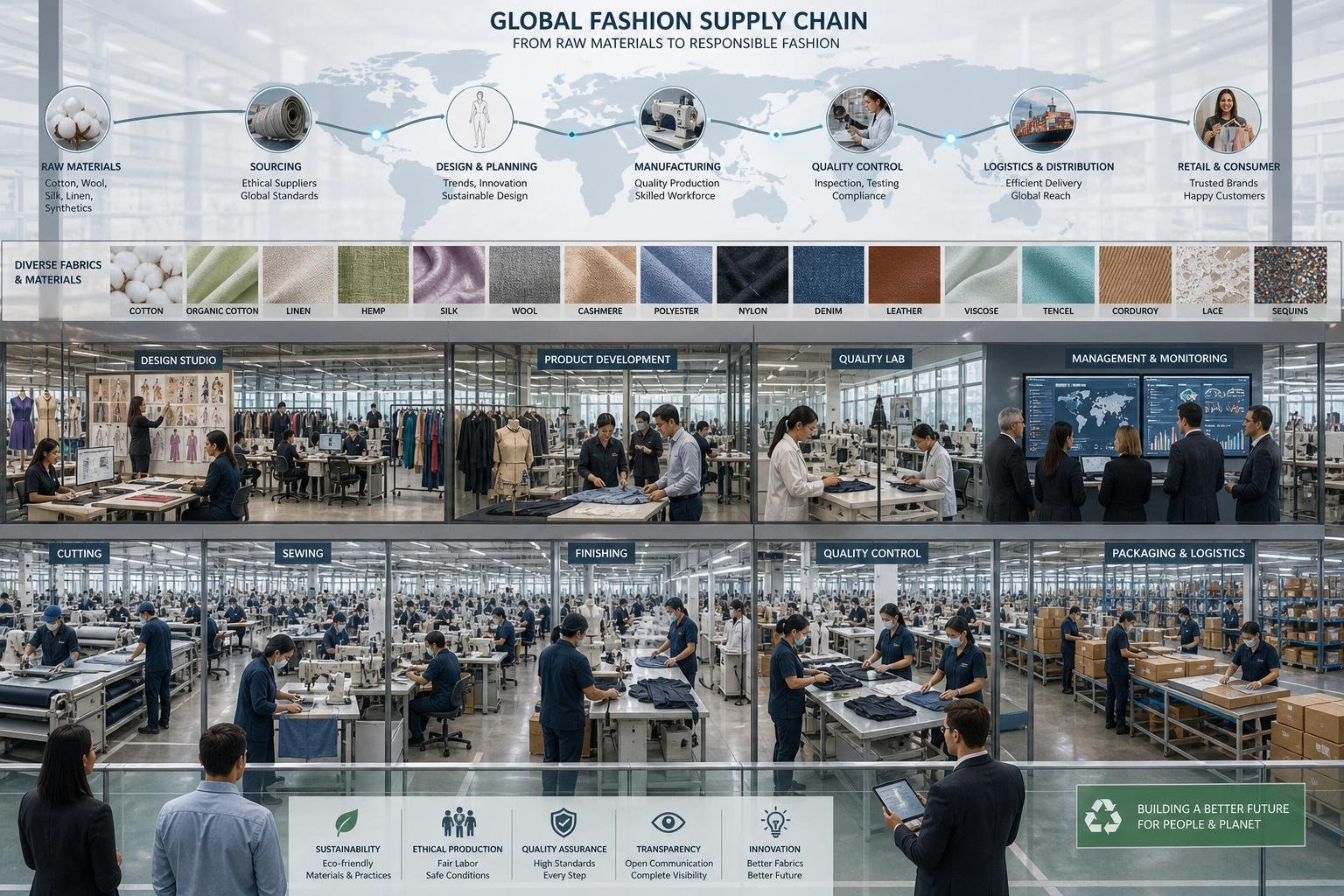
Global sourcing is moving away from informal, relationship-led dealmaking and towards a more controlled model built on visibility, verification and execution. Fashion Sourcing, a Miami-based B2B e-commerce and global procurement company with teams across Asia, is positioning itself within that shift by offering businesses access to a vetted manufacturing network alongside hands-on sourcing support.
The company says its model is designed to tackle one of the long-standing proble...
Continue Reading This Article
Enjoy this article as well as all of our content, including reports, news, tips and more.
By registering or signing into your SRM Today account, you agree to SRM Today's Terms of Use and consent to the processing of your personal information as described in our Privacy Policy.
ms in international manufacturing: the lack of reliable information. Buyers have often had to depend on middlemen or incomplete supplier details when placing orders, leaving them exposed to risks around quality, compliance, cost and delivery. Fashion Sourcing says it aims to replace that uncertainty with structured procurement processes and clearer oversight of each stage in production.
Its network spans manufacturers in China, India, Bangladesh, Pakistan, Vietnam, Thailand, Cambodia, Indonesia, Turkey and Mexico. According to the company, each partner is assessed for capacity, technical capability, standards compliance and operational dependability, giving clients a more evidence-based way to compare options. That approach is intended to help brands judge factories on performance rather than on informal introductions or marketing claims.
The company also argues that access has been a major fault line in sourcing. Large retailers and established brands can often maintain their own procurement teams and factory relationships, while smaller labels and fast-growing e-commerce businesses may struggle to reach the same production ecosystem. Fashion Sourcing says its platform is intended to narrow that gap by giving smaller and mid-sized companies a centralised route into the same global networks, without requiring a large in-house sourcing operation.
That broader trend towards centralisation is visible elsewhere in the sector. Frontaddress, another B2B fashion platform, says it connects wholesalers, retailers and brands through digital showrooms, order management and analytics. OS Group has taken a similar route in wholesale inventory, offering merchants a single platform for sourcing, orders and inventory management. Together, these businesses reflect an industry-wide push to make buying, selling and fulfilment less fragmented.
Fashion Sourcing says its own system is hybrid rather than fully digital. It uses RFx workflows and procurement tools to organise supplier selection, while also relying on local sourcing teams in manufacturing regions to monitor production, inspect goods and resolve problems on the ground. That combination of software and physical oversight is increasingly important in an industry where factories, materials and transport routes can change quickly.
The company’s pitch is also rooted in supply chain resilience. With trade policy shifts, regional bottlenecks and wider disruptions continuing to affect manufacturing, many businesses are looking for ways to spread risk across several countries. Fashion Sourcing says its footprint across Asia and parts of Latin America allows clients to diversify production based on price, capability, lead times and risk profile.
Quality control remains a major part of that promise. Rather than treating inspection as a final checkpoint, Fashion Sourcing says it builds quality assurance into the full production cycle, including factory audits, material review, in-line monitoring, pre-shipment checks and compliance verification. The company argues that early intervention reduces defects and improves consistency before products leave the factory.
Its offering also extends beyond sourcing alone. The company says it supports product development, factory selection, production management, quality control, freight coordination and cross-border logistics, giving clients a more complete view of their supply chain. That end-to-end structure is intended to reduce the burden of managing multiple vendors across different countries and stages of production.
Fashion Sourcing also highlights leadership as part of its identity, with Laurent Gabay fronting a model focused on execution, transparency and longer-term supplier relationships. The company presents itself less as a transactional intermediary and more as an operational partner for brands seeking to scale manufacturing with greater control.
For an industry long shaped by opacity, the message is clear: the future of global sourcing will be judged not just by reach, but by how well it can combine verified supplier access, local execution and dependable visibility from order to delivery.
Source: Noah Wire Services