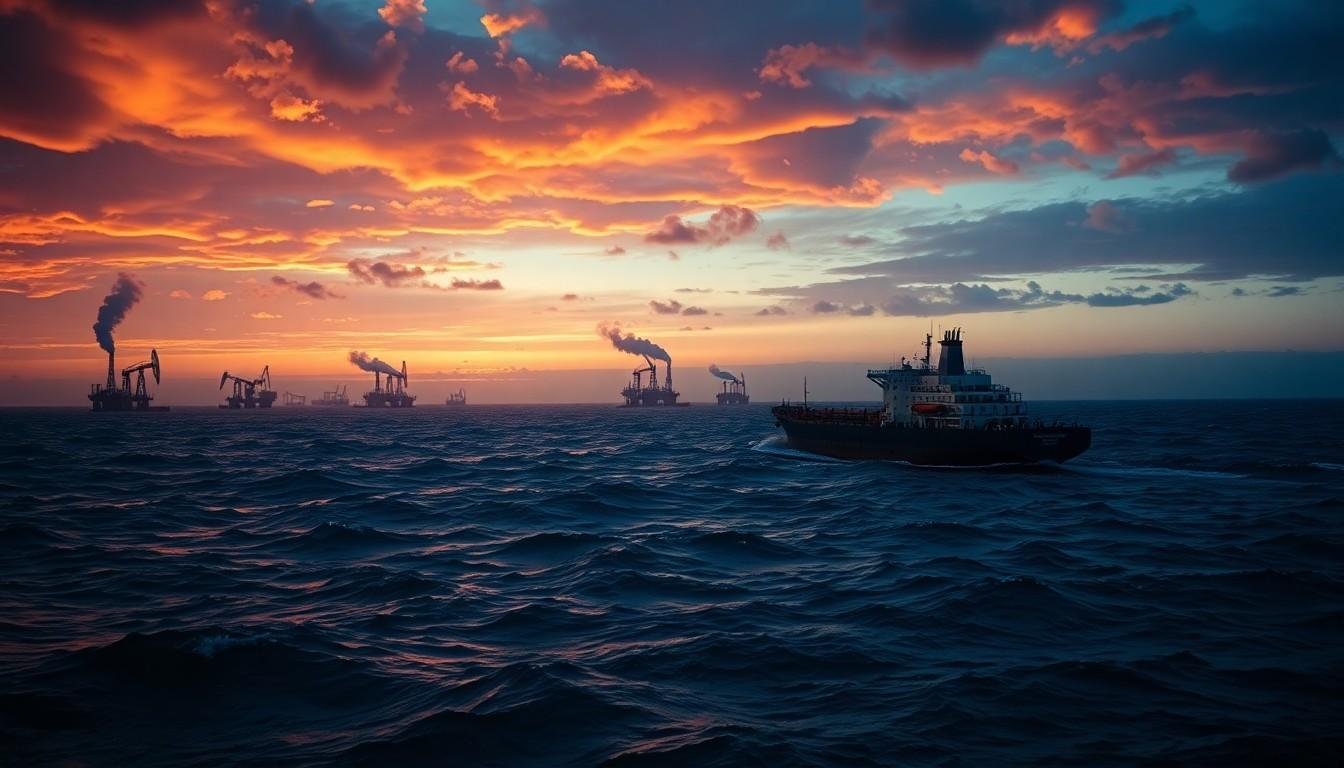
As oil prices pushed higher again on Tuesday and Tehran signalled fresh restrictions around the Strait of Hormuz, Donald Trump claimed the conflict would eventually deliver the opposite result at American forecourts. In a Truth Social post on Monday, the US president said oil would fall sharply once Washington “WIN[s] the war with Iran” and predicted pump prices, which he put at about $3 a gallon, would ultimately slip below $2. AP reported on Tuesday that Brent crude had ...
Continue Reading This Article
Enjoy this article as well as all of our content, including reports, news, tips and more.
By registering or signing into your SRM Today account, you agree to SRM Today's Terms of Use and consent to the processing of your personal information as described in our Privacy Policy.
risen to $98.48 a barrel in early European trading, while Iranian officials were talking about a new “exclusion zone” linked to the waterway. (
trumpstruth.org)
That forecast is at odds with the way markets have been behaving. Axios reported on 3 September that Brent had climbed back to about $95 from the low $80s a month earlier, benchmark diesel futures had reached a record $4.73 a gallon and the US 10-year Treasury yield was hovering near 4.8% as investors worried that energy costs were feeding inflation. Associated Press market reports have described the same pattern, with oil rising alongside bond yields and Wall Street growing more anxious that dearer fuel will keep price pressures elevated. (axios.com)
Trump is not the only administration figure arguing that prices could collapse if the war ends on Washington’s terms. Fox News reported on Sunday that Treasury Secretary Scott Bessent said crude could fall to $40 to $50 a barrel once the conflict is over and supply returns, while describing “the greatest economic isolation operation in the history of the world”. The network presented the remark as part of the administration’s public case for its blockade-and-sanctions strategy, rather than as an outside market forecast. (foxnews.com)
The broader policy is a mix of economic strangulation and periodic military escalation. In an AP dispatch carried by ABC News, Trump said last week that he did not expect the conflict to last “much longer”, even as his administration pressed ahead with “Operation Economic Outcast” and kept up the threat of further force. Secretary of State Marco Rubio said the price Iran would pay would be mainly economic, “but we reserve the right … to take military action when necessary”. The same report said reopening the Strait of Hormuz fully had become one of Washington’s main objectives; before the war, about one-fifth of the world’s oil moved through it. (www-cdn.abcnews.com)
At sea, that pressure campaign has moved well beyond rhetoric. CENTCOM said it began blockading maritime traffic into and out of Iranian ports on 13 April. In a 2 June release, the command said a US aircraft fired a Hellfire missile into the engine room of the Botswana-flagged M/T Lexie as it headed towards Kharg Island after ignoring repeated warnings over 24 hours. At that stage, during what CENTCOM described as a ceasefire period, the US military said it had disabled six commercial vessels and redirected 122 others. AP later reported that the blockade had been reimposed after negotiations collapsed, helping to explain why more recent totals cited by the agency were lower than CENTCOM’s June count. (centcom.mil)
A later enforcement action proved even more contentious. According to AP, the Palau-flagged M/T Settebello, described by a US official as part of a shadow fleet used to move Iranian oil and evade sanctions, ignored nearly 60 verbal warnings, eight shows of force including flares and flyovers, and two final warnings before an American aircraft struck its engine room. Indian officials said three Indian sailors were killed. New Delhi lodged what its foreign ministry called a “strong protest”, while Rubio told his Indian counterpart that commercial vessels should comply with US orders in the strait. (apnews.com)
Iran, for its part, has answered with threats of its own. After the US struck three Iranian tankers on Saturday in response to ballistic missiles fired at American warships, Mohsen Rezaei, the head of Iran’s Supreme National Security Council, said Tehran would soon announce an “exclusion zone” that would start from the line of the US blockade and extend towards the strait and into the Gulf. On Monday, Iranian state media said an upgraded ballistic missile showed Tehran would act against a threat “even before it is carried out”. Both sides have claimed effective control over the waterway, one of the world’s most sensitive energy chokepoints. (apnews.com)
The economic damage is now visible far from trading screens. Reporting from Bandar Abbas, AP found a port city where the waterfront had fallen quiet under renewed blockade conditions. A dock worker, Mohammad Torabian, said as many as 50 trucks carrying food and meat had once unloaded there each day and that about 500 people had previously made a living around the dock. Mahsa Shojaei, an accountant with a customs-clearing company, said 80 to 90 per cent of her workload had disappeared. Mehrdad Jahangiri, who sells children’s clothing, said sales were down by about half from the same period last year as families cut back on the usual spending before schools reopen later this month. (apnews.com)
Trump’s promise of sub-$2 petrol therefore asks voters and traders to believe not only in a clear US victory, but in a rapid reopening of supply routes and a flood of oil back into the market. For now, the signals point the other way. Brent is again near $100, Houthi attacks on Tuesday set fires at Saudi energy facilities, and Reuters reported that analysts were raising their forecasts on the assumption that Middle East shipping disruption could last into 2027. That makes the president’s post sound less like a reading of current conditions than a wager on an endgame that the market has yet to see. (apnews.com)
Source: Noah Wire Services