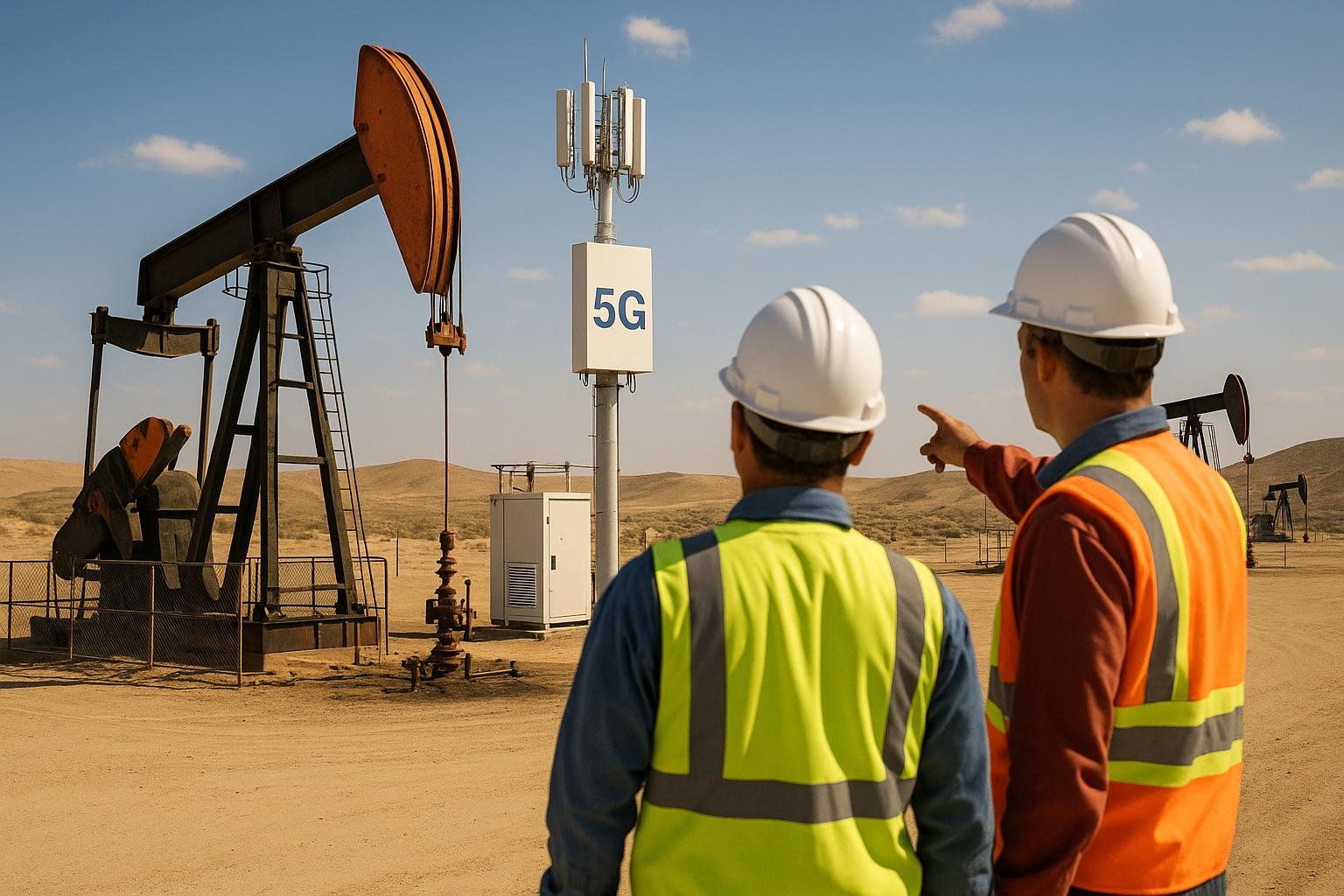
As the energy industry pushes deeper into digital operations, the case for smart oil fields is becoming harder to ignore. Real-time data, automation and advanced analytics can lift efficiency and improve safety, but only if they sit on a resilient industrial network. Without that foundation, digital tools can be underused, delayed or simply unable to support mission-critical work.
Ericsson is positioning its Smart Oil Field Maturity Assessment as a way for operators to judge ho...
Continue Reading This Article
Enjoy this article as well as all of our content, including reports, news, tips and more.
By registering or signing into your SRM Today account, you agree to SRM Today's Terms of Use and consent to the processing of your personal information as described in our Privacy Policy.
w far along that journey they really are. The tool reviews existing systems and workflows, then maps strengths, weaknesses and priority gaps into a practical roadmap for investment and change. According to Ericsson, the aim is to help companies move from ambition to execution without outpacing the underlying infrastructure.
The logic is straightforward. Smart oil fields depend on connected systems that can monitor operations continuously, support remote control and diagnostics, and automate tasks across dispersed sites. In practice, that can mean better visibility, faster responses and fewer manual interventions. It can also reduce exposure to hazardous environments, while early risk detection and stronger cyber and physical safeguards improve safety. Predictive maintenance, meanwhile, can help cut downtime and extend the life of equipment.
But these gains are only realistic if connectivity is robust, secure and responsive enough to handle industrial workloads. Ericsson says that is why operators need to assess whether current networks can support real-time monitoring, predictive alerts and automation in demanding environments before committing to large-scale digital projects.
The assessment is designed to examine four areas: organisational maturity, technical capability, production optimisation and workforce readiness. It then produces a tailored report with a digital maturity score, recommended next steps and an action plan intended to support business cases and investment decisions.
That kind of benchmarking can matter as much as the technology itself. If teams do not share a common view of where the business stands, digital projects can become fragmented or compete for budget. A clearer baseline can also sharpen conversations with suppliers, especially when companies are evaluating whether private network investments should come before, or alongside, analytics and automation programmes.
Ericsson has been making a broader case for private 4G and 5G networks as the connectivity layer that can link IT and operational technology in the oilfield. In recent blog posts, the company has argued that legacy networks often struggle to meet the speed and reliability required by AI, automation and remote operations. It has also said private 5G can provide the consistent performance needed across challenging industrial sites.
The company says it has deployed mission-critical networks for oil and gas operators in markets including Malaysia, Qatar and the UAE, and argues that this experience gives it an edge in helping customers modernise safely. For operators, the more immediate question is less about technology slogans than sequencing: what should be upgraded first, what can wait, and which investments will unlock the greatest operational return.
In that sense, the maturity assessment is as much a planning tool as a diagnostic one. Its promise is not only to identify where an organisation stands, but to show what needs to happen next in order to build a smarter, safer and more scalable digital oil field.
Source: Noah Wire Services