A double victory by the little-known Chinese motorcycle maker ZXMOTO in Portugal at the end of March has become an unlikely symbol of a broader shift in China’s industrial story. The wins in the World Supersport category of the Superbike World Championship ended a long run of dominance by established international brands and drew attention to the depth of China’s manufacturing base and supply chains.
That example comes as Beijing is trying to move the sector beyond size alo...
Continue Reading This Article
Enjoy this article as well as all of our content, including reports, news, tips and more.
By registering or signing into your SRM Today account, you agree to SRM Today's Terms of Use and consent to the processing of your personal information as described in our Privacy Policy.
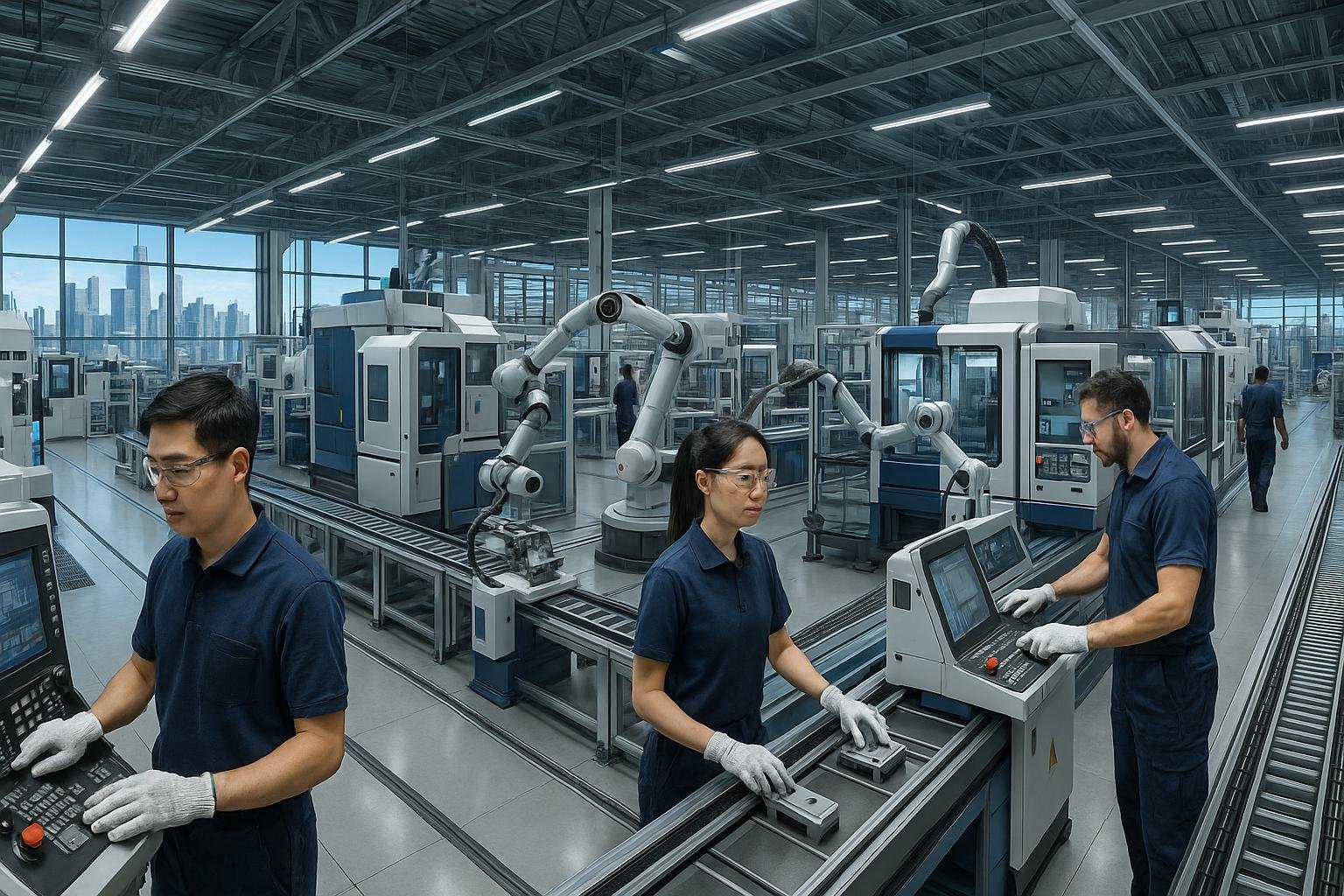
ne. China has remained the world’s largest manufacturing hub for 16 consecutive years, but policymakers are now placing fresh emphasis on advanced production, resilience and technological sophistication as the country enters the 15th Five-Year Plan period from 2026 to 2030.
The plan calls for a stronger manufacturing share in the economy and for a modern industrial system led by higher-end production. The Ministry of Industry and Information Technology says the focus will be on closing weak links, building on areas of strength and developing early advantages in strategic sectors. Xin Yongfei, an expert at the China Academy of Information and Communications Technology, said the sector already has both scale and an innovation base, and that the next phase is about moving from catching up to standing alongside, and in some areas leading, global rivals.
Local governments are also pitching in. Hunan province is backing major projects to build an advanced manufacturing base, Shanghai is promoting the “Made in Shanghai” brand, and Chongqing is seeking to position itself as a major industrial centre.
The change is visible in places such as Beijing’s Yizhuang district, where humanoid robots are being trained for a half-marathon and some can now reportedly run at speeds of up to six metres per second. The scene reflects a broader push towards smarter, greener and more sophisticated production.
China has also unveiled domestically developed T1200-grade ultra-high-strength carbon fibre, which officials and researchers describe as the strongest industrially produced version of its kind in the world. Chen Qiufei, the lead researcher behind the material, said it would help make large aircraft lighter, extend the reach of deep-space missions and improve the range of electric vehicles.
Companies are increasingly trying to earn more from services and integrated systems rather than just hardware. DJI, best known for drones, now provides agricultural plant-protection solutions, with related service revenue accounting for more than 30% of its total. Sunwoda, a battery maker, has built a six-dimensional maglev production line and a digital twin system to improve its own efficiency, and is now selling smart manufacturing solutions to other firms.
The data suggest that the industrial upgrade is gathering pace. In the first two months of 2026, value-added output from high-tech manufacturers rose 13.1% from a year earlier, while equipment manufacturing increased 9.3%. More than 30% of major manufacturers have now adopted artificial intelligence technology, and the country has established more than 8,300 green factories.
Openness is part of the same strategy. BASF’s huge Verbund complex in Zhanjiang, in Guangdong province, has begun production, marking what Chinese officials describe as the largest single investment by a wholly owned German enterprise in China. At the same time, Zoomlion has opened its first European smart factory in Tatabanya, Hungary, to provide faster delivery and more localised support for customers across the continent.
China has removed all foreign investment restrictions in manufacturing, while exports of high-tech and high-value-added mechanical and electrical goods reached 2.89 trillion yuan in the first two months of the year, up 24.3% year on year. With global economic and political uncertainty still elevated, Beijing is presenting manufacturing not just as a pillar of domestic growth, but as a platform for deeper international cooperation.
Source: Noah Wire Services