


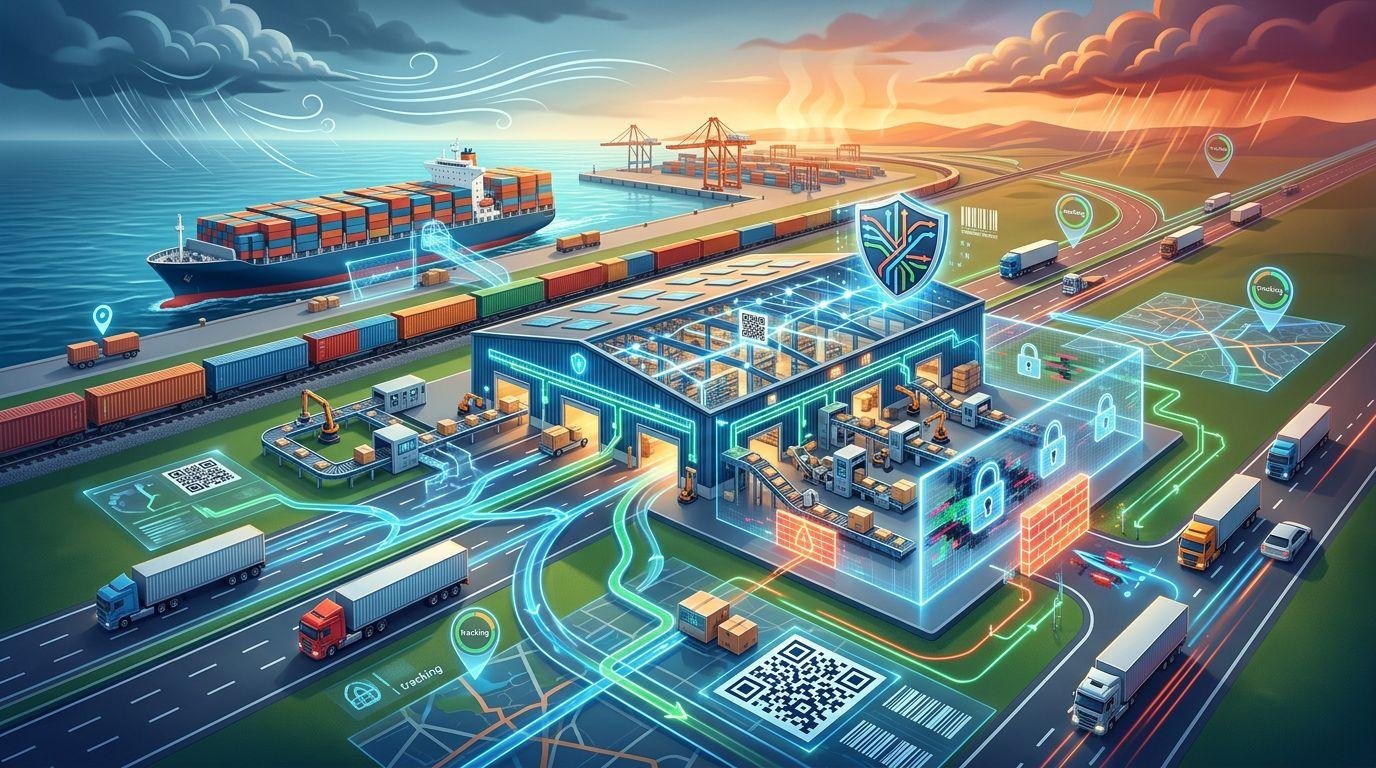
For e-commerce businesses, supply chain risk management has shifted from a back-office discipline to a core commercial priority. Industry surveys suggest many organisations still lack confidence in their ability to manage those risks effectively, even as disruption has become a permanent feature of global trade. Fuel shortages, port congestion, supplier instability and geopolitical shocks have all shown how quickly a weak link can interrupt sales, delay deliveries and erode customer t...
Continue Reading This Article
Enjoy this article as well as all of our content, including reports, news, tips and more.

By registering or signing into your SRM Today account, you agree to SRM Today's Terms of Use and consent to the processing of your personal information as described in our Privacy Policy.
At its simplest, supply chain risk management is the process of identifying where disruption might occur, assessing how serious that disruption could be and putting controls in place to reduce the damage. In e-commerce, where stock availability and delivery speed are central to the customer experience, the stakes are particularly high. A missed shipment is not just an operational issue; it can mean abandoned baskets, refund requests and lasting reputational harm.
The risks are varied and can come from both outside and within the business. External pressures include sudden changes in consumer demand, failures in raw material supply, political instability and environmental events. Internal risks are no less important: production breakdowns, forecasting errors, reporting mistakes and weak contingency planning can all cause problems before an item even reaches a warehouse. The broader lesson is that supply chain fragility is rarely caused by one factor alone. More often, it is the result of several vulnerabilities building up at once.
Academic research published in ScienceDirect has found that e-commerce supply chains are often more exposed than those in more traditional sectors, largely because they depend so heavily on technology, coordination and fast-moving fulfilment. The study highlights the value of real-time tracking and GPS-enabled systems in reducing losses when disruption occurs, while also noting that the field still needs broader research into the full range of risks facing online retailers. That point matters because the modern e-commerce model depends on many moving parts working together without much room for error.
The COVID-19 pandemic offered a stark demonstration of what happens when those parts fail simultaneously. Lockdowns, labour shortages and transport restrictions disrupted procurement and delivery networks around the world. Businesses that had relied on tightly optimised but inflexible systems found themselves unable to source stock or meet demand. The result was not only slower fulfilment but, in many cases, a direct hit to customer loyalty. The episode underlined the importance of resilience as well as efficiency.
More recently, cyber risk has emerged as one of the most pressing threats to supply chains. A 2026 report from Risk Ledger found that 82% of UK organisations experienced at least one supply chain cyber incident over the previous year, and companies took an average of 1.9 days to work out how their supplier networks had been affected. That delay is significant in a business environment where speed of response can determine whether a breach is contained or escalates. Separate research cited by CyberSmart also found that 43% of managed service providers reported third-party vendor-linked incidents in the past year, while more than half were not actively monitoring supply chain risks. Together, those findings suggest many firms are still struggling to keep pace with the complexity of their supplier ecosystems.
Against that backdrop, visibility is one of the most valuable defences. Businesses that can monitor inventory, transport, supplier performance and order status in real time are far better placed to spot anomalies early and act before a delay becomes a crisis. Analytics can help identify patterns in demand and expose weak points in the network, allowing managers to make better-informed decisions. In practice, this means less guesswork and more control, particularly when conditions change quickly.
Automation is another important layer of protection. By reducing manual processing in areas such as order handling, stock updates and inventory reconciliation, businesses can lower the risk of human error and speed up routine tasks. That can cut costs, improve accuracy and help maintain service levels during periods of pressure. For online retailers competing on delivery expectations, those gains can be decisive.
Agility matters just as much. E-commerce businesses that rely on a single warehouse, a single carrier or a narrow supplier base are more exposed when disruption hits. Diversifying fulfilment routes, using multiple distribution centres and setting more responsive inventory thresholds can make it easier to adapt to changing demand or shipping constraints. The goal is not merely to withstand disruption, but to keep operating while competitors are forced to pause.
Forecasting also remains central to resilience. Better demand planning allows companies to align procurement with realistic sales expectations, avoiding both stockouts and overstocking. With advanced analytics and a clearer view of market trends, businesses can adjust purchasing volumes more precisely and reduce the risk of being caught out by sudden shifts in consumer behaviour. This is especially important in sectors where seasonal demand or promotional activity can create sharp spikes in orders.
Third-party logistics providers can play a major role in all of this. A well-equipped 3PL can provide warehousing, fulfilment, carrier management and systems integration that would be difficult for many e-commerce businesses to build in-house. By spreading shipping across multiple carriers, improving route selection and supporting cross-border trade, these providers can reduce dependence on any single part of the network. They can also help businesses expand internationally by managing customs-related complexity and simplifying delivery across markets.
Omnichannel fulfilment is another area where outside logistics support can make a difference. As retailers sell through websites, marketplaces and wholesale channels at the same time, the challenge is not just moving goods but coordinating them. Integrated software and API-based connections can bring order, inventory and shipping data into one place, reducing confusion and making it easier to keep promises to customers and retail partners alike. For firms serving business buyers as well as consumers, the ability to handle wholesale orders accurately is equally important.
Warehouse systems and freight tools can also improve resilience. Real-time warehouse management helps businesses understand exactly what is in stock and where it is located, which reduces the chances of picking errors or fulfilment delays. Freight services can further stabilise international movement, especially when combined with more sophisticated planning and visibility tools. In a sector where margins can be thin and customer expectations high, these operational advantages are not trivial extras; they are part of the competitive foundation.
The broader message is clear. Supply chain risk management in e-commerce is no longer about planning for rare disruptions. It is about building a business that can absorb shocks, respond quickly and continue serving customers when conditions change. For online retailers, resilience is now inseparable from growth. Those that invest in visibility, automation, forecasting and trusted logistics partners are better positioned not only to avoid disruption, but to turn reliability into a commercial advantage.
Source: Noah Wire Services
Subscribe to Industry Updates
Get the latest news and updates directly to your inbox.

