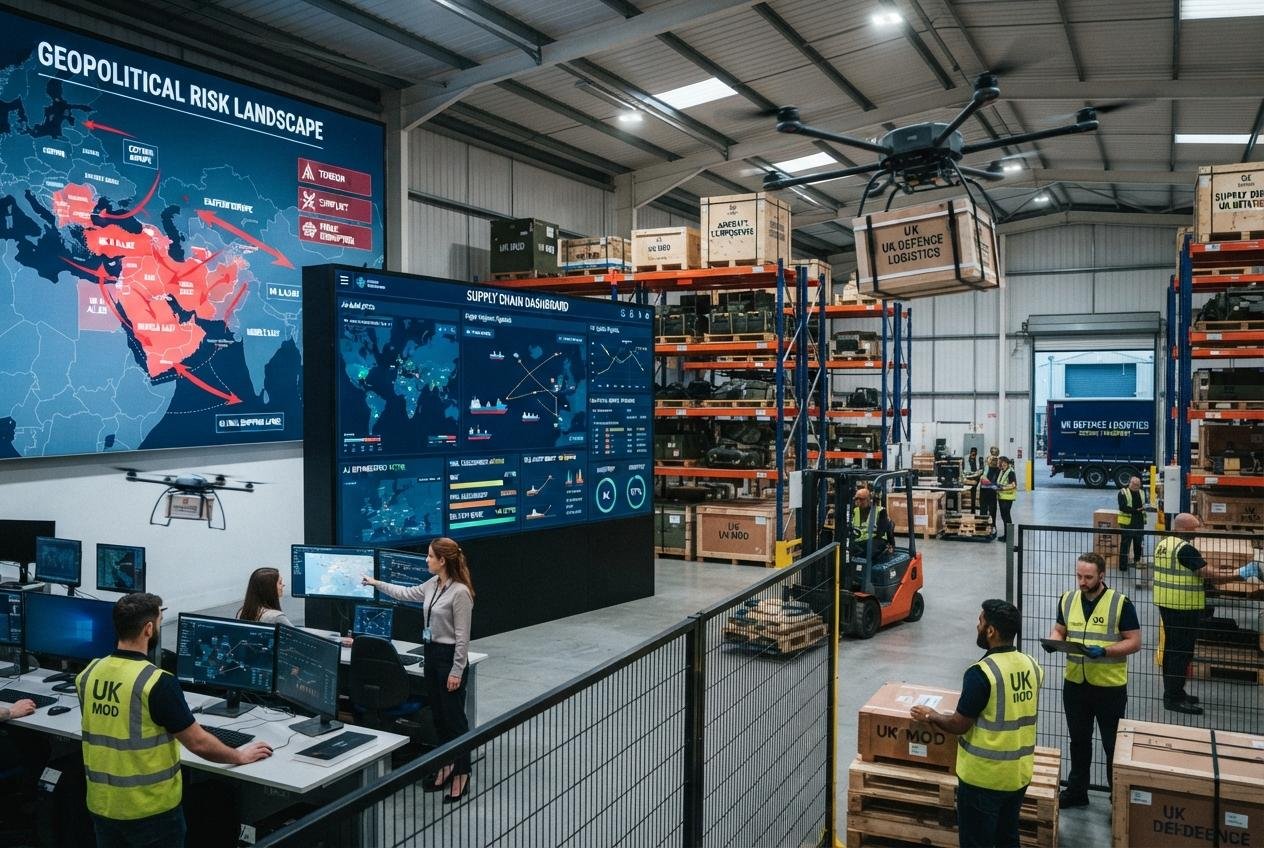
Defence supply chains have been redefined over the past three decades, moving away from narrow cost efficiency and towards a model built around resilience, visibility and speed of response. Torus Defence Supply Chain, the alliance formed by Accenture, Amentum, GXO and Maersk, said the change reflects a sector that no longer sees logistics simply as a support function, but as a core contributor to operational advantage.
That shift has accelerated sharply in the 2020s. The UK Min...
Continue Reading This Article
Enjoy this article as well as all of our content, including reports, news, tips and more.
By registering or signing into your SRM Today account, you agree to SRM Today's Terms of Use and consent to the processing of your personal information as described in our Privacy Policy.
istry of Defence set out a new Defence Supply Chain Strategy in 2022 after concluding that years of prioritising savings had left the system too exposed to shocks, from the pandemic to geopolitical disruption. Since then, the emphasis has been on building networks that can adapt under pressure rather than merely operate efficiently in peacetime.
The issue has become more urgent as governments prepare for a more contested security environment. In April 2026, the Ministry of Defence carried out a major war-game exercise with defence companies to test whether supply chains could function under sustained conflict. Ministers said the findings would shape policy and support the Armed Forces with the equipment and supplies they need, while also feeding into a broader £270 billion defence investment programme across the current parliament.
Industry groups argue that this is not just about stockpiling more goods, but about redesigning the whole system. Ralph Eberspaecher of 4flow has said resilience in defence means maintaining delivery under severe disruption and restoring capability quickly when systems are stressed. He warned that a network optimised for calm conditions does not automatically stand up in crisis.
Technology is central to that effort. Torus said artificial intelligence, especially predictive and agentic tools, is now helping defence organisations make faster decisions, automate routine tasks and cut costs by around 10 to 15%. Digital twins, integrated data platforms and advanced analytics are also improving forecasting and giving operators a clearer view of inventories and movements across the chain.
That visibility matters more than ever. Smart tracking across supplies can help commanders and suppliers know where critical equipment is, how it is moving and whether it will reach the right place at the right time and in the right condition. The result, proponents say, is a more agile system capable of reacting to changing mission demands and geopolitical shocks.
Yet the growing use of digital systems has brought new weaknesses too. Greater connectivity has widened the cyber threat surface, meaning resilience now depends on protecting information as well as moving material. Torus said the sector has become stronger through diversification and digitalisation, but that resilience remains uneven and must be continuously improved.
Sustainability has also moved up the agenda. What was once treated as a secondary issue is now being measured alongside cost, service and resilience, as rising energy prices, emissions targets and regulatory pressure reshape procurement and distribution decisions.
The wider lesson, according to Torus, is that lean systems can become fragile systems if they rely too heavily on efficiency alone. The next stage for defence logistics, it said, will be to balance robustness with speed, underpinned by strong data foundations and closer collaboration between industry partners.
Source: Noah Wire Services