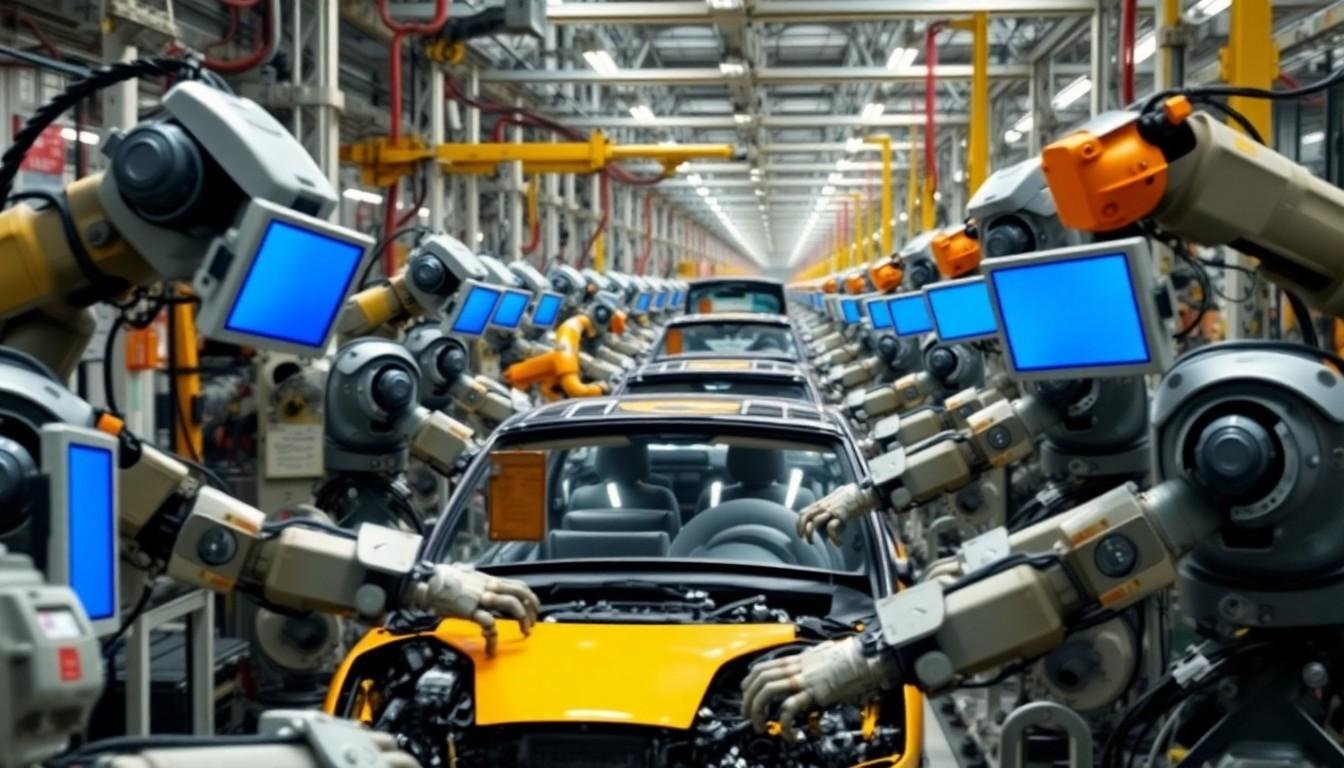
General Motors is stepping up pressure on its suppliers to automate more of their production lines, in a move that could reshape the company’s supply chain and accelerate the use of robotics and artificial intelligence across the auto industry.
The centrepiece of the effort is GM’s Overall Automation Maturity Index, known internally as OAMI, a framework the company began rolling out in March by sending suppliers a survey asking them to assess how far their operations have p...
Continue Reading This Article
Enjoy this article as well as all of our content, including reports, news, tips and more.
By registering or signing into your SRM Today account, you agree to SRM Today's Terms of Use and consent to the processing of your personal information as described in our Privacy Policy.
rogressed towards automation. The review is broad, covering the full manufacturing chain from purchasing raw materials through production and final delivery. In some cases, GM is also said to be inspecting supplier plants directly.
According to reporting from Crain’s Detroit, the company has set a target of 4.5 on a five-point scale that ranges from manual production to smart-factory or adaptive automation. Supplier executives quoted by Crain’s said the expectation is that vendors will work towards that standard if they want to protect future business, even though GM says the programme is not a formal mandate and does not come with a fixed deadline.
MarkLines reported that GM presents OAMI as a way to modernise operations and encourage the adoption of smart factories and adaptive automation throughout its supply base. The automaker says the goal is to build a more resilient and world-class network, although the push raises obvious questions about the impact on factory employment as more tasks are handed to machines.
The initiative comes as GM is also advancing its own autonomous-technology work. In March 2026, the company said it had begun supervised public-road testing of next-generation automated systems on limited-access highways in California and Michigan, using more than 200 manual and supervised development vehicles in live traffic with trained test drivers ready to intervene. GM said the data gathered from those vehicles will improve its artificial intelligence driving models and system robustness.
The automaker has described that programme as part of a wider plan to bring automated driving features into personal vehicles at scale, across both petrol and electric platforms. Together, the supplier push and the road-testing programme underline how aggressively GM is trying to embed automation across both its products and its manufacturing base.
GM is also hiring for the effort. A recent job posting for a senior automation maturity specialist shows the company wants a dedicated figure to assess supplier automation levels, shape improvement strategies and work with suppliers to close gaps, suggesting the initiative is being treated as a sustained operational priority rather than a short-term campaign.
For suppliers, the message appears clear: investment in automation may increasingly influence their standing with one of the world’s largest carmakers.
Source: Noah Wire Services