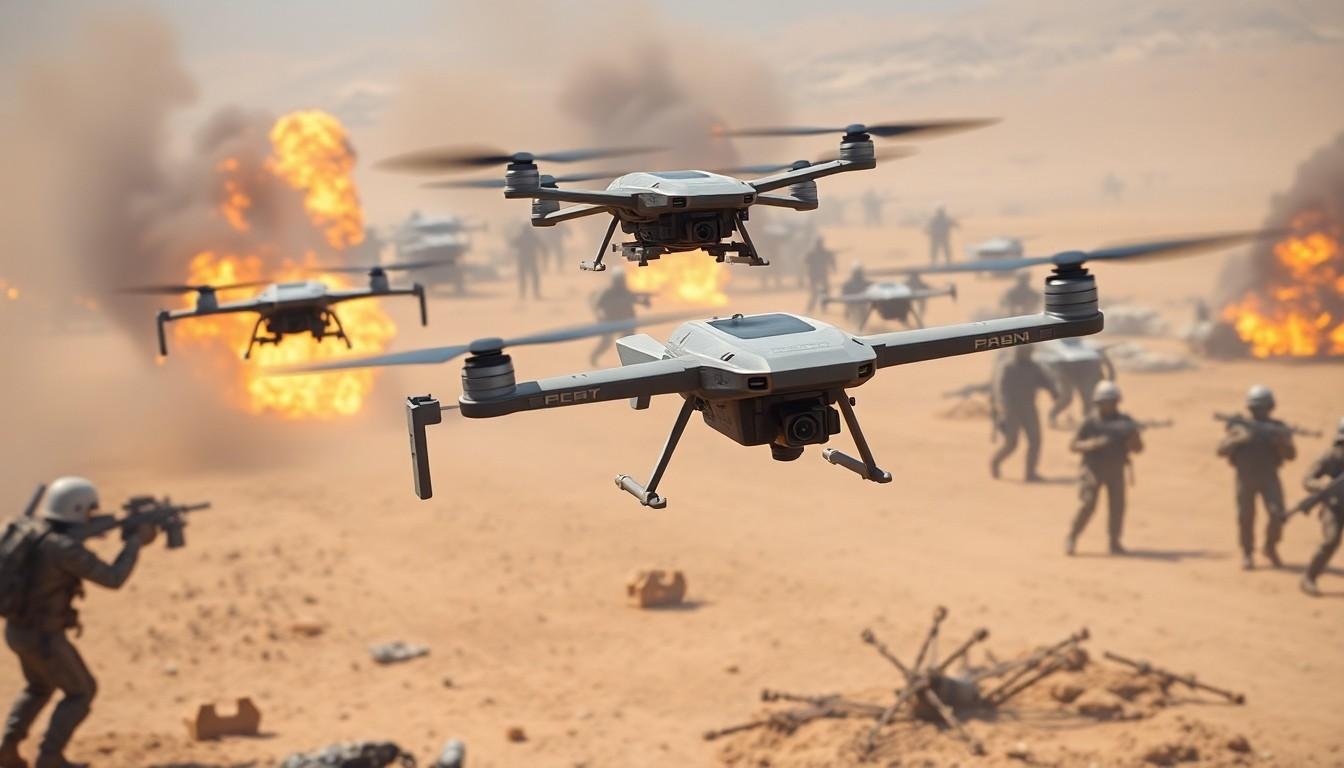
NATO is being pushed to rethink how it prepares for the next drone conflict, as senior officials warn that buying and storing huge numbers of systems now could leave the Alliance with weapons that are obsolete before they are ever used.
The concern reflects lessons drawn from Ukraine, where the pace of drone development has turned unmanned systems into one of the war’s fastest-moving capabilities. What worked on the battlefield months ago can already be outclassed, forcing bo...
Continue Reading This Article
Enjoy this article as well as all of our content, including reports, news, tips and more.
By registering or signing into your SRM Today account, you agree to SRM Today's Terms of Use and consent to the processing of your personal information as described in our Privacy Policy.
th soldiers and manufacturers into a relentless cycle of adaptation. According to NATO officials and defence specialists, that makes the old model of procurement , large purchases, long storage and slow refresh cycles , increasingly unsuitable.
Tarja Jaakola, NATO’s assistant secretary general for defence industry innovation and armaments, has said the Alliance can no longer approach drones in the same way it once bought conventional kit. Rather than placing large orders and waiting for a crisis, NATO needs a system that allows industry to keep updating equipment, with small buys used for training and testing while production capacity remains ready to scale quickly.
That argument is now being matched by money. On 7 July, NATO allies announced more than $40bn in investment over the next five years for counter-drone capabilities and drone training, including a NATO-tested marketplace for compatible systems and expanded operator training through the Alliance’s multinational Flight Training Europe initiative. The move underlines how seriously the Alliance is taking the threat from inexpensive unmanned aircraft and the speed at which they are spreading across modern battlefields.
Germany’s chief of defence, Carsten Breuer, has also warned that quantity alone is not enough. If Russia could be ready for a confrontation with NATO by 2029, he argued, then millions of drones bought today might already be outdated by the time they are needed. For Breuer, the issue is not simply speed of procurement but the ability to innovate procurement itself, while building industrial capacity and ensuring armed forces are willing to test, discard and replace systems continuously.
The Ukrainian experience has become the clearest model of how this can work. Ukrainian units and manufacturers operate in a tight feedback loop, with frontline troops helping to shape revisions and companies pushing changes into the field within weeks. One Ukrainian firm, Frontline Robotics, says it has made small adjustments to its products as often as 20 times a month and major updates roughly every six months to stay ahead of Russian countermeasures.
That has encouraged a wider shift towards modular, software-driven and remotely updatable drones that can be improved without being withdrawn from service or redesigned from scratch. NATO officials say the lesson from Ukraine is not that the West must mirror Kyiv’s dependence on drones, but that it must adopt the same tempo of adaptation. In a conflict where adversaries are also investing heavily in unmanned systems, the ability to learn and iterate quickly may matter as much as stockpiles themselves.
Source: Noah Wire Services