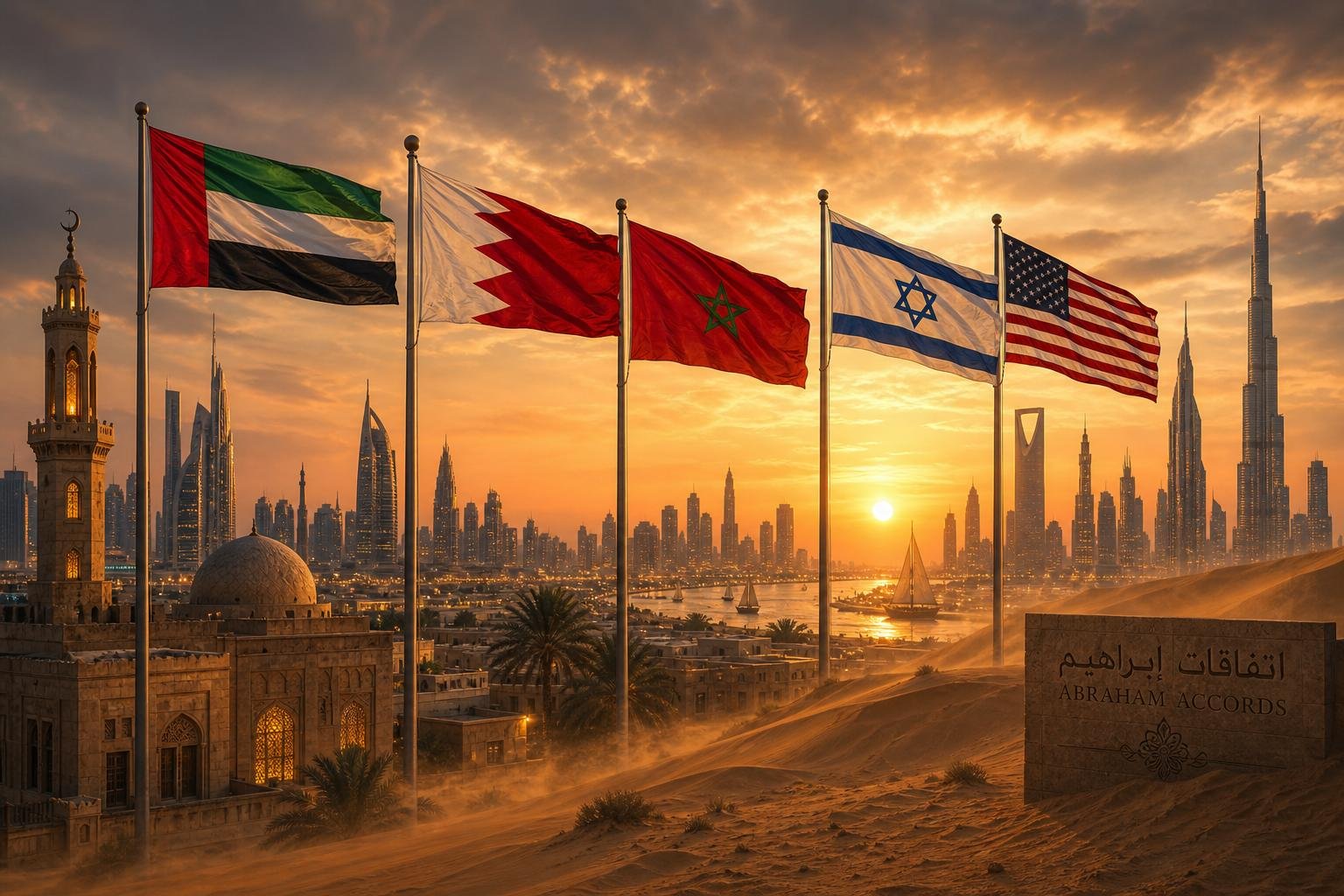
President Donald Trump’s renewed push to enlarge the Abraham Accords comes at a moment when the Middle East looks markedly less receptive to American pressure than it did five years ago. According to commentary in The Conversation, the White House is trying to attach wider Arab-Israeli normalisation to its broader diplomacy with Iran, even as trust in US guarantees has been badly eroded by war, shifting alliances and rising public anger across the region.
The Abraham Accords ...
Continue Reading This Article
Enjoy this article as well as all of our content, including reports, news, tips and more.
By registering or signing into your SRM Today account, you agree to SRM Today's Terms of Use and consent to the processing of your personal information as described in our Privacy Policy.
were once held up by Trump as a signature achievement of his first term. Brokered in 2020, they led the United Arab Emirates, Bahrain, Morocco and Sudan to establish or move towards formal ties with Israel, with each country receiving its own mix of political, military and economic incentives. As PolitiFact noted in reviewing Trump’s claims, the deals brought embassies, trade and security cooperation, but they did not amount to a comprehensive Middle East peace settlement.
That distinction now matters more than ever. The Conversation argues that the accords are being asked to do work they were never designed to do: resolve the Palestinian question, manage confrontation with Iran and provide a regional framework at a time when many governments are publicly more cautious about Israel than they were in 2020. Saudi Arabia, long seen as the prize in any wider normalisation drive, has repeatedly linked any breakthrough to credible movement on Palestinian statehood. Pakistan, Qatar and Turkey also face strong domestic opposition to any overt embrace of Israel.
Trump’s latest efforts are tied to the stalled US-Iran negotiations that followed his decision to launch Operation Epic Fury in February. The Atlantic reported this week that, despite an initial military advantage, Washington has struggled to turn battlefield gains into a durable political settlement. A temporary ceasefire has held for roughly eight weeks, but diplomacy remains fragile, with Trump seeking a deal that would outstrip Barack Obama’s 2015 nuclear agreement in scope and symbolism.
Axios reported that US and Iranian negotiators had reached a preliminary 60-day memorandum of understanding to prolong the ceasefire and open talks on Iran’s nuclear programme, including provisions on shipping through the Strait of Hormuz and possible sanctions relief. But both sides have stopped short of formal endorsement, and Trump has since asked for changes to strengthen the nuclear material provisions. The result, as The Atlantic put it, is a war drifting into “long-term limbo” rather than a decisive settlement.
In that context, Trump’s insistence that new regional deals should include the Abraham Accords looks as much like political theatre as strategy. According to The Conversation, he and Israeli Prime Minister Benjamin Netanyahu both need a visible success they can sell at home. But the same report warns that regional public opinion, especially after the devastation in Gaza and continuing tensions in Lebanon, is now far less willing to accept US-led normalisation on Washington’s terms.
The deeper problem for Trump is that the Middle East has changed. States that once viewed the accords as a useful hedge against Iran now see the risks of overreliance on the US security umbrella. Others are exploring their own alternatives, including a reported Saudi idea for a regional non-aggression pact that would also involve Iran. If that approach gains traction, the Abraham Accords may increasingly look like a fading American template rather than the basis for the next phase of regional order.
Source: Noah Wire Services