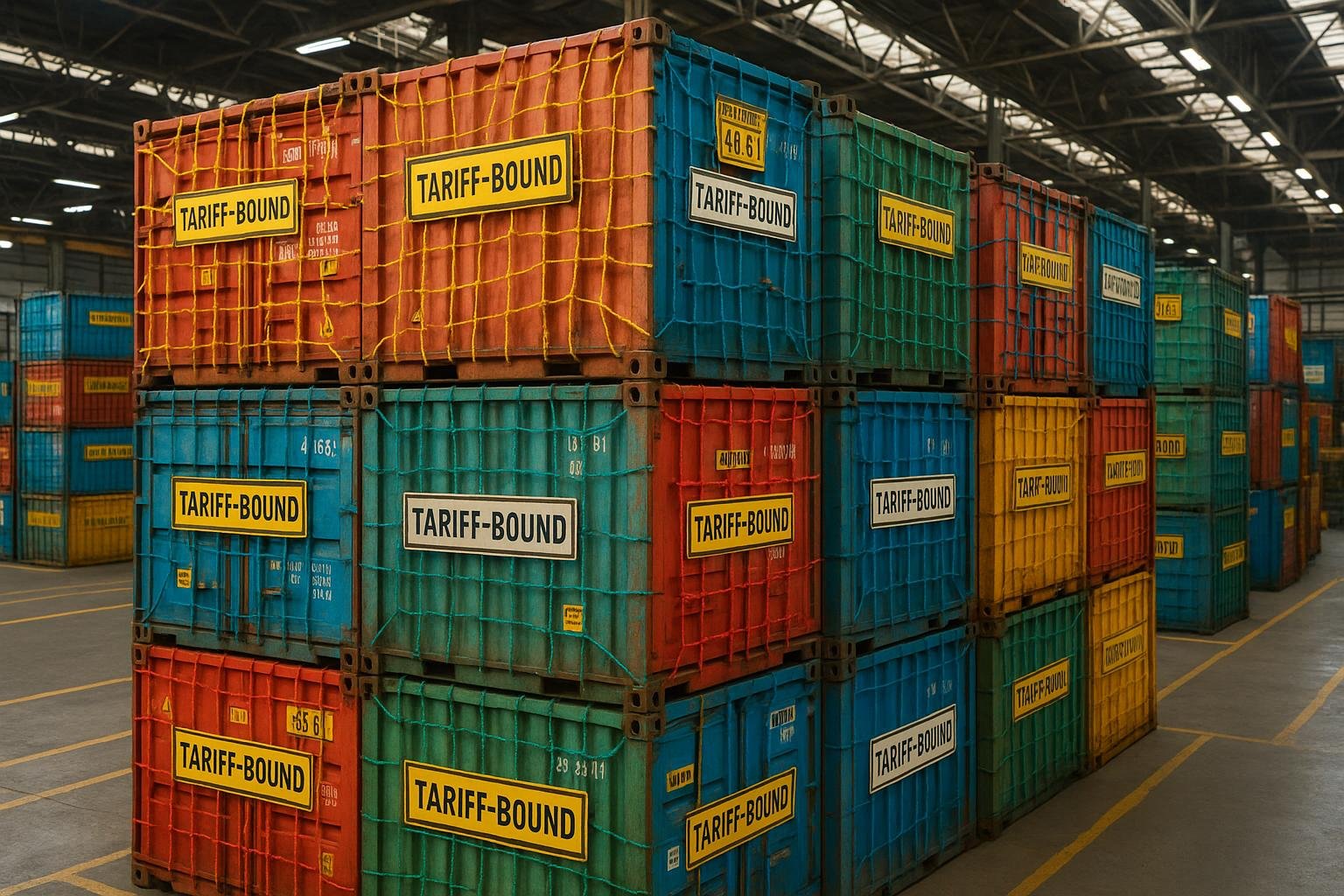
With tariffs increasingly dictating landed costs, companies are adopting innovative tools like bonded warehouses, FTZs, and tariff engineering to optimise supply chain efficiency and reduce duty exposure amid policy shifts and market volatility.

Tariffs are no longer a marginal compliance line: they are a principal driver of landed cost and, increasingly, a strategic variable that shapes sourcing, network design and modal choice across North America. According to the In...
Continue Reading This Article
Enjoy this article as well as all of our content, including reports, news, tips and more.
By registering or signing into your SRM Today account, you agree to SRM Today's Terms of Use and consent to the processing of your personal information as described in our Privacy Policy.
The case for treating tariffs as a supply‑chain discipline has been reinforced by recent policy and market developments. The InTek blog highlights the full suspension of duty‑free Section 321 de minimis treatment for most commercial imports on 29 August 2025, a change that closed a widely used low‑value duty exemption and forces many small‑parcel flows back into standard customs processes. That policy shift makes duty deferral and structural tools such as FTZs and bonded storage more important for parcel and containerised flows alike.
How bonded warehouses and FTZs change the math
Bonded warehouses and FTZs both defer or alter when duties are paid, but they serve complementary use cases. Bonded warehousing allows importers to store goods without immediate duty payment, releasing inventory into U.S. commerce only as demand justifies it. This improves working capital, enables container consolidation onto inland intermodal moves, and supports re‑exports or duty drawback where appropriate. FTZs add further flexibility by permitting manipulation, assembly or repacking before formal entry, potentially reducing effective duty rates if the finished product attracts a lower tariff than its components, and enabling weekly consolidated entries that can lower Merchandise Processing Fees.
InTek emphasises pairing these tools with intermodal networks that shift customs processing inland, to ramp‑adjacent warehouses or FTZs in hubs such as Chicago, Louisville, Kansas City and Memphis, so shippers can avoid coastal congestion, smooth clearance predictability and combine multiple inbound containers into optimised outbound loads. In practice, this architecture can make previously marginal lanes profitable when duties rise and demand is uncertain.
Tariff engineering, classification and origin work
A substantial share of duty spend comes from untapped or misapplied tariff preferences, the blog warns. HTS reclassification, careful rules‑of‑origin work (for example under USMCA) and tariff engineering , undertaken with legal and broker validation , can legitimately reframe liability. The InTek author notes the value of continual auditing, writing: “I can attest to the savings found in these audits, as I put myself on the fast track within GM at the start of my career by challenging the classifications of many products and sub‑assemblies because of the millions of dollars saved through the process.” Systematic reviews of past entries often generate recoverable refunds and reduce future overpayments.
Duty recovery and in‑bond strategies
Because landed cost includes recoverable past payments, duty drawback and re‑export strategies should be part of treasury planning. The blog outlines how drawback can refund up to 99% of eligible duties for exports, although the programme requires meticulous documentation and specialised filings. For many flows, using in‑bond transit and bonded storage to re‑export goods to Canada, Mexico or third markets can provide a simpler path to avoid duty than complex drawback claims.
Macroeconomic and sectoral pressure: what recent reporting shows
Independent reporting and sector analyses underscore how tariff policy reverberates beyond landed costs into investment and operating decisions. A Deloitte report published on 29 October 2025 warned that tariffs introduced under the current U.S. administration could raise material and service costs for oil and gas projects by 4% to 40%, delay more than $50 billion of projects into 2026 and prompt firms to favour domestic or non‑tariffed suppliers, FTZ use or reclassification to mitigate impact. Reuters reporting on corporate responses noted Husqvarna is reworking its supply chain, relocating production and rerouting shipments, to reduce exposure to proposed U.S. tariff increases on European imports. Similarly, Reuters quoted Sika’s CEO Thomas Hasler saying that while Sika has limited direct exposure the wider inflationary effects of tariffs could force modest price rises to cover labour costs.
The Johnson & Johnson example illustrates the scale of direct corporate tariff impacts: the company told the Associated Press it expects around $400 million of tariff‑related costs in 2025, mainly in its medical‑technology business, and is planning major domestic investment to reduce future vulnerability. An analysis by the Washington Center for Equitable Growth cited by the AP and others suggests that higher import duties can raise U.S. factory operating costs by 2%–4.5%, with potential knock‑on effects for wages, employment and competitiveness; one estimate even put an average household loss from tariffs at roughly $2,400 annually. Taken together, these reports show why many firms are pursuing nearshoring, supplier diversification and localisation alongside trade‑compliance measures.
Operational recommendations and governance
Translating tariff strategy into repeatable outcomes requires data, systems and governance. The InTek piece stresses the need for centralised landed‑cost models in TMS/ERP systems so duties, fees and accessorials are captured at the SKU and lane level; routine HTS and origin validation; and scenario planning that tests the speed and cost of shifting ports, modes or suppliers. For most organisations a practical roadmap is:
- Map current landed cost by lane and SKU, including duties and fees.
- Identify where bonded warehousing, FTZs or drawback could shift the timing or quantum of duty payments.
- Align intermodal routing and inland customs options with tariff, inventory and service objectives.
- Institute recurring HTS reviews and origin verification, and ensure TMS/ERP systems surface duty‑impacted decisions to procurement and network planners.
When to use which tool
Many importers begin with bonded warehouses adjacent to intermodal ramps to gain immediate duty deferral and working‑capital benefits, then scale into FTZs as volumes and value‑add activities grow. FTZs are particularly attractive when product transformation or assembly changes the tariff classification of the finished good, or when consolidated weekly entries materially reduce processing fees.
Conclusion
Tariff management now starts at network and product design, not at the customs gate. With the suspension of Section 321 duty‑free treatment for most commercial imports and heightened tariff volatility, firms that weave bonded warehousing, FTZ strategy, intermodal routing, sourcing decisions and robust duty‑recovery programmes into their operating models can turn compliance into competitive advantage. Industry reporting from Deloitte, Reuters and the Associated Press shows that the stakes are high: tariffs affect capital investment, pricing power and supply‑chain resilience. Implemented with disciplined data, governance and legal oversight, the measures outlined by InTek offer a pragmatic toolkit to reduce landed cost while preserving service and regulatory compliance.
Source: Noah Wire Services
Subscribe to Industry Updates
Get the latest news and updates directly to your inbox.