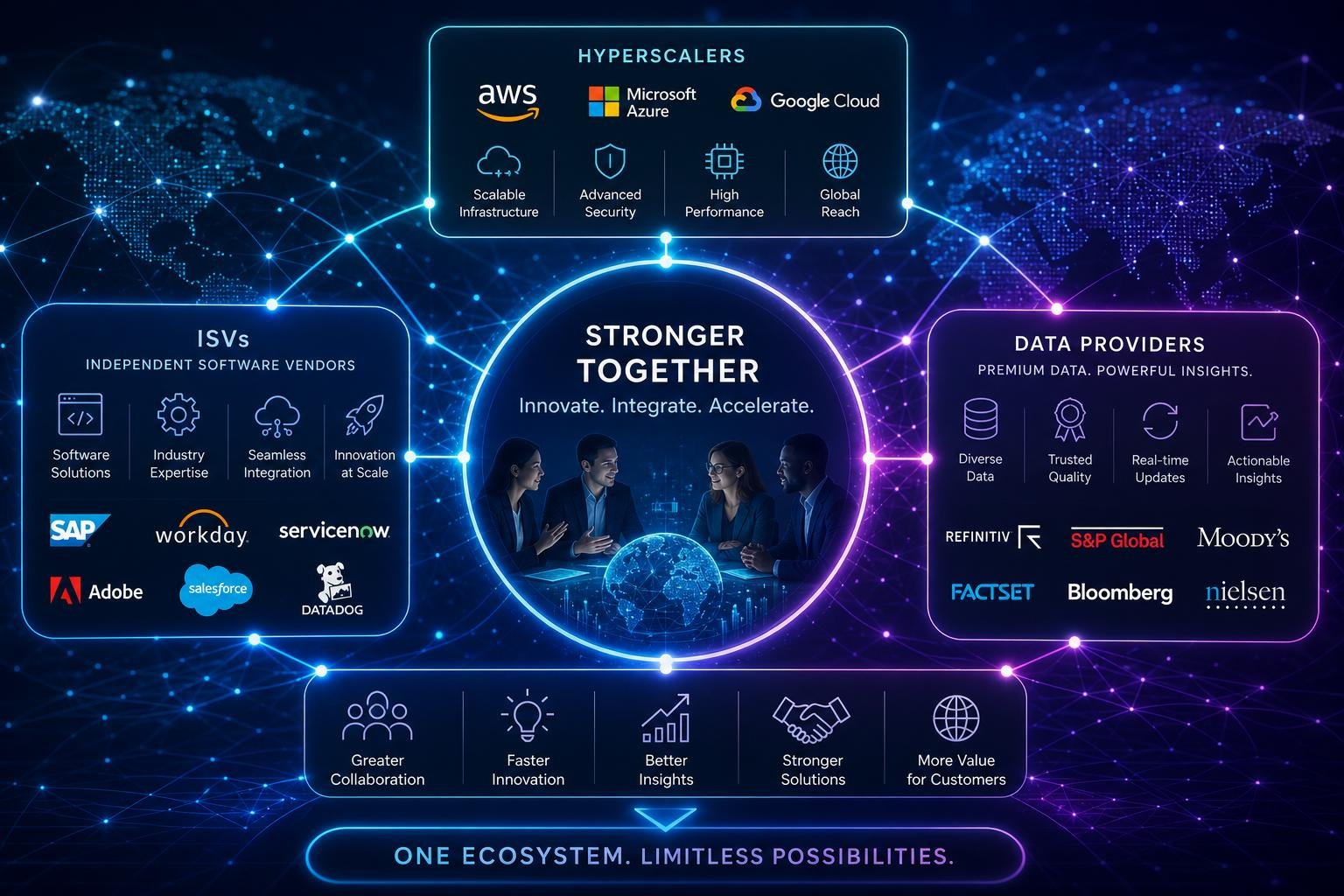
At SAP Sapphire 2026 in Orlando, PwC’s Patrick Pugh argued that the old model of a consulting firm and software vendor solving transformation together is no longer enough. The real task, he said, is now to coordinate a wider web of hyperscalers, independent software vendors, data providers and emerging AI players to address problems too complex for any one organisation to handle alone.
Pugh, PwC’s global and US alliances leader, said that this shift is already visible in tw...
Continue Reading This Article
Enjoy this article as well as all of our content, including reports, news, tips and more.
By registering or signing into your SRM Today account, you agree to SRM Today's Terms of Use and consent to the processing of your personal information as described in our Privacy Policy.
o of the most demanding areas of enterprise change: supply chain visibility and sustainability reporting. In both cases, he said, successful execution depends on bringing multiple technologies and partners into a single operating model rather than trying to force everything through a narrow integration path.
That point matters particularly in Europe, where the Corporate Sustainability Reporting Directive is forcing many global businesses to rethink how they collect, verify and report data. PwC has separately promoted its SAP alliance as a way to support RISE with SAP customers through cloud migration and transformation, including its “Transcend with PwC” framework, which it says is designed to guide organisations from strategy through planning, transformation and innovation. The firm also says its approach is intended to reduce complexity and deliver value more quickly.
Pugh’s comments suggest the consultancy sees ecosystem orchestration as central to that promise. On sustainability, he said Scope 3 tracing and CSRD compliance are too broad to be handled by only two parties working in isolation. In his view, businesses that stick to a siloed delivery model risk slower integration, weaker learning and a narrower return on investment.
He also said the logic of transformation has changed. Where SAP programmes were once sold largely on efficiency, resilience is now taking equal billing. Clients, he said, want systems that can withstand shocks, not just trim costs. That broader view, he added, spans finance, supply chain, human resources, procurement and risk, which is why a multi-partner approach is becoming more important.
PwC has made a similar case in its own materials on supply chain and sustainability. The firm has described supply chain management as a strategic priority alongside ERP, finance and HR, pointing to disruption, geopolitics, changing consumer demand and regulation as reasons companies need greater transparency and end-to-end resilience. On sustainability, PwC says it is working with SAP to embed reporting into existing systems, including its ESG Reporting Manager for CSRD, a tool-supported offering built around European Sustainability Reporting Standards.
Pugh also highlighted a shift in how data is used inside organisations. He said information that once took weeks to extract can now be placed directly in the hands of frontline workers, allowing faster decisions and more predictive responses. But he warned that technology alone does not solve the human side of change. Many employees, he said, have been burned by previous ERP projects, which makes early visible wins essential.
For Pugh, that is why modern transformation programmes must be shorter, more iterative and better anchored in day-to-day business value. “At the heart of all this, where we’re seeing success, still [involves] humans in the loop,” he said, underscoring a message that combines automation, resilience and ecosystem design with a more pragmatic view of how large-scale change actually succeeds.
Source: Noah Wire Services