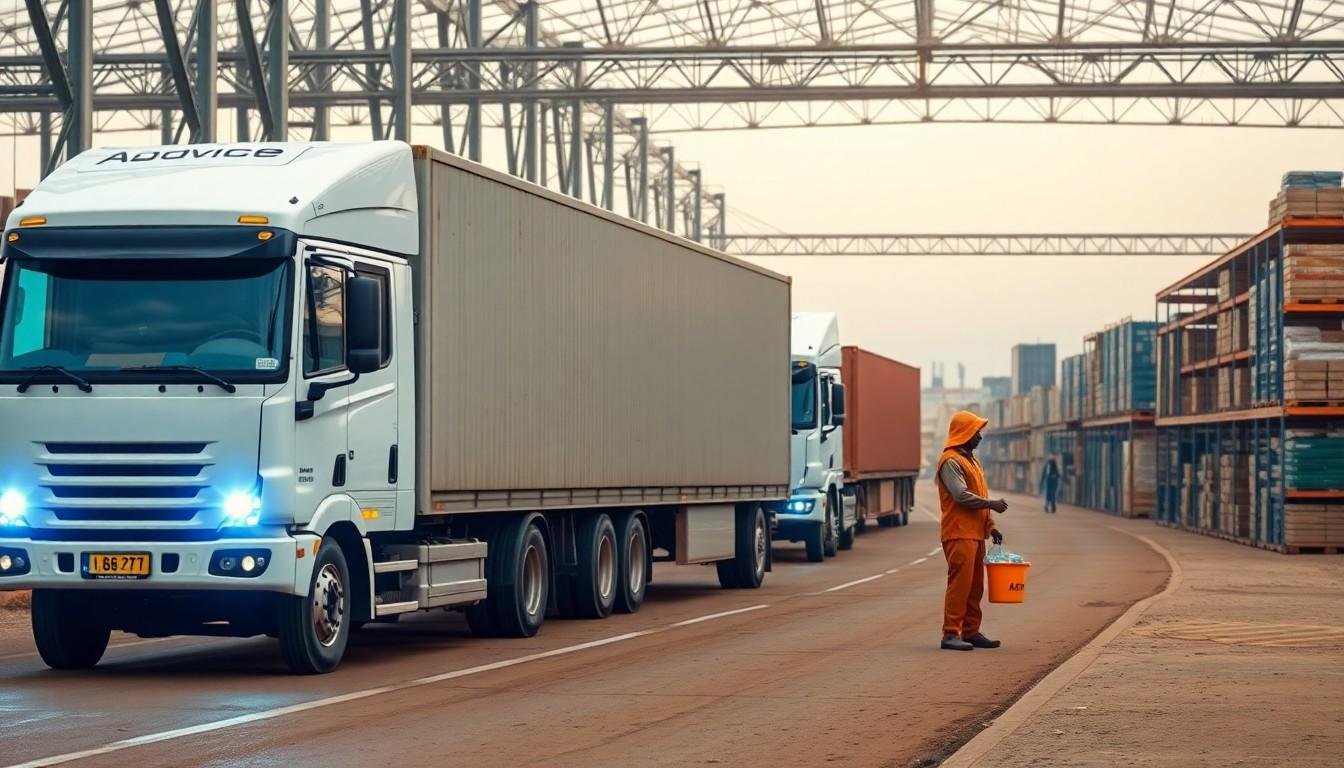
Artificial intelligence is moving from the margins of supply chain management into everyday operations, including in Ghana and other African markets, where it is already being used for demand forecasting, route planning and warehouse automation. For inventory managers, logistics teams and procurement specialists, the technology is no longer being treated as an experiment so much as a practical tool that is quietly reshaping how decisions are taken and how efficiency is measured.
<...
Continue Reading This Article
Enjoy this article as well as all of our content, including reports, news, tips and more.
By registering or signing into your SRM Today account, you agree to SRM Today's Terms of Use and consent to the processing of your personal information as described in our Privacy Policy.
p>That shift is not happening evenly. Research cited in the lead article suggests many supply chain professionals believe AI makes their work easier, particularly when it comes to predicting demand, improving transport routes and flagging problems before they escalate. Yet the same evidence points to clear limits: supplier management, negotiation and relationship-building still depend heavily on human judgement.
A more revealing divide is emerging between using AI and understanding it. Many professionals are comfortable working with dashboards, automated alerts and predictive tools, but far less confident explaining how the systems produce their outputs. According to material cited by the article, simply using AI more often does not necessarily deepen technical understanding, which suggests that literacy in AI requires structured training rather than routine exposure alone.
That need for training is increasingly being treated as a leadership issue. TraxTech argues that supply chain leaders now need AI literacy as a core management capability, not a specialist extra, because AI has become embedded in decision-making across supply networks. The company says leaders must be able to assess outputs, use the tools responsibly and understand the ethical implications if they want to stay competitive in an AI-enabled sector.
The business case for that approach is becoming clearer in practice. Seaflux Technologies says it helped a UK fast-moving consumer goods brand cut costs by 22% after implementing AI demand forecasting alongside a Databricks Lakehouse system over 14 weeks. The project was designed to move the company away from reactive problem-solving and towards more proactive planning, highlighting how AI can expose blind spots that traditional systems miss.
In Africa, similar ambitions are taking shape in food logistics. SankofaFresh, a Ghanaian AI-powered agritech company, says it is tackling post-harvest losses through community-owned cold storage and sensor monitoring, paired with offline-first marketplaces. The company says such systems could help address the large volumes of fresh produce that are lost after harvest, while also supporting smallholder farmers and creating opportunities for young people in supply chain roles.
Other African firms are also pushing AI deeper into operations. GSNA Solutions says it delivered an AI transformation programme for a major FMCG and distribution business across multiple African markets, helping to reduce dependence on siloed data and manual decision-making. The broader message from these examples is that the biggest gains are not always about the most advanced technology, but about whether organisations can align the technology with workflow, governance and staff capability.
That is where workplace culture appears to matter most. The lead article points to evidence that employees who feel their organisations communicate clearly about AI, involve different stakeholders in implementation and provide guidance on future plans tend to perform better than those left without support. In other words, the human framework around AI may be more important than the software itself.
Bias remains a stubborn weakness. The article suggests that although many organisations have formal fairness policies and career frameworks, fewer have made active bias-checking part of day-to-day practice. That gap matters because as AI becomes more central to hiring, planning and performance assessment, weak oversight can embed old inequalities into new systems.
Training providers are already responding to the demand for practical skills. ISCEA’s Certified Professional in Supply Chain AI programme focuses on AI fundamentals, predictive analytics, applications in demand planning and ethical use. Georgia Tech’s Supply Chain and Logistics Institute also offers a course on generative AI for supply chain professionals, covering prompt engineering, inventory automation and route optimisation.
For smaller businesses in particular, the lesson is becoming easier to see: the gains from AI may depend less on budget than on discipline. Firms that invest in training, communicate openly and build trust around how AI is used are likely to extract more value than those that simply buy the latest tool and hope for the best. As supply chains in Ghana and beyond continue to lean further into AI, the winners may be the organisations that treat inclusion, literacy and accountability as part of the technology stack.
Source: Noah Wire Services