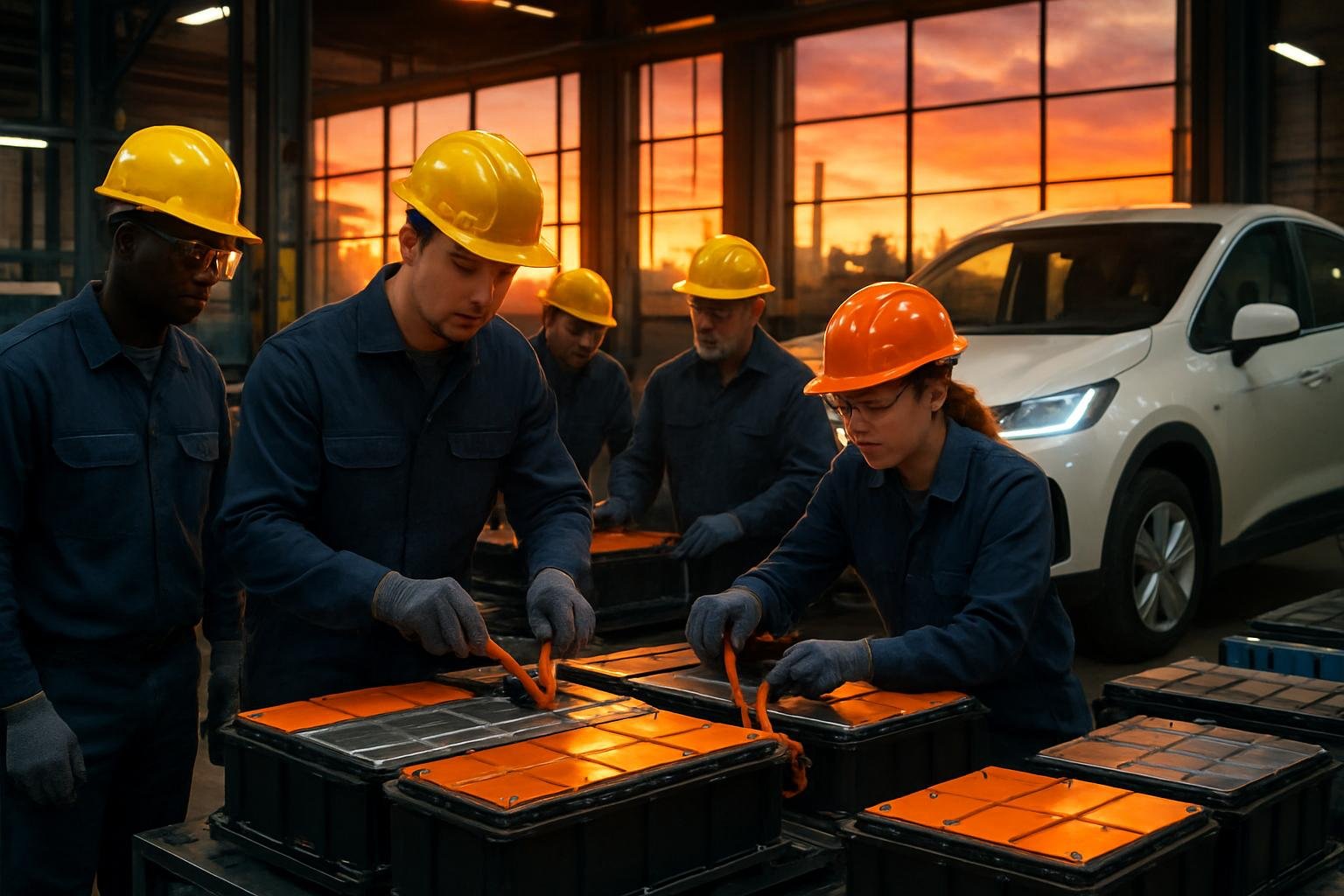
Mercedes-Benz’s agreement with Samsung SDI is more than a routine sourcing decision. Reuters reported that the German carmaker has signed its first battery supply deal with the South Korean group, in a move that underlines how much the economics of electric vehicles are being reshaped by control over batteries rather than engines.
According to Samsung SDI’s announcement, the multi-year deal will provide high-performance cells for Mercedes-Benz’s next generation of electri...
Continue Reading This Article
Enjoy this article as well as all of our content, including reports, news, tips and more.
By registering or signing into your SRM Today account, you agree to SRM Today's Terms of Use and consent to the processing of your personal information as described in our Privacy Policy.
c vehicles, using high-nickel NCM chemistry. The companies also said they plan to work together on next-generation battery technology, signalling that the relationship is intended to go beyond simple procurement.
The batteries are expected to be used in future compact and mid-size electric SUVs and coupe models, Reuters reported, although neither company disclosed the value of the contract. That omission does little to diminish its strategic significance. In the EV era, batteries sit at the centre of range, cost and performance, and that makes them one of the most important battlegrounds in the industry.
Samsung SDI said the cells are designed to deliver higher energy density, longer range, durability and stronger output. For Mercedes-Benz, the appeal is clear: instead of trying to build every critical capability in-house, it is locking in access to a specialist supplier at a time when battery technology is evolving quickly and the capital demands are enormous.
The deal also reflects a wider shift in the automotive value chain. Where engine technology once defined competitive advantage, control of battery supply now has a growing influence over product planning and profitability. Industry analysts have increasingly argued that carmakers can no longer rely on ownership alone to secure advantage; instead, they must build durable partnerships that give them preferential access to the technologies that matter most.
For Mercedes-Benz, the arrangement appears designed to reduce supply risk while preserving flexibility elsewhere in the business, particularly in software, vehicle design and brand positioning. It also gives the company a route into battery development without taking on the full cost and operational burden of manufacturing at scale.
Samsung SDI, meanwhile, gains a deeper foothold in Europe’s premium EV market. Euronews reported that the deal could help expand the company’s presence in the region as manufacturers look for battery partners capable of supporting more affordable premium electric models.
The broader lesson is that EV competition is increasingly being shaped by ecosystems rather than individual products. Automakers that can secure stable, high-quality battery access will be better placed to manage cost, scale production and protect margins. Those that cannot may find themselves relying on external suppliers for the very technologies that determine whether their vehicles can compete.
Source: Noah Wire Services