Rising oil prices, geopolitical tension in the Middle East and continuing shortages of key materials are putting fresh strain on maintenance, repair and operations teams, which are under growing pressure to keep plants and equipment running with less certainty over replenishment. With some lead times now stretching into weeks or months, the old habit of ordering parts only when they are needed is becoming harder to defend.
The result is a sharper focus on MRO stocking as a resi...
Continue Reading This Article
Enjoy this article as well as all of our content, including reports, news, tips and more.
By registering or signing into your SRM Today account, you agree to SRM Today's Terms of Use and consent to the processing of your personal information as described in our Privacy Policy.
lience issue rather than a back-office task. Industry guidance from IBM, Life Cycle Engineering and other MRO specialists points to the same underlying principle: companies need a clearer view of which spares truly matter, how long they take to replace and how much disruption they would cause if they were missing.
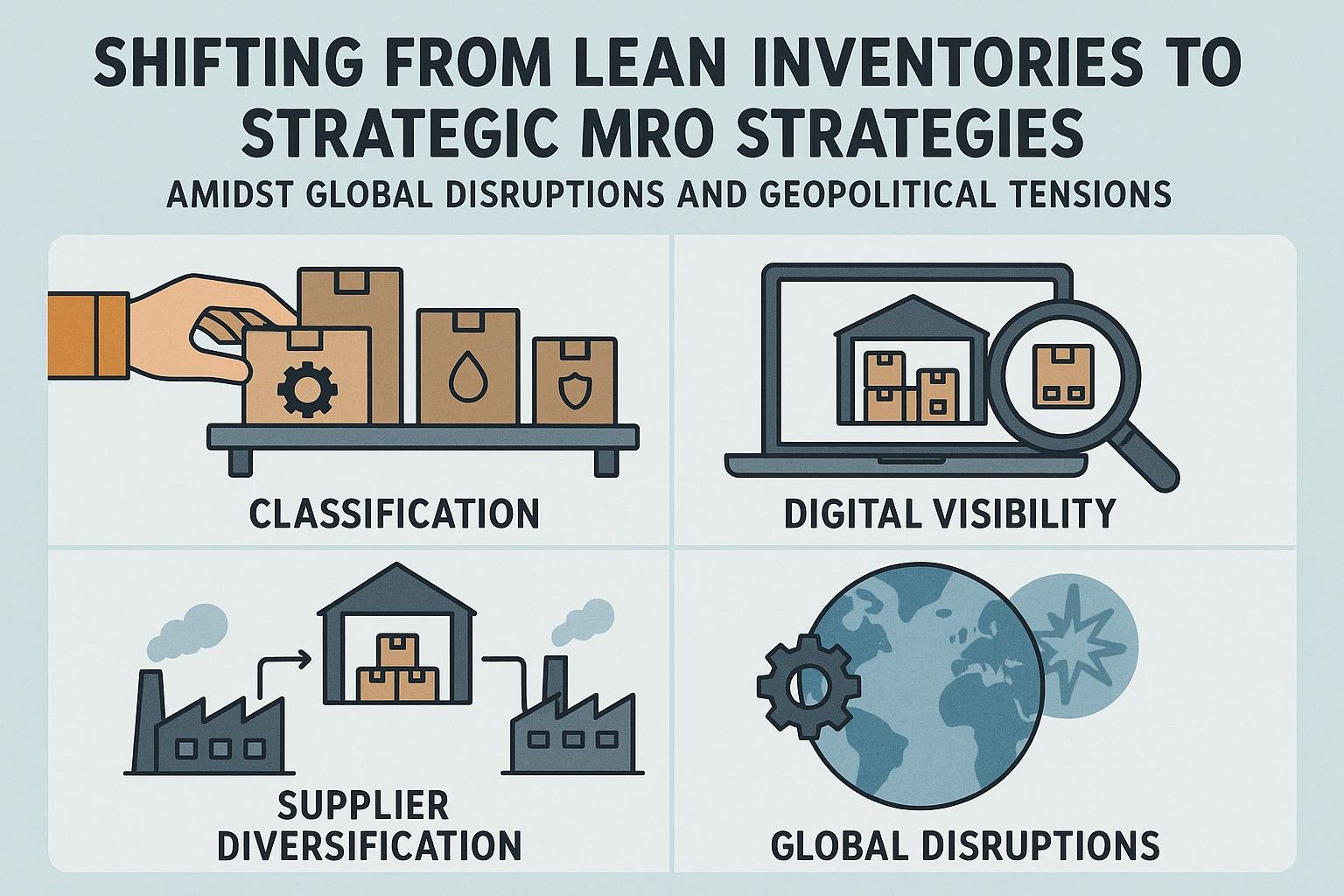
That starts with classification. Not every item on the shelf deserves the same treatment, and the most valuable stock is often the one tied directly to uptime, safety or production continuity. Spare parts that would halt an operation if they failed, such as pumps, filters, hydraulic assemblies and specialised electrical components, need a different policy from routine consumables. IBM says a formal criticality framework helps organisations decide which items must always be available, while other MRO advisers recommend grouping parts into critical, important and non-critical categories so stock levels can reflect operational risk rather than habit.
The pressure on inventory strategy has also weakened the appeal of pure lean models. For years, minimal stock was treated as best practice, but in an environment shaped by shipping delays, commodity swings and supply shocks, many operators are moving towards a hybrid approach. The aim is to keep inventories tight where replacement is easy, while holding deeper buffers for parts that are difficult to source, slow to arrive or exposed to volatile raw material costs.
That logic is especially important for components linked to petrochemical feedstocks. Rubber seals, synthetic lubricants, plastics and hose assemblies can all be affected when oil markets move sharply or when trade restrictions and sanctions disrupt supply routes. In that environment, a single emergency supplier is rarely enough. Building dual sourcing into the procurement model, and maintaining alternative approved vendors before a crisis hits, can reduce the risk of costly downtime.
Visibility is another recurring weakness. Many organisations still lack a reliable, real-time picture of what they hold, where it is stored and how quickly it is consumed. That leaves some sites overstocked and others exposed. Digital inventory systems, usage tracking and automated alerts can close those gaps, especially where multiple facilities share the same spare pool. Better data also makes it easier to avoid duplicate purchases and to move stock to where it is most urgently needed.
Standardisation can deliver similar gains. The more equipment variations a site operates, the harder it becomes to manage the parts that support them. Reducing the number of component types across machines and systems simplifies procurement, eases training and improves the odds of sourcing replacements quickly. It can also cut the risk of obsolete stock gathering dust on the shelf. In periods of shortage, standardisation gives buyers more leverage with suppliers and helps maintenance teams work from a more predictable inventory base.
Forecasting has to become more sophisticated as well. Historical usage and maintenance schedules remain essential, but they are no longer enough on their own. Smart MRO planning now pulls in supplier performance, shipping delays, commodity trends and wider geopolitical signals to anticipate where shortages might emerge. That broader picture allows teams to stock ahead of disruption rather than after it has already begun.
Maintenance strategy should feed directly into inventory policy. Preventive maintenance plans can reveal when parts will be required, how often they are likely to be used and which items need to be rotated before they expire or degrade. When stocking decisions are aligned with planned work, organisations can avoid emergency purchases, smooth budgets and keep critical equipment available for longer.
People matter too. Even the best stocking model will fail if items are misplaced, used incorrectly or recorded badly. Training staff to handle inventory properly, follow storage rules and log consumption consistently helps reduce waste and improves accountability. Regular refresher training can also reinforce good habits, particularly in facilities where several teams share responsibility for MRO items.
Finally, operators need to think about equipment-specific demands. Some assets rely on specialised parts that are easy to overlook until failure forces an unscheduled stop. Tracks for skid steers, for example, wear in ways that can be anticipated if maintenance schedules are understood properly. The broader lesson is that MRO planning works best when it is grounded in the realities of individual machines, not just in generic stock rules.
Across the supply chain, the message is becoming clearer: resilience now depends on preparation. Freight is less predictable, materials are more exposed to global shocks and emergency buying is increasingly expensive. Organisations that treat MRO as a strategic function, rather than a reactive one, are better placed to protect uptime, control costs and keep workflow moving when the market turns against them.
Source: Noah Wire Services