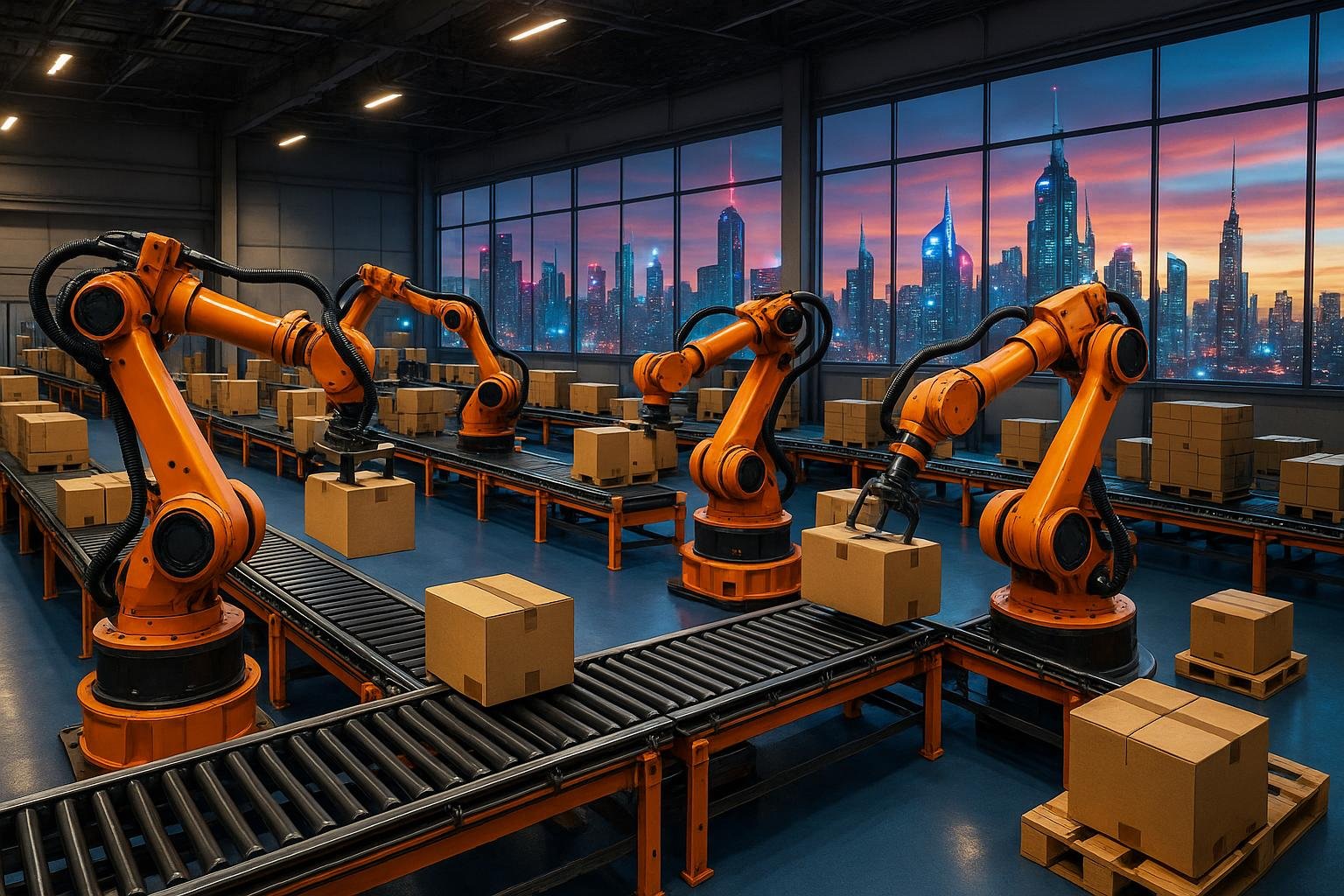
Artificial intelligence has emerged as the standout force reshaping supply chains in 2026, with a new MHI annual report suggesting the industry is moving away from small-scale trials and towards broader deployment.
The report, produced with Deloitte and based on a survey of more than 500 supply chain professionals, found that AI is now widely seen as a disruptive technology rather than a distant possibility. MHI said 71% of respondents viewed AI as disruptive, while 24% called ...
Continue Reading This Article
Enjoy this article as well as all of our content, including reports, news, tips and more.
By registering or signing into your SRM Today account, you agree to SRM Today's Terms of Use and consent to the processing of your personal information as described in our Privacy Policy.
it transformational. Robotics and automation also ranked highly, underscoring how companies are increasingly looking to software and machines to improve speed, accuracy and resilience.
That shift is already visible in day-to-day operations. MHI said 53% of organisations are using AI today, with the strongest applications in demand and inventory optimisation, predictive maintenance and transport planning. The report suggests the next phase will be less about experimentation and more about embedding these tools into core workflows.
Even so, the path to adoption remains uneven. According to the report, one of the biggest obstacles is proving a clear business case, while budget pressure continues to slow investment in robotics and automation. The findings suggest many companies are still weighing the upfront cost of new systems against the promise of lower disruption, better visibility and tighter control.
Workforce constraints remain another major concern. MHI said 90% of organisations are dealing with talent shortages, and nearly two-thirds described that problem as severe. That comes as firms face a broader set of pressures, including inflation, economic uncertainty, supply volatility and the need for stronger end-to-end visibility.
Industry observers say the growing appeal of AI is tied to that environment. Gartner recently forecast that by 2031, 60% of supply chain disruptions will be resolved without human intervention, driven by real-time analytics, automated risk assessment and the rise of agentic AI. In its March outlook, Gartner said trade uncertainty and geopolitical tensions are increasing the need for systems that can react faster than human teams alone.
The direction of travel is also reflected in commentary from MHI’s 2026 trend outlook, which pointed to a more intelligent and resilient supply chain model, alongside a continuing talent gap as demand rises for digitally skilled workers. BCG has meanwhile argued that AI will only deliver lasting gains if companies also strengthen the underlying systems of planning, governance, data and process discipline.
For now, the message from the report is clear: competitive advantage will depend less on isolated pilots than on how well companies connect AI, automation and analytics across the entire supply chain.
Source: Noah Wire Services