French companies are being pushed into a new era of energy buying, one in which procurement is tied as much to regulation and carbon strategy as to price. The end of the ARENH framework, which for years gave firms access to a slice of nuclear electricity at a regulated €42/MWh, is forcing buyers to rethink how they secure supply and manage risk. According to industry summaries of the change, the old model is giving way to longer-term contracting and redistribution mechanisms designe...
Continue Reading This Article
Enjoy this article as well as all of our content, including reports, news, tips and more.
By registering or signing into your SRM Today account, you agree to SRM Today's Terms of Use and consent to the processing of your personal information as described in our Privacy Policy.
d to soften the impact of volatility, while businesses must also adapt to France’s purchasing-power protections and the RE2020 framework.
RE2020 has become one of the clearest signals that energy policy is now feeding directly into corporate decision-making. France’s environment ministry says the regulation, which came into force in 2022 for new buildings, is built around improving energy performance, cutting life-cycle carbon emissions and strengthening comfort during summer heatwaves. Other sector briefings note that the rules are being phased in across housing and tertiary buildings, with tighter treatment of carbon-intensive energy and tougher expectations for the built environment.
That shift is encouraging companies to move from simply paying bills to actively managing energy exposure. In practice, that means choosing between fixed-price contracts for certainty and indexed deals that can capture market dips, even if they leave buyers more exposed to swings. It also explains why procurement is increasingly being treated as a risk function rather than a back-office utility task.
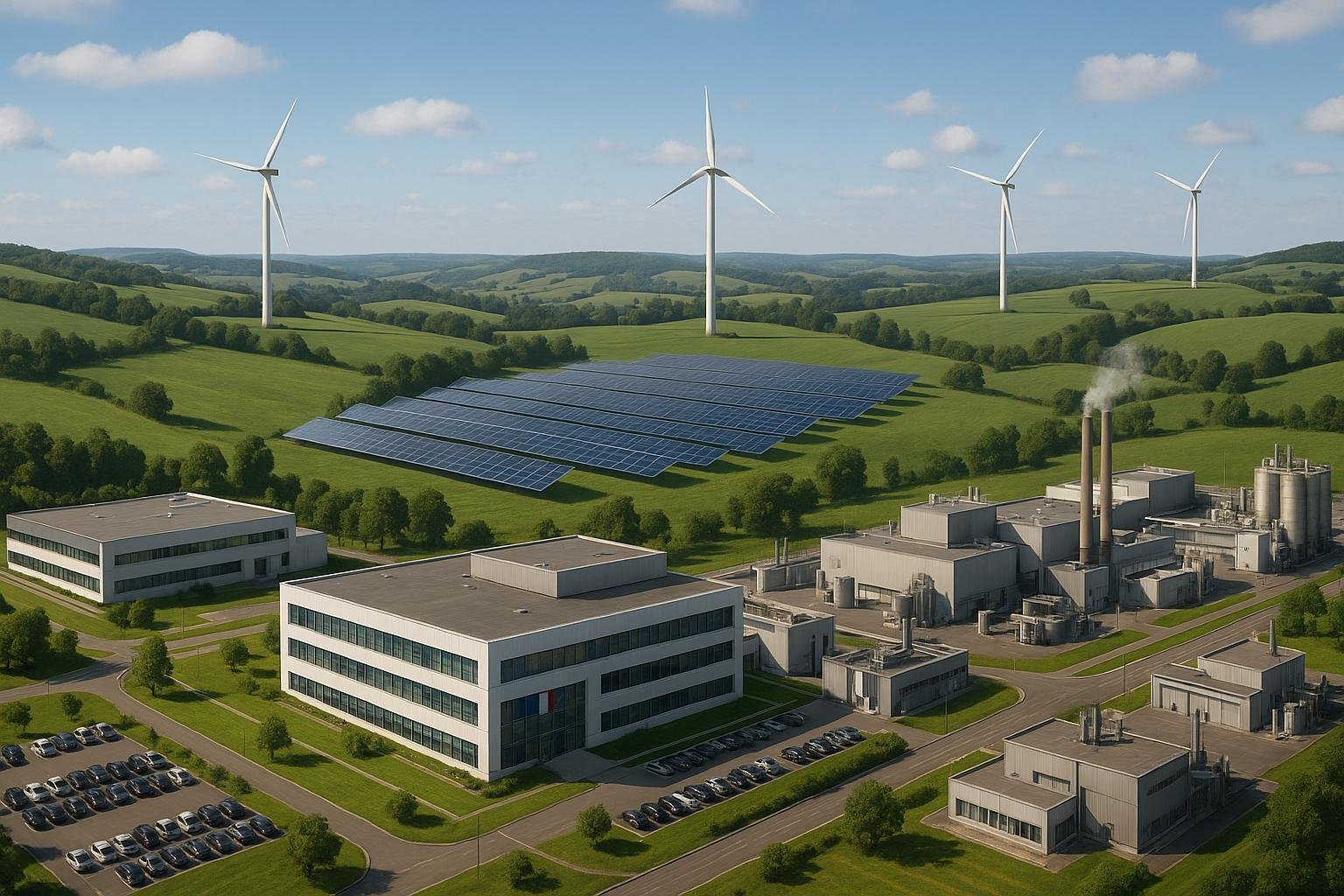
Renewable sourcing is becoming central to that response. Large industrial users are turning to corporate power purchase agreements, which allow them to lock in supply directly with renewable developers and signal a concrete contribution to France’s transition. Others are installing solar panels on roofs and parking canopies, a route that can reduce dependence on the grid while limiting some network-related charges. Smaller firms are more likely to stay with retail suppliers, using guarantees of origin and certified green tariffs from incumbents and challengers alike to match consumption with renewable generation without major capital spending.
Cost reduction, however, is still anchored in basic efficiency. The article’s core point holds: the cheapest unit of electricity is the one never used. Energy management systems, including ISO 50001 approaches and digital monitoring tools, can expose waste in heating, ventilation and industrial processes and deliver quick savings. Demand-side response is another lever, with France’s grid operator, RTE, paying firms that cut usage at peak times, turning flexibility into a revenue stream as well as a grid service.
Companies are also taking a more tactical approach to hedging. Rather than fixing all of their future consumption at one moment, many are spreading purchases through the year in staged contracts, averaging out prices and reducing the risk of locking in during a market spike. In a volatile market, that can be as important as the choice of supplier.
The supplier landscape itself is increasingly segmented. EDF and Engie remain the natural fit for large industrial groups that need scale, stability and complex multi-site management. More agile providers such as Ohm Énergie and Ekwateur are pitching transparency, digital tools and greener products to mid-sized customers. Aggregators, meanwhile, are carving out a role for firms that want to monetise flexibility through demand-response schemes.
The broader direction of travel is clear enough: French businesses are being nudged from passive consumers towards active “prosumers”, blending self-generation, market purchasing and flexibility trading. In that model, energy is no longer just an overhead. It becomes a strategic asset, one that can lower emissions, improve resilience and, if managed well, sharpen competitiveness.
Source: Noah Wire Services