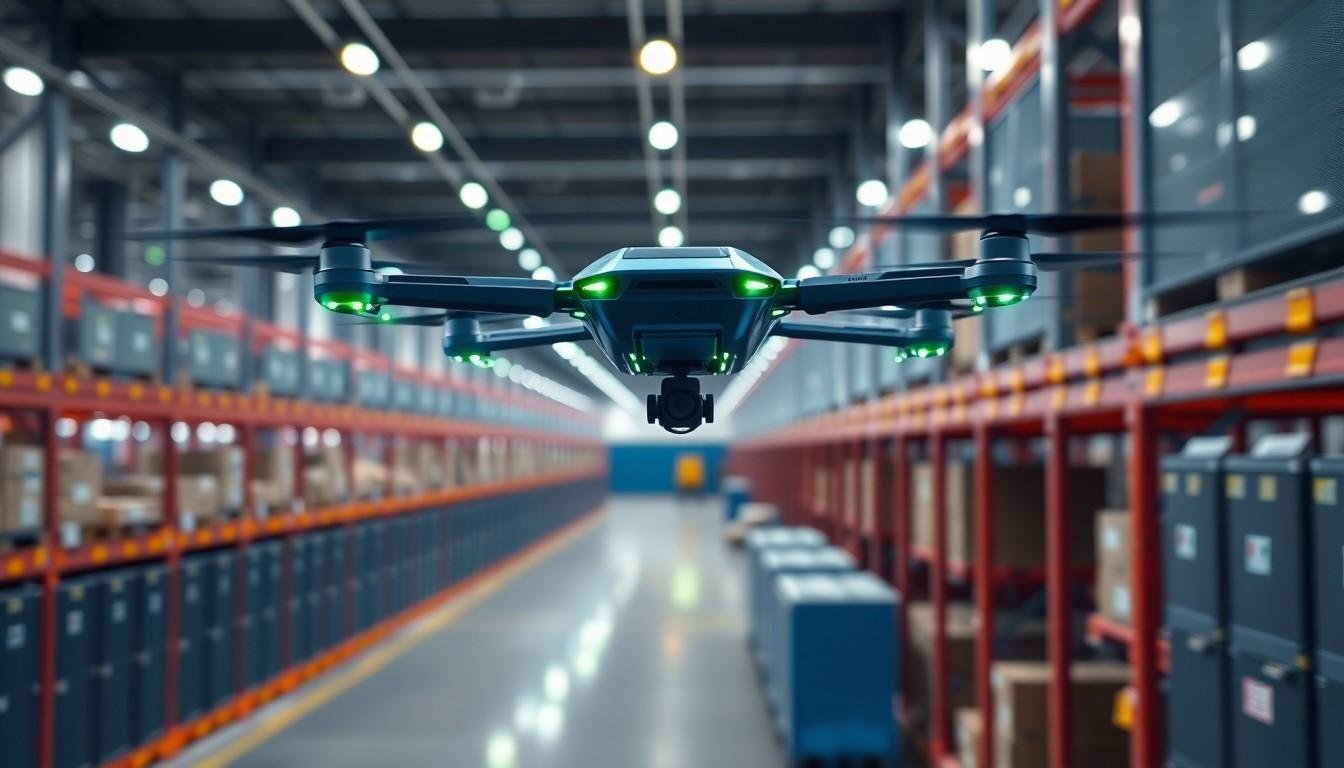
Gartner has highlighted agentic AI and physical AI among eight supply chain technology trends it expects to shape 2026, arguing that the sector is moving from isolated digital tools towards systems that can sense, decide and act across both virtual and physical operations.
In its report on top supply chain technology trends, the consultancy groups the developments into three broad themes: autonomy and agency, specialisation and intelligence, and trust and governance. Gartner sa...
Continue Reading This Article
Enjoy this article as well as all of our content, including reports, news, tips and more.
By registering or signing into your SRM Today account, you agree to SRM Today's Terms of Use and consent to the processing of your personal information as described in our Privacy Policy.
ys those themes reflect a deeper shift towards supply chains that are more self-directed, more adaptive and more accountable, with AI increasingly becoming the foundation for how operations are run.
Christian Titze, vice-president analyst and chief of research in Gartner’s supply chain practice, said the changes go beyond routine efficiency gains. He said organisations need to do more than adopt advanced tools; they must make sure those systems work together in ways that produce measurable value and improve resilience over the long term. He added that companies which align the technologies with business priorities will be better placed to handle disruption and preserve competitive advantage.
The autonomy and agency theme includes polyfunctional robots, physical AI, agentic AI and collaborative multi-agent systems. Gartner describes polyfunctional robots as machines able to perform several different jobs rather than a single fixed task, a development it says could help sectors facing labour shortages. Physical AI, meanwhile, combines AI models with sensors, robotics and automation to support real-time action in manufacturing, warehousing and transport.
Agentic AI is presented as a step beyond predictive systems, with virtual agents that can plan, act and adjust to meet goals in complex environments. Multi-agent systems extend that model by allowing several specialised agents to work together across different workflows, although Gartner warns that such systems will require robust governance.
The specialisation and intelligence category covers intelligent simulation and domain-specific language models. Gartner says these tools are designed to improve forecasting, planning and decision-making, particularly in logistics, transport and warehouse operations. Rather than relying on general-purpose AI, the company expects more firms to use models tailored to specific supply chain tasks such as compliance, knowledge management and workflow automation.
The final theme, trust and governance, reflects mounting pressure on companies to prove where products come from and how AI-supported decisions are made. Gartner says product provenance is becoming more important as regulatory demands and customer expectations for transparency rise, while decision governance will be essential if AI is to be used in auditable, accountable ways.
The consultancy’s latest thinking also sits alongside a broader message about supply chain transformation. In a June announcement on its 2026 Global Supply Chain Top 25, Gartner said leading operators are increasingly redesigning their networks around AI, autonomous workforces and end-to-end orchestration. Schneider Electric remained at the top of that ranking, ahead of NVIDIA and Walmart.
The timing is notable. Gartner has also been using its supply chain events to push the message that chief supply chain officers need to prepare for a more AI-led operating model, while reports from the same research house have warned that demand for AI skills in supply chains is rising faster than the available talent pool. Taken together, the findings suggest the next phase of automation will depend not only on technology, but on whether companies can build the skills, controls and governance needed to use it well.
For Gartner, the central bet is clear: the supply chain of 2026 will be less about incremental digitisation and more about intelligent systems that can make decisions, coordinate across functions and respond to disruption with far greater speed than traditional models.
Source: Noah Wire Services