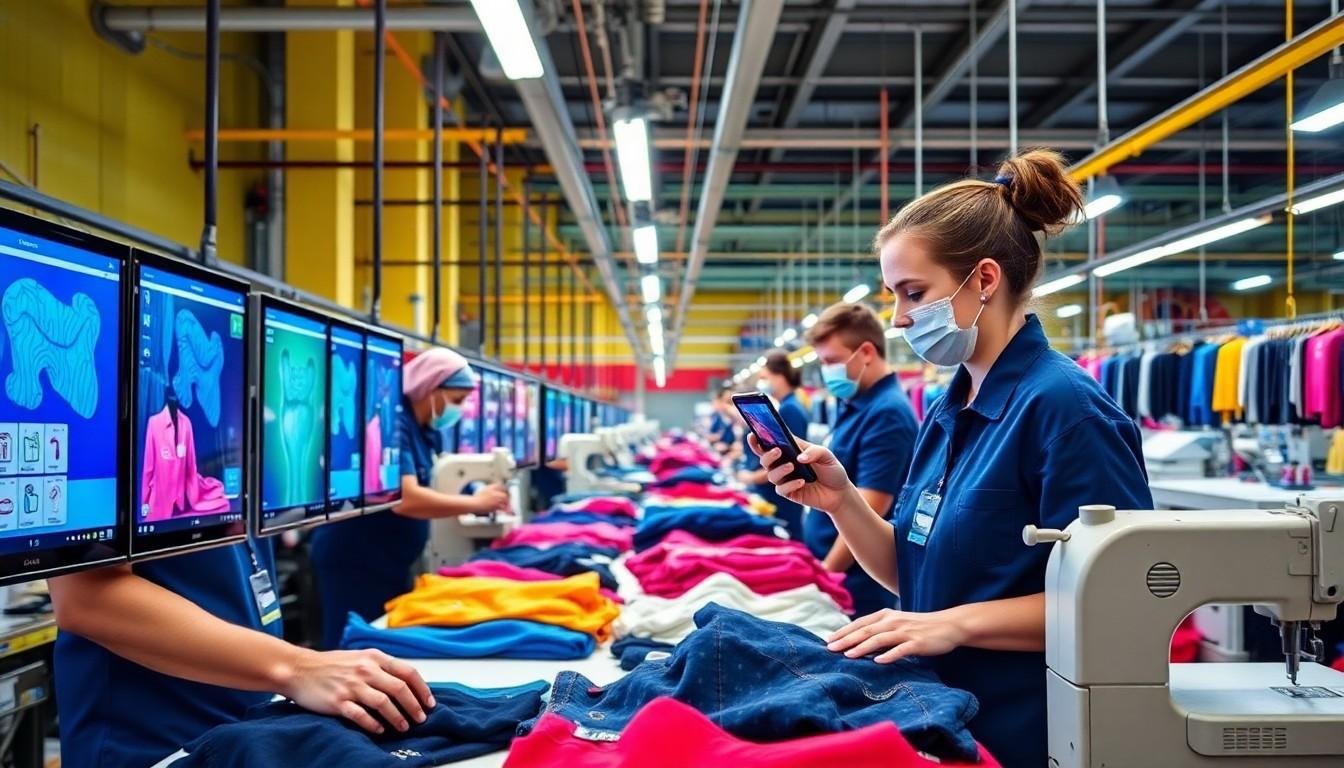
Fashion traceability has moved from a niche sustainability ambition to a central test of how well the apparel industry can prove what it says about its products.
Shoppers increasingly want to know where a garment began, who handled it, what it contains and what happened along the way. At the same time, brands are under pressure from regulators, investors and retailers to evidence claims about sourcing, labour standards and environmental impact. The result is a shift in the indu...
Continue Reading This Article
Enjoy this article as well as all of our content, including reports, news, tips and more.
By registering or signing into your SRM Today account, you agree to SRM Today's Terms of Use and consent to the processing of your personal information as described in our Privacy Policy.
stry’s expectations: transparency is no longer a branding exercise, but an operational requirement.
At its simplest, traceability means being able to track and document a product and its materials from origin through manufacture, distribution, use and, increasingly, reuse or recycling. That is very different from basic supplier visibility. Knowing the first-tier factory is one thing; being able to connect fibres, dyes, mills, logistics providers and end-of-life pathways is another entirely.
The challenge is scale and fragmentation. A single T-shirt can pass through several countries and many hands before it reaches a shop floor. Cotton may be grown in one place, spun in another, woven elsewhere, then dyed, cut, sewn and shipped through a separate network of intermediaries. As Deloitte has pointed out, the fashion industry’s supply chains are so opaque that gaining visibility across every material and movement is both a resilience issue and a risk issue.
That complexity matters because so many of the sector’s claims depend on evidence. Brands that market organic fibres, recycled content or responsible sourcing need systems that can substantiate those statements. Traceability also helps expose risks that can otherwise remain hidden, including forced labour, child labour, unauthorised subcontracting, environmental breaches and counterfeiting.
The World Economic Forum has highlighted cotton as a useful example of the problem: an apparently simple raw material can involve a long, multi-country chain before it becomes a finished product. In that context, traceability is not just about compliance. It is about making sustainability measurable.
The regulatory pressure is building as well. Vogue has noted that the push towards fully traceable garments is tied to evolving European rules and rising consumer expectations. Digital Product Passports are likely to play a bigger role in that shift, offering a structured way to store and share product information over the life of a garment. For brands, that means traceability systems will need to do more than collect data; they will need to organise it in a way that can be accessed, verified and updated.
Technology is becoming central to that effort. QR codes can give consumers instant access to product details. RFID helps with tracking inventory and movement. Blockchain can support auditable records. Artificial intelligence is increasingly being used to clean, analyse and validate data across sprawling supplier networks. DNA tagging and other authentication tools are also being explored as ways to make origin claims harder to fake, according to industry commentary from technology providers and fashion specialists.
Yet the sector still faces familiar obstacles. Data is often incomplete, inconsistent or locked inside different systems. Many brands know more about direct suppliers than the upstream mills, farms and processors that shape a product’s footprint. Integrating traceability into existing enterprise systems can be costly and time-consuming, and none of it works without supplier participation. In practice, the hardest part is often not generating information, but keeping it connected and reliable.
That is why traceability is increasingly being treated as a maturity journey. Some companies can identify their manufacturers; others can trace raw materials or production processes; a smaller number can connect environmental and social performance data to the product itself. The more advanced the system, the better equipped a business is to handle reporting obligations, circularity initiatives and consumer scrutiny.
The benefits extend beyond compliance. For brands, traceability can strengthen trust, improve reporting and reduce exposure to supply-chain shocks. For manufacturers, it can support better control and clearer relationships with customers. For retailers, it can improve transparency and customer engagement. For consumers, it offers something increasingly valuable: confidence that the story attached to a garment is more than marketing.
Fashion’s future is likely to be judged less by aspiration and more by proof. As due-diligence rules tighten, sustainability reporting becomes more exacting and circular business models expand, the ability to trace a product from fibre to finish and beyond will define which companies can keep pace.
In that sense, traceability is no longer an optional add-on to responsible fashion. It is becoming the infrastructure on which responsible fashion depends.
Source: Noah Wire Services