Fashion retail has long traded on atmosphere. The right lighting, layout and sense of discovery can still pull shoppers through the door, but Aidan Harrison, head of retail UK&I at Diebold Nixdorf, argues that the next leap will come from stores becoming more intelligent as well as more appealing.
“We create retail environments that matter,” he says, setting out a vision in which the shopfloor is not only theatrical, but responsive. For fashion brands, where exp...
Continue Reading This Article
Enjoy this article as well as all of our content, including reports, news, tips and more.
By registering or signing into your SRM Today account, you agree to SRM Today's Terms of Use and consent to the processing of your personal information as described in our Privacy Policy.
ectations are high and any friction can quickly spoil the experience, the challenge is to combine physical retail with technology that helps both customers and staff move more easily through the journey.
That means flexibility. Diebold Nixdorf says its focus is on modular checkout and store systems that can be adapted to different formats, operating models and levels of demand. Harrison says this approach avoids retailers being tied to one hardware or software stack, a point that matters in fashion, where a flagship store, a small urban branch and a busy outlet can all need different service models.
The company’s broader retail offer also reflects that shift. On its retail and fashion pages, Diebold Nixdorf describes open, scalable checkout systems designed for changing consumer habits, along with infrastructure that can support resale, closed-loop recycling and digital product passports as fashion becomes more circular and more digitally traceable.
But Harrison says checkout is only part of the story. The bigger opportunity lies in addressing the points where shopping still breaks down: inventory gaps, shrink, service delays and the awkward handoff between digital tools and the physical shop.
That is where AI and RFID come in. Diebold Nixdorf says its Vynamic Smart Vision AI tools are designed to improve checkout accuracy, reduce shrink and support more efficient operations across the store. The company also says it is using RFID to tighten stock visibility and reduce friction on the floor.
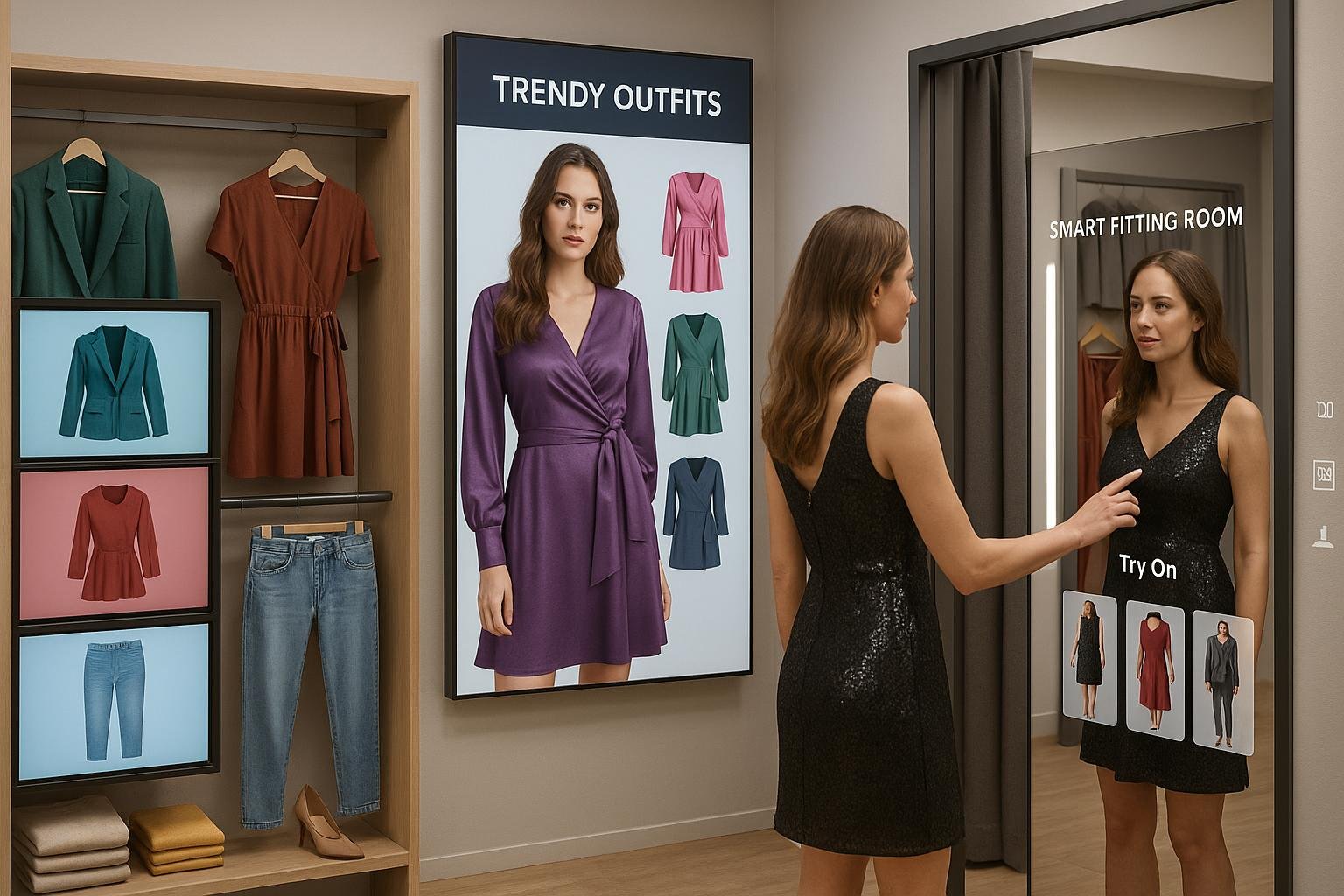
In fitting rooms, that can mean a more fluid experience. A smart mirror can recognise the items a shopper has taken inside and suggest a different size, another colour or a related piece, cutting out the need to leave the cubicle and search the shopfloor. For retailers, that creates another chance to sell; for customers, it simply feels easier.
RFID is also meant to help staff and shoppers find products faster. Because each tag is linked to a unique item, retailers can track stock more precisely, improve location data and get a clearer view of availability in real time. In fashion, where a missing size can end a sale instantly, that kind of visibility can matter as much as the display itself.
Mobility is another part of the equation. Handheld tools can let associates check stock, assist customers and, where needed, process transactions without sending them back to fixed tills. In busy periods, that can ease pressure on the queue and make service feel more personal.
Diebold Nixdorf says the aim is to bring AI, computer vision and connected devices together at the point where the customer actually experiences the store. Harrison says the company’s differentiator is the way it combines visual AI and RFID with modular self-service and advisory services to reduce loss and friction where they happen, rather than trying to solve everything behind the scenes.
That philosophy is central to its pitch on checkout too. The company’s “all lanes open, all of the time” model is designed to let retailers switch between assisted, semi-assisted and self-service formats depending on demand. Systems such as DN Series EASY ONE can be configured to support those different modes, helping stores use labour more efficiently and keep the journey moving.
Reliability is part of the sales pitch as well. Harrison says the value of retail technology depends on uptime and long-term performance, not just novelty. Diebold Nixdorf says it backs its systems with proactive and predictive service to help retailers protect their investment and keep operations stable.
The company will use the Retail Technology Show in London to showcase that thinking, with demonstrations centred on smart RFID, mobility and flexible checkout. It also plans to highlight AI tools aimed at tackling shrink in free-flow environments and unstructured checkout zones, drawing on live deployments and pilot projects from different markets.
For Harrison, the direction of travel is clear: stores are becoming less passive and more aware. The most compelling version of that future is not a shop that merely reacts when someone walks in, but one that notices what is happening on shelves, in aisles and at the till, then responds fast enough to improve the experience before irritation sets in.
In fashion, where emotion and convenience are equally important, that may be the most valuable kind of theatre of all.
Source: Noah Wire Services