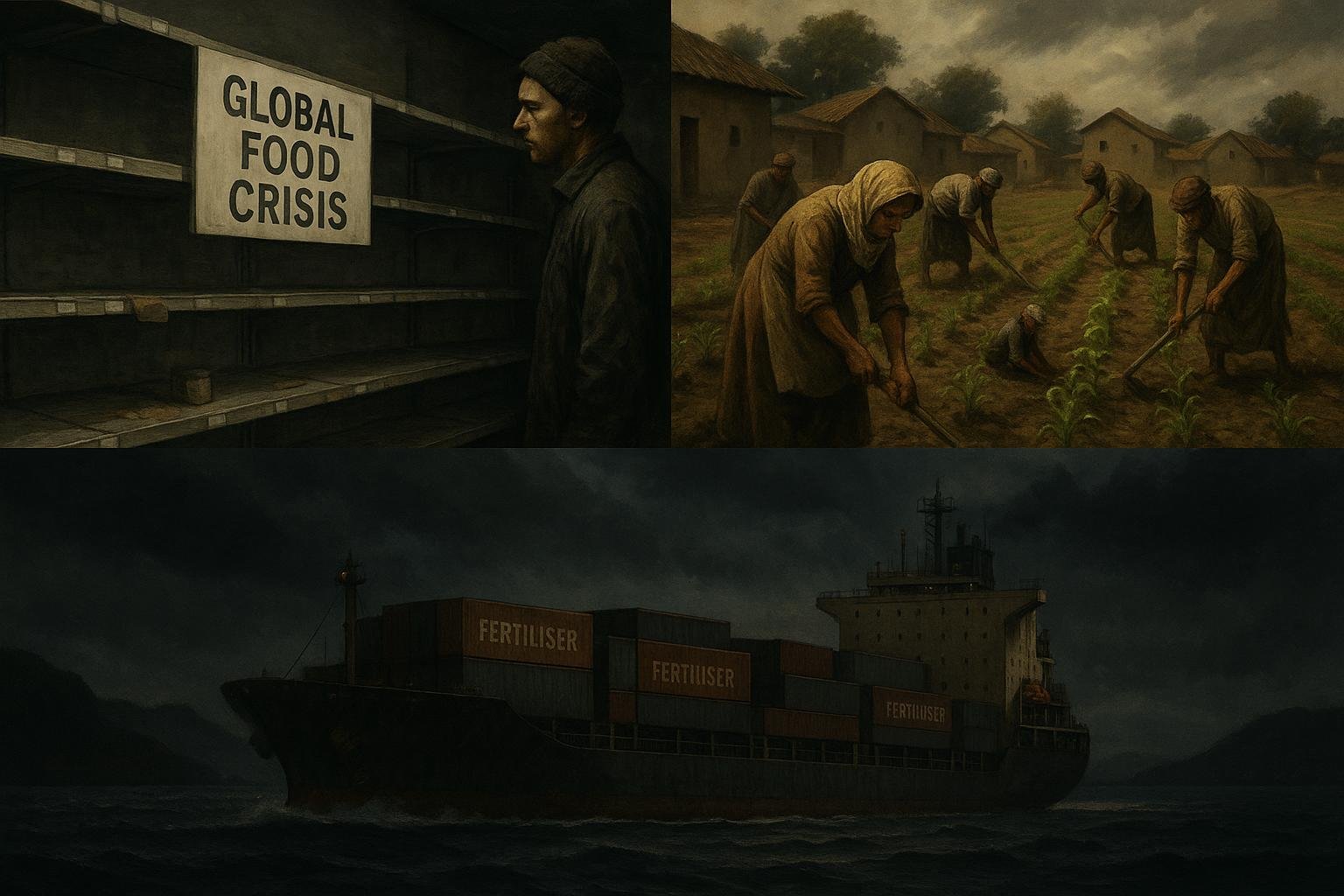
The United Nations has warned that disruptions in the Strait of Hormuz could trigger a serious global food crisis if fertiliser shipments do not resume quickly, with officials saying the planting season in many countries is already under way and time is running out to limit the damage.
Jorge Moreira da Silva, the executive director of UNOPS, told UN News that about a third of the world’s fertiliser shipments pass through the waterway and that the bottleneck has already caused...
Continue Reading This Article
Enjoy this article as well as all of our content, including reports, news, tips and more.
By registering or signing into your SRM Today account, you agree to SRM Today's Terms of Use and consent to the processing of your personal information as described in our Privacy Policy.
a major shock to supply chains. He said the situation was evolving into a wider agricultural emergency and stressed that poorer countries would be hit first and hardest if deliveries remain delayed.
The warning has been echoed by the UN in Geneva and by the Food and Agriculture Organization, which says tanker traffic through the strait has fallen sharply and that the disruption is pushing up both energy and fertiliser costs for farmers. Máximo Torero, the FAO’s chief economist, said the shock is feeding through to global commodity markets and could reduce crop yields and lift food prices if it continues.
The timing is especially fraught. According to the UN, the planting season has already begun in much of the world and in many African countries will end in May, leaving only a short window for fertiliser to reach farms before key decisions on acreage and input use are made. The UN has urged an immediate reopening of the corridor for commercial shipments, warning that waiting for a full diplomatic settlement could be too late for this year’s harvests.
The impact is not confined to developing economies. In the US, the American Farm Bureau Federation said a recent survey found that 70% of farmers believe fertiliser is now too expensive to buy in full for the 2026 season. The farm group said nitrogen prices have climbed by more than 30% and urea by 47% since late February, while fuel and fertiliser costs together have risen by roughly 20% to 40%.
Those increases matter because fertiliser is one of the most important cost lines in industrial farming. Bloomberg’s Tracy Alloway has argued that higher input costs usually filter through slowly, first affecting farm margins, then wholesale prices and eventually supermarket shelves. In her analysis, the present surge in fertiliser and fuel prices could spread into everything from grains to meat, eggs and biofuels if the disruption persists.
The broader concern, UN officials and agricultural groups say, is that the Strait of Hormuz has become more than a shipping lane for oil and gas. It is now a critical passage for the global food system itself, and any prolonged closure risks turning a transport crisis into a hunger crisis.
Source: Noah Wire Services