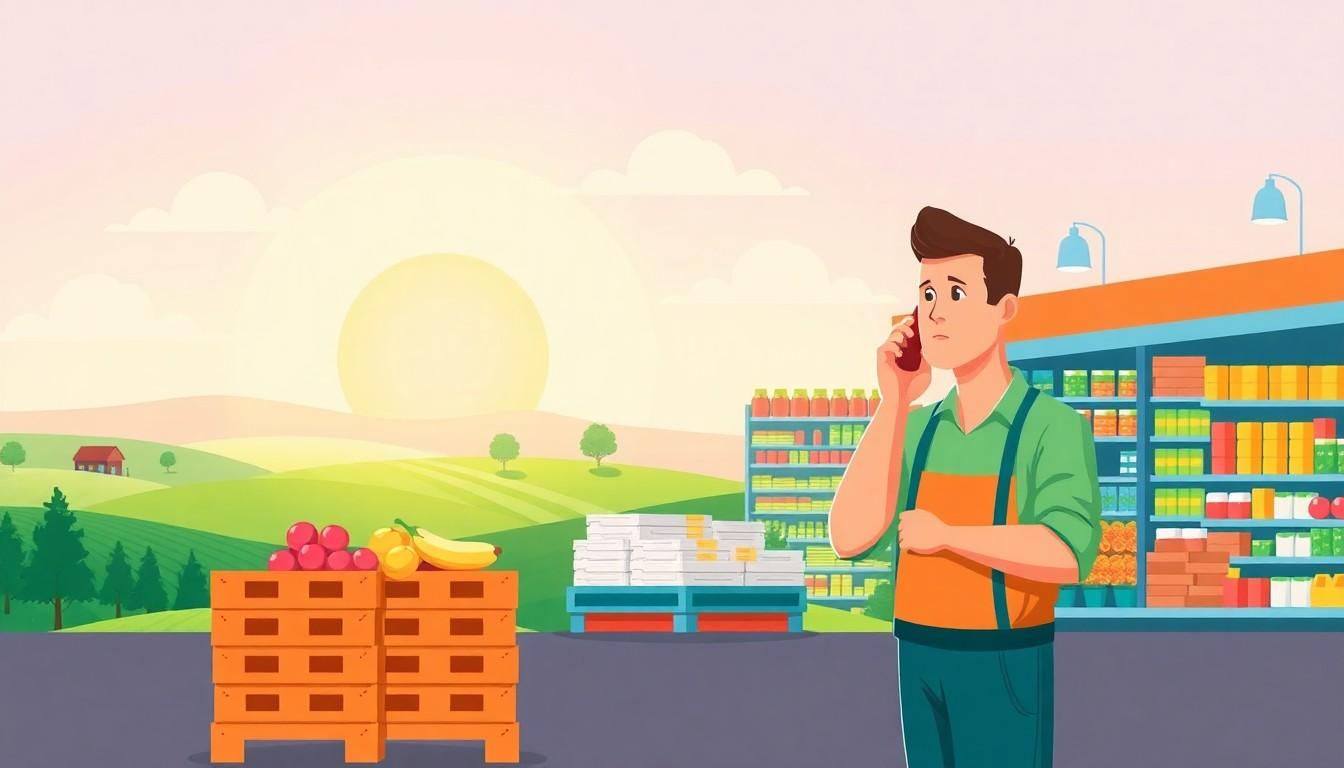
Families are still feeling the strain of rising prices and the occasional gap on supermarket shelves, and the underlying cause is often the same: a fragile supply chain. In simple terms, the grocery supply chain is the network that moves food from farms and factories to shoppers’ baskets, but in practice it is a chain of linked stages, each one vulnerable to its own pressures.
IT Retail describes six main stages in that chain: raw materials, processing and manufacturing, dist...
Continue Reading This Article
Enjoy this article as well as all of our content, including reports, news, tips and more.
By registering or signing into your SRM Today account, you agree to SRM Today's Terms of Use and consent to the processing of your personal information as described in our Privacy Policy.
ribution, wholesale supply, supermarkets and, finally, customers. A problem at any one of those points can travel quickly through the rest of the system, whether it is a shortage of ingredients, a transport delay or a sudden surge in demand driven by a viral trend.
The first stage begins with the producers of core ingredients and agricultural inputs, including farmers, growers and livestock suppliers. Their role is especially important because manufacturers depend on a steady flow of inputs to keep production lines running. If supply tightens here, the effects can be felt far beyond the farm gate. IT Retail points to the recent popularity of high-protein foods as one example of how a sharp jump in demand can place pressure on commodity suppliers.
From there, food moves to processors and manufacturers, where it is cooked, sliced, packaged or otherwise transformed into saleable goods. This is where everything from crisps and canned vegetables to bottled drinks is prepared for the next stage of the journey. It is also a stage exposed to machinery breakdowns, regulatory changes and food safety failures. The summary cites the 2024 shutdown of a Boar’s Head plant in Virginia after black mould and other unsanitary conditions were linked to a listeria outbreak as a reminder that quality issues can rapidly become supply issues.
Once products are ready for sale, they pass through distributors and warehouses, including cold-storage facilities that handle fresh and chilled goods. Weather, labour shortages, transport accidents and geopolitical shocks can all interrupt this part of the chain. The broader grocery sector has also had to contend with the lingering effects of the pandemic, which exposed how border restrictions, factory closures and staffing problems can paralyse the movement of fresh produce and other perishables.
Wholesalers sit at the point where many supermarkets do business directly. Independent grocers often rely on them because they are too small to buy in the volumes required by manufacturers. According to IT Retail, wholesale prices have been under pressure from higher import costs, forcing many firms to rethink their pricing and ordering strategies. In this environment, knowing lead times, product ranges and margin differences has become more than a competitive advantage; it is a necessity.
Supermarkets themselves face the final operational challenge: getting the right goods onto shelves at the right time, in the right quantities, without excessive waste. Thin margins mean stores must manage perishable stock carefully, avoid over-ordering and limit losses from shrinkage, which can come from theft, errors or fraud. In a system built on just-in-time replenishment, even a small delay can leave customers staring at empty shelves.
Demand from shoppers sits at the centre of the whole process. Changes in preference, whether for organic foods, eco-friendly packaging or a new style of bread, can quickly reshape what suppliers must produce and what retailers must stock. The IT Retail article uses bread as a simple example: shifts in taste between white loaves, wholegrain, slider buns and other varieties force each stage of the chain to respond in real time.
That responsiveness is exactly what many grocers have lacked in recent years. A separate IT Retail article on grocery supply chains says disruptions are commonly driven by food safety problems, poor visibility across systems, weather, labour shortages and rising costs. Other industry analysis has highlighted how delays in store-level data, fragmented systems and even third-party cyber incidents can also undermine availability. Together, these pressures make clear that supermarkets are no longer dealing with isolated interruptions, but with a more persistent operating environment in which disruption is part of the normal business model.
Retailers are not powerless, however. IT Retail argues that better inventory software can help stores link sales data with stock levels, improve forecasting and identify shrinkage before it becomes severe. Low-stock alerts and daily sales reports can also give managers a clearer picture of what is moving and what is not. By combining this data with demand forecasting that accounts for weather, holidays, local events and seasonality, supermarkets can reduce the risk of recurring shortages.
The article also recommends building stronger local supply relationships. Working with nearby farms and producers can shorten transport routes, improve resilience and give stores a clearer picture of where products are coming from. Local products can also be promoted as a point of difference, especially when shoppers are looking for convenience and familiarity.
Promotions, too, need careful handling. Discounting slow-moving stock can improve turnover, but only if it is done with a firm grasp of future demand. Stores that cut prices too aggressively may find themselves short of products just as interest rises. Periodic supplier reviews are equally important, particularly when lead times, quality and minimum order quantities can change over time.
The broader lesson is that the supermarket supply chain is only as strong as its weakest link. Inflation, climate pressure, labour shortages and volatile consumer behaviour have made it harder for retailers to rely on old assumptions. The stores most likely to adapt are those that treat supply planning, data analysis and supplier relationships as strategic tools rather than back-office tasks.
Source: Noah Wire Services