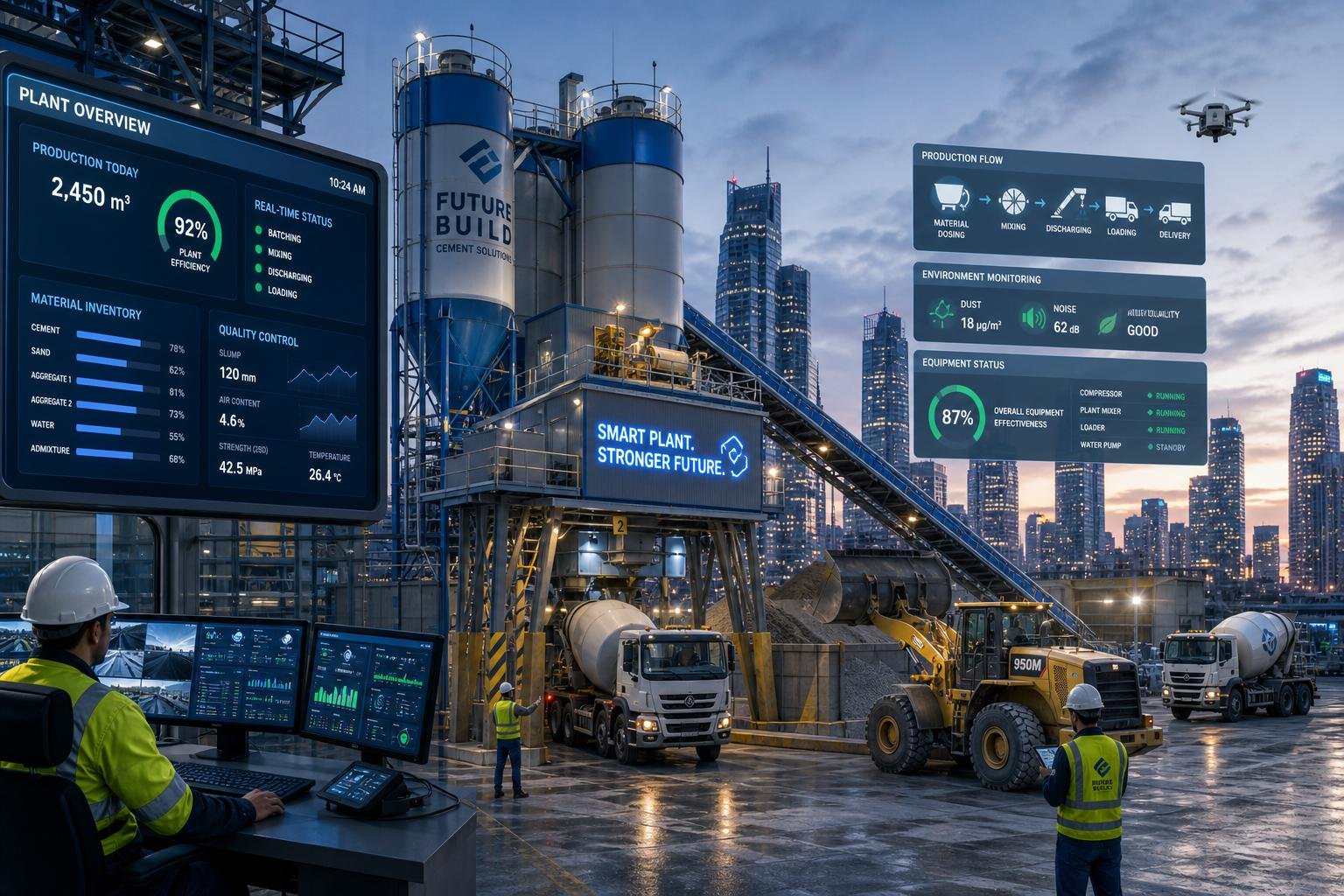
Industry 4.0 is changing the concrete batching plant business from the factory floor up. What was once a field dominated by mechanical engineering and output capacity is now being shaped by sensors, automation software and live data analysis. For suppliers, that means selling more than machines: they are increasingly expected to provide connected systems that can improve efficiency, reduce waste and support customers over the full life of a plant.
That shift is visible in the w...
Continue Reading This Article
Enjoy this article as well as all of our content, including reports, news, tips and more.
By registering or signing into your SRM Today account, you agree to SRM Today's Terms of Use and consent to the processing of your personal information as described in our Privacy Policy.
ay equipment is designed and built. Digital design tools, simulation software and automated fabrication processes are helping manufacturers improve accuracy and cut production errors before a plant ever reaches a site. Instead of relying solely on traditional fabrication, suppliers can now test how mixing systems, aggregate handling units and control platforms will work together in a virtual environment. The result is tighter quality control, shorter lead times and a lower risk of costly misalignment later on.
The rise of intelligent control systems has also altered what buyers expect from batching plants. PLC-based controls, cloud monitoring and IoT sensors now allow operators to track moisture levels, mixing times, cement flow and energy use in real time. That data can be used to fine-tune production automatically, helping plants produce more consistent concrete with less manual intervention. Predictive maintenance is another major change: sensors on motors, conveyors and mixers can detect signs of wear early, allowing repairs to be scheduled before a failure causes downtime.
The effect is not uniform across every type of plant, but the direction is the same. Large stationary batching plants, often used on infrastructure schemes, are increasingly fitted with centralised control rooms and integrated data systems to support continuous output. Mobile plants, which must be moved and set up quickly, benefit from compact digital controls and remote oversight. Modular and space-saving plants, meanwhile, are being designed with smarter interfaces and energy-saving components to suit urban construction and lower environmental impact.
Related developments in the wider concrete and heavy-equipment sectors suggest where the technology is heading next. MEC Pro Factory, for example, offers a digital twin system for concrete block plants that creates a live virtual view of machines, processes and data, while Zoomlion has deployed a 3D digital twin platform in Hubei province for virtual inspections and earlier fault detection. Holcim’s Digital Concrete Solutions show how data can be used not only in production but also across mix design, ordering, scheduling, logistics and live performance monitoring. Together, these examples point to a broader industry move towards connected operations rather than isolated machines.
Industry 4.0 is also reshaping supply chains. Manufacturers can now monitor component availability, production stages and shipping progress more closely, which helps reduce delays and improve delivery accuracy. Better inventory systems can also support spare-part planning, using usage data from installed plants to forecast demand and keep service levels higher. For customers, that can mean less downtime and faster access to replacement parts when problems arise.
Just as important, connected plants generate the kind of performance data suppliers once had little access to. That information can be fed back into product development, helping manufacturers refine future designs, improve energy performance and strengthen mixing consistency. For operators, the benefits are commercial as well as technical: lower running costs, better quality control and stronger returns on investment. In infrastructure work, where consistency matters to structural performance, the ability to monitor and adjust production continuously is especially valuable.
The next stage is likely to go beyond automation into broader lifecycle support. Digital twins, deeper AI integration and more autonomous decision-making are expected to become more common, giving suppliers and operators the ability to model production scenarios and spot problems before they affect output. The result is an industry that is moving steadily away from standalone equipment and towards fully connected production ecosystems.
For concrete batching plant suppliers, that transition is no longer optional. The companies that can combine engineering, data and service are likely to gain the strongest position in a market where customers increasingly want smarter, more adaptable and more efficient plants.
Source: Noah Wire Services