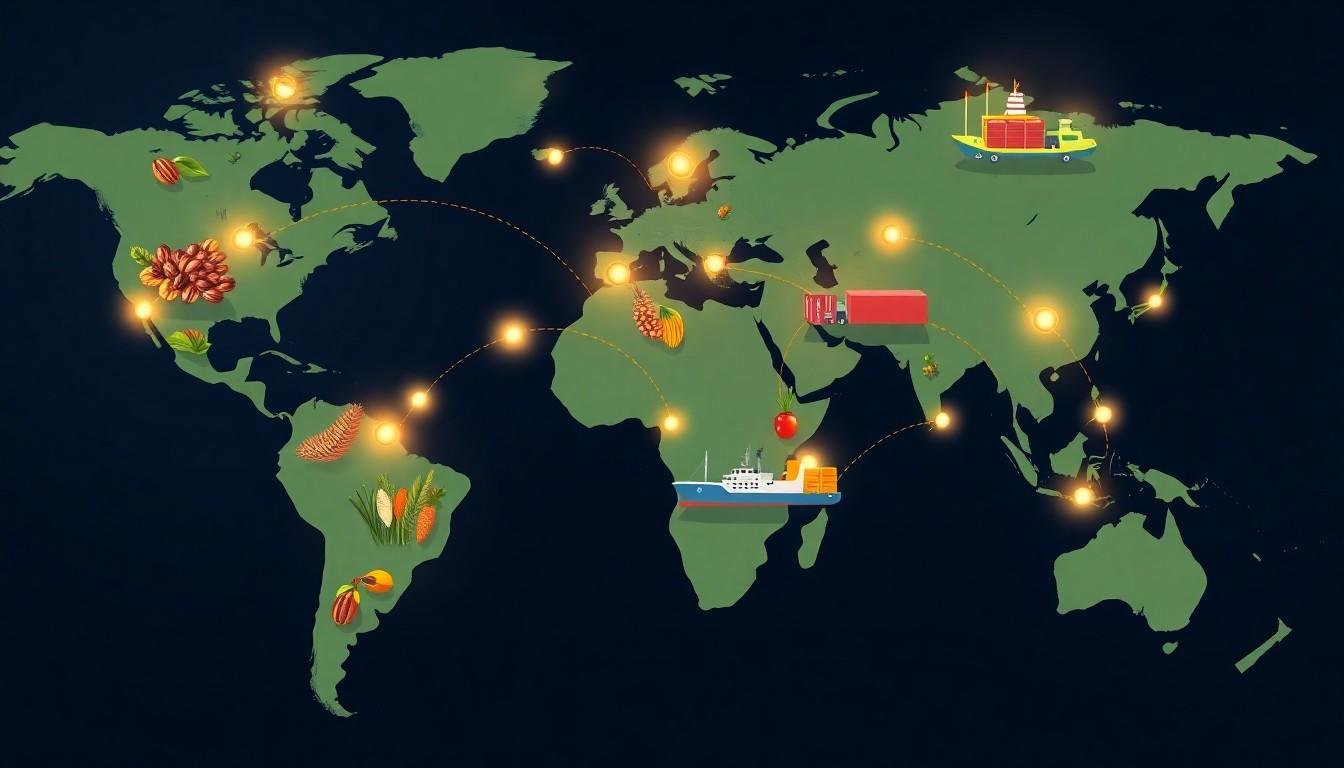
For Nestlé, supply disruption is no longer a temporary disturbance to be managed when it arises. Jacob Busk Nielsen, the company’s chief procurement officer, describes the food and drink sector as facing lasting volatility, driven by climate pressures and geopolitical uncertainty. His prescription is to prepare for shocks before they happen, by building a wider range of sourcing options and making supply networks more adaptable.
That preparation can mean qualifying additiona...
Continue Reading This Article
Enjoy this article as well as all of our content, including reports, news, tips and more.
By registering or signing into your SRM Today account, you agree to SRM Today's Terms of Use and consent to the processing of your personal information as described in our Privacy Policy.
l suppliers, securing alternative ingredients and routes, and deciding in advance which materials pose the greatest risk to production. Nestlé says it has increased business-continuity coverage by more than 30% for key raw and packaging materials in Ukraine, where diversified sourcing has helped the company maintain operations under exceptionally difficult conditions.
Such safeguards come at a price. Extra stock, backup suppliers and the testing of substitute materials all add expense, leaving procurement teams to weigh the cost of preparedness against the need to remain competitive. But Nielsen argues that the ability to anticipate disruption and retain options is undervalued across the industry.
Climate change is among the pressures making that calculation more urgent. Shifts in weather and growing extremes can affect both the volume and quality of crops, with consequences for ingredients ranging from cocoa and coffee to dairy, cereals and grains. Nielsen identifies agricultural commodity price swings as a major exposure for Nestlé, which relies on large quantities of agricultural raw materials.
The vulnerability is heightened when production is concentrated in a small number of countries. The UN Food and Agriculture Organization says Côte d’Ivoire and Ghana together account for more than two-thirds of global cocoa supply. Weather damage and plant disease in those countries contributed to lower output and sharp price rises in 2023 and 2024, according to the FAO. The agency has called for climate-resilient farming, better control of pests and diseases, and stronger information on crops, stocks and trade to help reduce uncertainty.
Nestlé presents work with farmers as one part of its response. The company says 96.2% of its cocoa was sourced through the Nestlé Cocoa Plan in 2025, and it aims to keep that share between 95% and 100% from 2026. Its programme includes agricultural training and support for practices such as water management and planting shade trees, intended to help farms cope with heat and heavy rainfall. Nestlé also acknowledges that shortages, logistics constraints and geopolitical events can complicate sourcing, and that some purchases may fall outside certified or verified networks.
The company’s account illustrates a broader tension: responsible sourcing and traceability can strengthen oversight, but supply chains are not always easy to map fully, particularly in fragmented markets. The FAO’s findings also underline that price shocks affect farmers, processors and consumers differently, meaning that stronger production resilience alone cannot remove every risk.
Procurement’s remit is expanding beyond price and availability. Nestlé says its sourcing teams work with research and development and commercial colleagues on product choices, while suppliers can contribute expertise in formulation, packaging and manufacturing. This cooperation can help identify alternatives before a shortage forces a rapid change. Substituting an ingredient, however, may affect flavour, texture, nutrition, processing, shelf life, labelling and consumer response, so alternatives need to be evaluated well ahead of a crisis.
The company’s 2025 Annual Review offers a view of how that work is being supported by digital systems. Nestlé says it has cut the number of recipe specifications by about half since 2019, simplifying requirements for ingredients and materials. Digital dashboards tracking raw-material needs are intended to give sourcing teams quicker access to information. The review also reports that around 85% of procurement teams used the company’s electronic auction platform in 2025, covering more than 40% of purchasing spend. Nestlé says many transactions generated additional savings of up to 10%.
Artificial intelligence is another tool in the effort to spot problems sooner. Nielsen says Nestlé analyses supplier, logistics, commodity and market information to identify emerging risks and compare sourcing scenarios. In the Middle East, the company has developed a digital supply-chain control tower to provide visibility across shipments and containers. A pilot project also highlighted packaging materials that procurement teams had not previously recognised as carrying substantial exposure, after the system assessed inventory, financial and sales risks together.
Nestlé has separately described using AI to review supplier contracts, support planning and forecasting, and help optimise recipes. Those applications sit within a wider digital programme, the company says, which also includes automation and connected manufacturing. But Nielsen has cautioned that better recommendations do not remove the need for people to take responsibility, particularly when decisions involve suppliers, sustainability or the effects on farmers and communities.
That distinction is central to the changing role of procurement. Digital analysis can help teams act earlier and examine more information, while human judgement remains necessary to assess trade-offs and maintain relationships. As climate risks and market shocks reshape ingredient supply, the function is increasingly tied not only to cost control, but also to product development, business continuity and long-term access to agricultural materials.
Source: Noah Wire Services