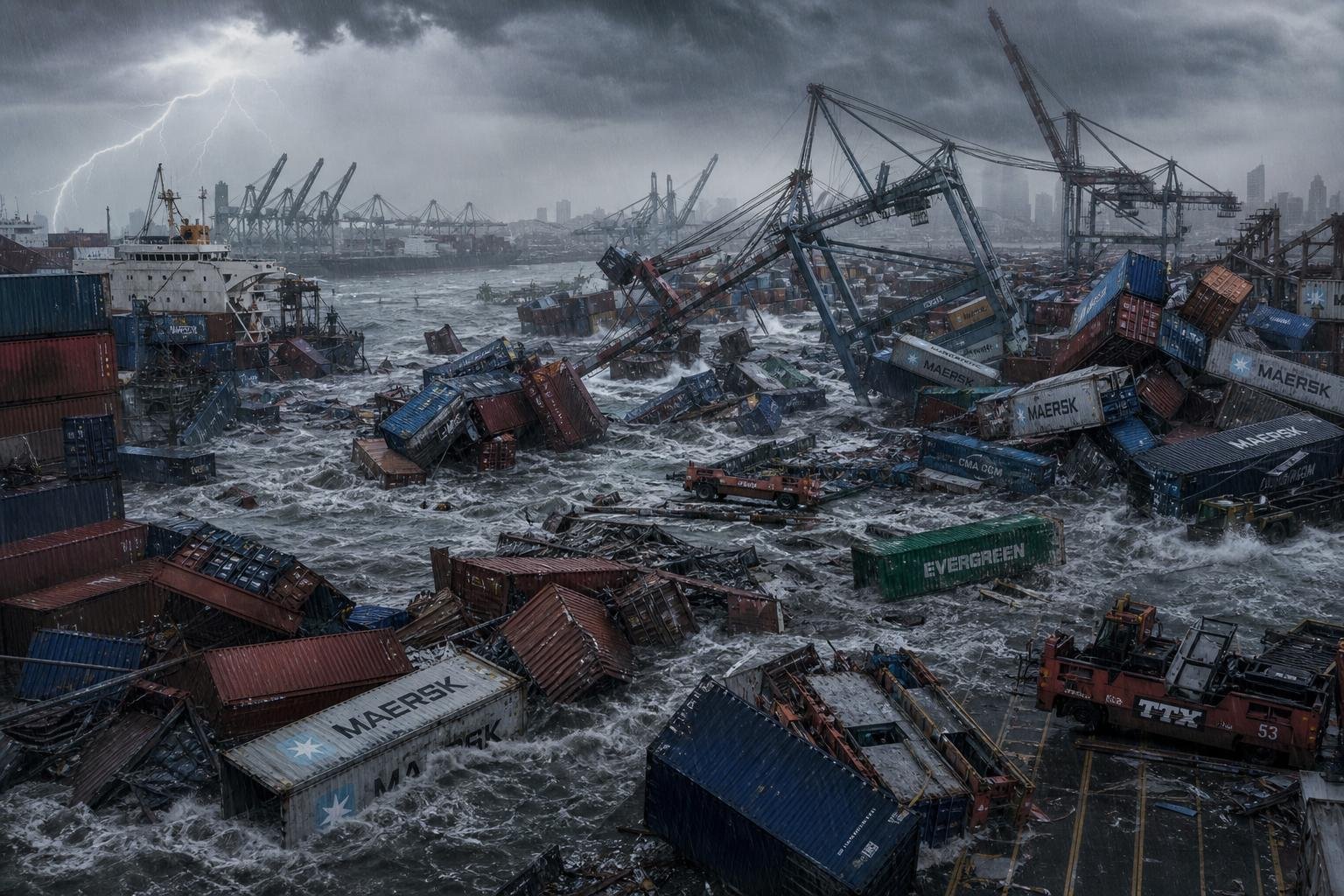
Geopolitical shocks are now moving through supply chains fast enough to force a rethink of how contracts are written, negotiated and managed. In-house legal teams and procurement leaders are no longer dealing only with routine commercial disputes or familiar logistics problems; they are having to build agreements that can cope with wars, sanctions, tariff swings, customs actions and shifting trade rules all at once.
That pressure is visible well beyond the legal department. Gra...
Continue Reading This Article
Enjoy this article as well as all of our content, including reports, news, tips and more.
By registering or signing into your SRM Today account, you agree to SRM Today's Terms of Use and consent to the processing of your personal information as described in our Privacy Policy.
nd View Research says geopolitical tensions and trade disputes continued to disrupt global supply chains in 2024, while McKinsey’s supply chain risk survey found that senior executives were still dealing with serious vulnerabilities, including attacks on commercial shipping in the Red Sea and weather-related delays in Europe. Axios has also reported that conflict in the Red Sea and drought affecting the Panama Canal have added further strain to shipping routes, pushing up costs and lengthening transit times.
Against that backdrop, boilerplate contracting is increasingly out of step with commercial reality. Companies are moving away from the habit of reusing standard purchase terms without much scrutiny, and towards agreements that spell out how the parties will respond if political or regulatory conditions change. That can mean defining how notices will be given, what happens if a shipment is detained by customs, how a sudden tariff increase is handled, or what remedies apply if a counterparty appears on a sanctions or denied-party list.
The change is also reshaping operating models. Businesses are narrowing product ranges, rationalising service lines and reducing exposure to single-country dependence. Many are holding more inventory closer to the point of use, even as tariff pressure and import disruption make that more expensive. Others are broadening their supplier base after years of relying on single-source arrangements that now look too fragile for critical inputs.
A useful way to think about the problem is to divide it into four kinds of variance. Compliance risk arises when goods, services or counterparties fall foul of sanctions, export controls, customs rules or forced-labour restrictions. Cost risk appears when landed prices or service charges rise so sharply that a deal becomes commercially unattractive. Availability risk covers shortages, shipping delays or government interference that prevents delivery. Quality risk concerns products or services that fail to meet agreed standards and damage production, customer relationships or both.
Each of those risks requires a different contractual response. Compliance concerns often call for warranties, indemnities and screening obligations, particularly where third parties, banking relationships, end users or upstream suppliers are involved. Cost exposure may need pricing formulas, indexation, shared-cost structures or milestone-based payment terms. Availability risk can justify forecasting obligations, reporting requirements and carefully drafted force majeure clauses. Quality issues are often better managed through service-level agreements, performance metrics, periodic reviews and corrective action plans.
The procurement process matters just as much as the contract itself. Many companies are now mapping supply chains in detail to identify vulnerable nodes, assess visibility gaps and pinpoint legal or operational weak spots. That information can then feed into tender documents, supplier questionnaires, onboarding checks and periodic certifications. For sales teams, the same discipline applies downstream: customer screening, sanctions checks, export-control validation and order-fulfilment controls are becoming standard parts of risk management rather than back-office formalities.
NIST’s guidance on cybersecurity supply chain risk management adds another layer to that thinking, emphasising that companies need to understand how products are developed, integrated and deployed if they are to protect security, resilience and integrity across the chain. Gartner, meanwhile, has argued that companies should formalise their risk appetite so that supply chain controls align with broader business strategy. Together, those views point to the same conclusion: supply chain resilience now depends on treating geopolitical risk as a contract issue, an operational issue and a governance issue at the same time.
The legal lesson is straightforward. Every supply chain has its own vulnerabilities, and every one of them needs terms that reflect the real exposures in play. For companies trying to preserve continuity in a volatile trading environment, that means moving beyond generic wording and building contracts that are designed for disruption rather than surprised by it.
Source: Noah Wire Services