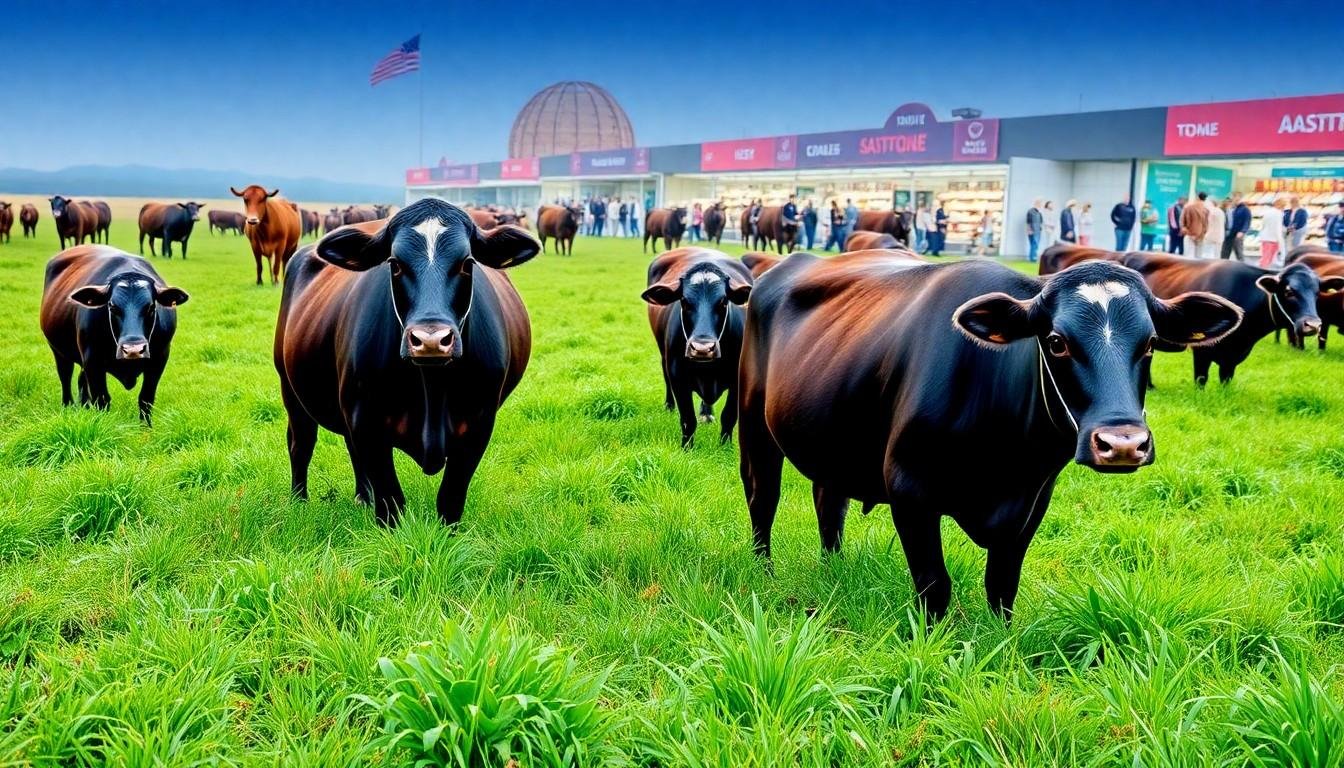
Australian beef producers are being told that sustainability reporting may soon be as important as the product itself, after a year-long pilot tested whether farm data could be captured once and carried through the supply chain in a form buyers, regulators and consumers could all use.
SEAOAK Consulting said the project followed Macka’s Australian Black Angus Beef from Gloucester in New South Wales through trade links spanning seven countries, using GS1 Australia barcodes, QR ...
Continue Reading This Article
Enjoy this article as well as all of our content, including reports, news, tips and more.
By registering or signing into your SRM Today account, you agree to SRM Today's Terms of Use and consent to the processing of your personal information as described in our Privacy Policy.
codes and digital passports to move provenance and sustainability information from the farm to the end customer. The trial involved 15 partners, including Meat & Livestock Australia, and was designed to reduce the repeated data requests that many producers face from different parts of the supply chain.
At the core of the programme was a reporting framework built around more than 115 farm-level measures covering environmental stewardship, animal welfare, economic resilience, and people and community. SEAOAK said the model aligned with the Australian Beef Sustainability Framework and was intended to give producers a single source of truth that could be repurposed for multiple reporting demands.
The company also trialled an AI Farm Sustainability Dashboard, which pulled together on-farm information and generated reports and credentials for supply chain partners. According to SEAOAK, this allowed automated sustainability reporting to be shared quickly and in different formats, cutting down the burden on farmers who otherwise have to respond to overlapping questionnaires from customers, processors, industry bodies and regulators.
The digital passport element of the pilot was linked to GS1-based QR codes aligned with the Australian Agricultural Traceability Protocol. SEAOAK said this allowed environmental credentials and verified provenance data to be viewed on smartphones in several languages, helping information travel with the product across markets including China, Korea, Mexico and Spain.
The consortium said consumer behaviour shifted most when sustainability claims were presented alongside product quality, rather than as a standalone selling point. It also said visible and trusted information increased confidence and buying intent among supply chain participants.
The project’s backers argue the timing is significant. Beef production is one of Australia’s most economically important agricultural sectors, contributing more than AUD14 billion to GDP and supporting about 60,000 producers, according to figures released with the pilot results. That scale, they said, makes the case for systems that can be extended to other commodities if the model proves workable.
Maria Palazzolo, chief executive of GS1 Australia, said the trial showed how global standards could support end-to-end traceability. Robert Mackenzie, managing director of Macka’s Australian Black Angus Beef, said the pilot had changed how the business could present its farm story to customers and described the response as encouraging.
SEAOAK and its partners say the next question is whether the infrastructure can be broadened beyond a single trial and adopted more widely across agriculture, as pressure rises from deforestation rules, emissions disclosure requirements and the push for verified provenance in export markets.
Source: Noah Wire Services