For consumer-goods businesses, a supply plan can be overtaken within days by a successful promotion, a sudden change in the weather or a product attracting unexpected attention. The challenge is not simply to predict every shift. It is to turn new information into coordinated action before the opportunity, or the stock, has gone.
Capgemini Research Institute’s study, Resilient by design, found that 77% of consumer-goods organisations regarded forecasting uncertainty,...
Continue Reading This Article
Enjoy this article as well as all of our content, including reports, news, tips and more.

By registering or signing into your SRM Today account, you agree to SRM Today's Terms of Use and consent to the processing of your personal information as described in our Privacy Policy.
That delay can have practical consequences. Demand may surge in one region while stock sits elsewhere, or a promotion may outperform expectations after production and distribution decisions have already been made. Moving inventory, adjusting output or rerouting a delivery may require agreement across teams that use different systems and operate on different timelines.
The interval between detecting a change and acting on it is a test of coordination as much as prediction. Capgemini’s analysis argues that agents can help close this gap by linking signals to decisions and execution. But adoption does not mean handing supply chains over to software.
The institute’s research found that 22% of consumer-products organisations had piloted or implemented AI agents in their supply chains, up from 15% a year earlier. Yet only 24% expected their supply chains to be fully automated within three to five years. Across all sectors surveyed, the proportion expecting agents to make most supply-chain decisions over that period fell from 66% to 56%.
Those figures come from executives’ expectations, not a measure of proven results. They nevertheless suggest that organisations are approaching deployment with greater caution as they confront uneven data, operational exceptions and decisions that require judgement. Capgemini’s wider research, based on a survey of 1,000 senior executives across 13 countries and four industries, also highlights the continuing importance of human accountability, sound data foundations and clear governance.
The design question, then, is less about maximising autonomy than deciding how people and agents should work together. Agents might monitor conditions, analyse options and carry out routine tasks, while people set boundaries, weigh competing priorities and take responsibility for consequential choices. Clear rules are needed for what an agent may do independently, when it must escalate a decision and who owns the result.
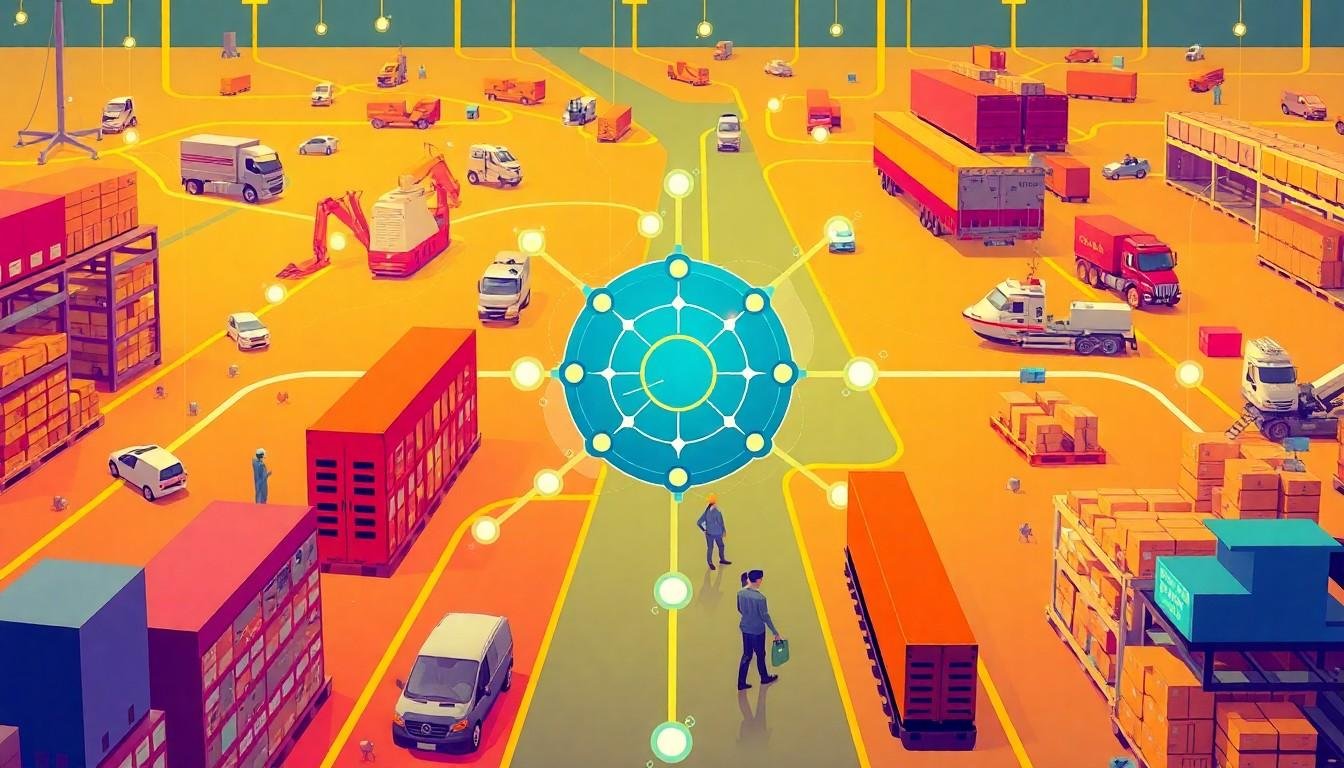
That requires a shift away from improving isolated functions towards organising work around shared business outcomes. Planning, procurement, production, logistics and commercial teams may each have capable tools, yet delays can arise where decisions pass between them. Capgemini’s perspective on next-generation supply chains describes an orchestration model in which agents connect those activities, supported by shared operational context and governance. Such a model depends not merely on access to data, but on systems understanding how the organisation works and what it is trying to achieve.
For example, a demand-sensing agent could combine sales information with promotion, weather and other market signals. Other agents might assess supplier or factory capacity and recommend where inventory should go. The benefit would depend on whether those assessments lead to a joined-up response, rather than a series of disconnected recommendations.
There are early examples of AI being applied to parts of this work, although they should not be mistaken for proof that fully autonomous, multi-agent systems are already delivering results at scale. Unilever has described using AI and connected data to improve forecasting and supply-chain decisions. In a company-reported pilot with Walmart in Mexico, the initiative achieved more than 98% on-shelf availability while reducing inventory and supporting category growth. Unilever’s account also emphasises that human expertise remains important in interpreting information and making decisions.
PepsiCo, meanwhile, has announced plans to work with Salesforce’s Agentforce and other AI-enabled tools across customer service, sales operations and in-store execution. The company says real-time inventory information is intended to help field representatives improve product stocking and store execution. These are announced capabilities and plans, rather than independently verified evidence of results across a fully deployed system.
For consumer-products executives, oversight is not a secondary safeguard. Capgemini’s survey found that 86% of respondents in the sector believed insufficient human oversight would increase operational and reputational risk, compared with an 80% average across industries. That concern need not signal opposition to AI. It reflects the consequences of a poor decision being repeated across a large, fast-moving operation.
Human intervention should also provide information the system can learn from. When a planner rejects an agent’s recommendation, recording the reason and the subsequent outcome can help distinguish a useful exception from a flaw in the recommendation. Without that feedback, human overrides remain invisible and trust is harder to build.
The same response challenge applies to disruption across the supply network. Capgemini found that 81% of consumer-products respondents considered geopolitical instability a significant supply-chain challenge, while 61% were concerned about maintaining operational continuity. Yet only half said their organisations could adapt quickly and cost-effectively to short-term disruption.
An agent that detects a deviation, assesses its implications for sourcing, production and distribution, and prepares options for decision-makers could help speed the response. The work may begin further upstream: monitoring risks such as water stress or deforestation could give companies earlier warning of threats to agricultural supplies. But effective action also depends on visibility beyond direct suppliers, an area where Capgemini’s research identifies readiness gaps.
The intended outcome need not be a product on a shop shelf. Online delivery promises, returns, margin protection and the conversion of orders into cash all depend on decisions spanning multiple teams and systems. No single agent or department can control the whole result.
The practical starting point is to identify a recurring delay between a meaningful signal and an effective response. Leaders can then define the outcome they want to improve, trace the decisions and handovers involved, and set explicit rules for when agents act and when people step in. Progress should be judged by whether the organisation responds better, not simply by how many decisions it has automated.
Demand will continue to shift and supply networks will remain exposed to disruption. The opportunity for agentic AI lies in helping people, systems and decisions move together quickly enough to change what happens next. As Mayank Sharma, Capgemini’s vice-president and global intelligent operations offer lead, put it: “Autonomy is the wrong scoreboard. The brands that win will be the ones that keep people and agents looking at the same picture, at the same moment.”
Source: Noah Wire Services
Subscribe to Industry Updates
Get the latest news and updates directly to your inbox.