


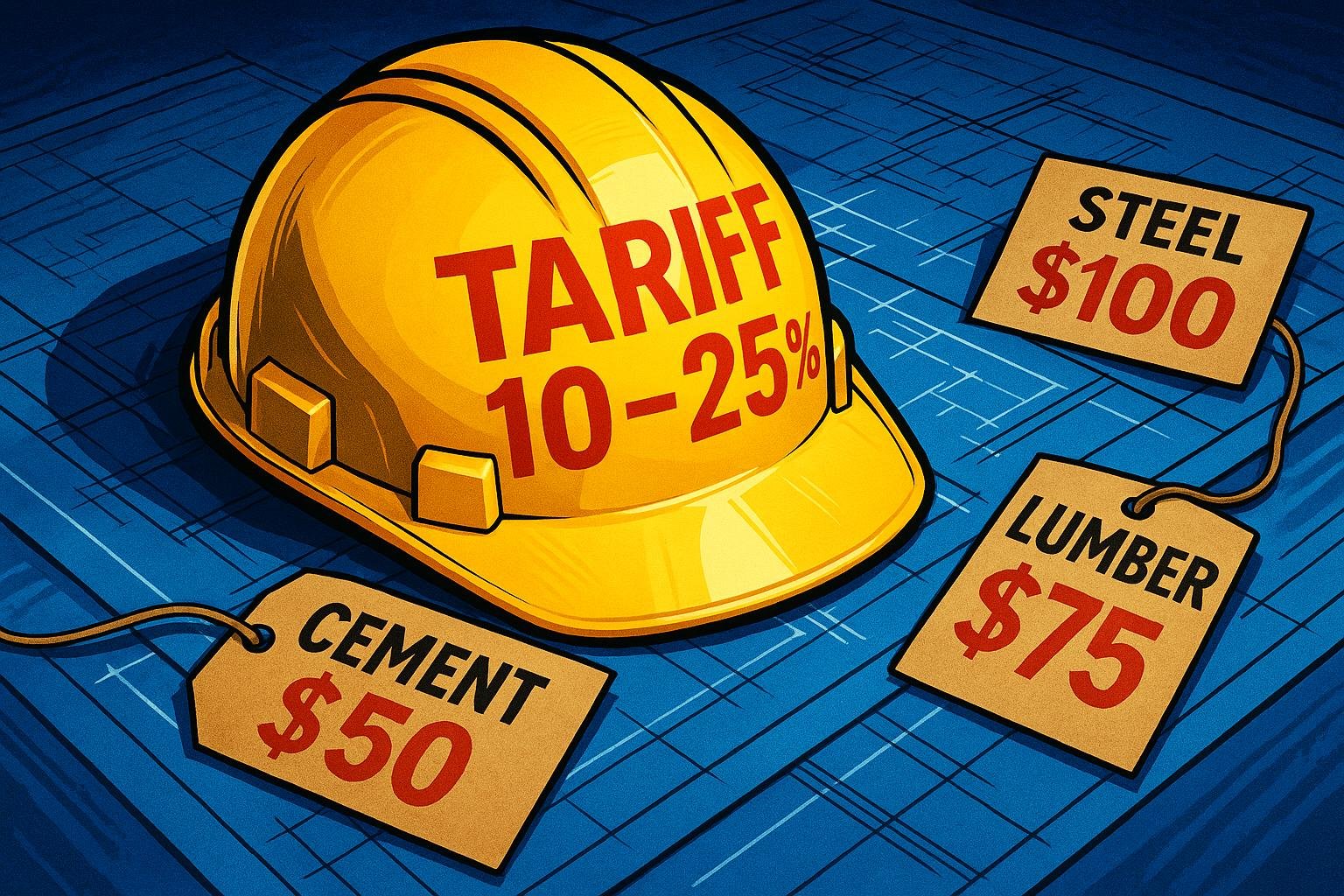
The White House’s April 2025 reciprocal‑tariff framework introduces new ad valorem duties on imports that are increasing cost volatility across the construction sector. Builders are stockpiling materials, rewriting bid assumptions and pressing for targeted exemptions as rising input prices, supply‑chain disruptions and labour shortages threaten margins, project timelines and housing affordability.

Since 2020 the construction sector has been fighting a squeeze on every front — higher material prices, fragile supply lines and a chronic shortage of skilled tradespeople — and a new layer of trade policy is now threatening to deepen the strain. The industry faces the twin problems of margin erosion and planning uncertainty as tariffs announced by the White House in April 2025 introduce fresh cost volatility to an already unsettled market.
Industry data show the scale of the challenge. Analysis by the National Association of Home Builders indicates that costs for core building materials such as lumber, steel and gypsum have climbed roughly 34% since December 2020. Producer‑price measures collected and discussed by NAHB underscore that, while some items (notably lumber) have eased from pandemic peaks, many inputs remain well above pre‑pandemic levels — with gypsum, concrete and steel still carrying substantial multi‑year gains. Higher input prices, NAHB says, ripple through projects by raising insurance costs, complicating appraisals and eroding housing affordability.
Those pressures were amplified last year by a sharp rise in supply‑chain disruption. Resilinc, which monitors millions of open‑source feeds with its EventWatch AI, reported a 38% year‑on‑year increase in global supply‑chain disruptions during 2024. Its analysis pointed to a mix of factory fires, labour incidents, business sales and leadership transitions as leading causes, and flagged a marked rise in protests, extreme weather and regulatory and geopolitical alerts. Resilinc argues that such disruptions make lead times more unpredictable and force firms to devote resources to supplier mapping, AI monitoring and rapid incident response — steps that many construction firms are only beginning to adopt.
Into that fraught environment came an executive order issued by the White House in April 2025 that created a reciprocal‑tariff framework intended to address persistent U.S. goods trade deficits. The order sets a baseline additional ad valorem duty starting at 10% on most imports and establishes higher, country‑specific rates in annexes that take effect from April 2025. The administration characterised the move as a tool to correct unfair trade practices and protect domestic industry, while the order itself says the new duties are supplemental to existing tariffs and may be layered with other measures where lawful. It also lists exemptions for certain products and agreements, including goods that qualify under the United‑States‑Mexico‑Canada Agreement and specified critical sectors.
How that policy will translate into everyday costs in construction is already worrying contractors. White‑paper and trade coverage note announced tariff ranges from about 10% up to figures as high as 245% in particular cases. Reporting has since clarified that the top‑end 245% number reflects the cumulative aggregation of multiple tariff layers — existing Section 301 levies, newly announced reciprocal duties and, in some instances, additional penalty or fentanyl‑related surcharges applied to specific products — rather than a blanket, across‑the‑board rate on all imports from any single country. Beijing has dismissed the high‑end characterisation as “a numbers game”, according to contemporary reporting, but the practical effect for affected supply chains remains material.
Contractors and remodelers are already changing behaviour in response. Trade reporting and industry groups describe a mix of tactical measures: builders are stockpiling key materials when cash and storage permit; seeking domestic alternatives where feasible; reworking bid assumptions to include broader price escalators; and in some cases passing higher input costs on to customers. The strategy of stockpiling, while sensible as a short‑term hedge, ties up working capital and can create bottlenecks in smaller firms that lack purchasing scale.
The supply‑side response is mirrored by policy pleas from the industry. NAHB and other trade bodies are calling for more predictable trade policy, targeted tariff relief and measures to expand domestic timber and raw‑material production to reduce reliance on vulnerable imports. Advocates argue that clarity and calibrated exemptions would allow firms to plan rather than react — a crucial difference in an industry where contracts and financing stretch months or years into the future.
Beyond tariffs and supply risk, the sector’s labour shortages make flexibility and resilience harder to achieve. Tight labour markets mean that even where materials are available, projects can be delayed because of a lack of skilled installers; conversely, sudden price swings complicate workforce planning when smaller margins leave less room for overtime or productivity loss. Taken together, these factors deepen an affordability squeeze for homebuyers and complicate the balance sheets of residential and commercial builders alike.
What does this mean in practice? For many firms the immediate priority will be scenario planning: recalibrating budgets, tightening supplier relationships and accelerating adoption of supply‑chain visibility tools. Resilinc’s work, for instance, emphasises investment in supplier mapping, AI monitoring and WarRoom‑style collaboration to reduce surprise exposure at sub‑tier levels. For policymakers, industry groups urge more transparent and targeted trade measures, and investments to grow domestic manufacturing capacity — a longer‑term answer that will not ease the next 12 months’ cost pressure.
The upshot is stark. Construction firms are operating with thinner cushions and less predictability than a decade ago. The April 2025 tariff framework adds a political and regulatory dimension to risks that were already economic and operational. Unless policy decisions are accompanied by clear, narrow exemptions and time for firms to adjust, builders and remodelers worry that margins, project timelines and, ultimately, housing affordability will continue to deteriorate — a scenario that will be felt not only by firms but by the consumers and communities who rely on steady construction of homes and infrastructure.
Source: Noah Wire Services

