


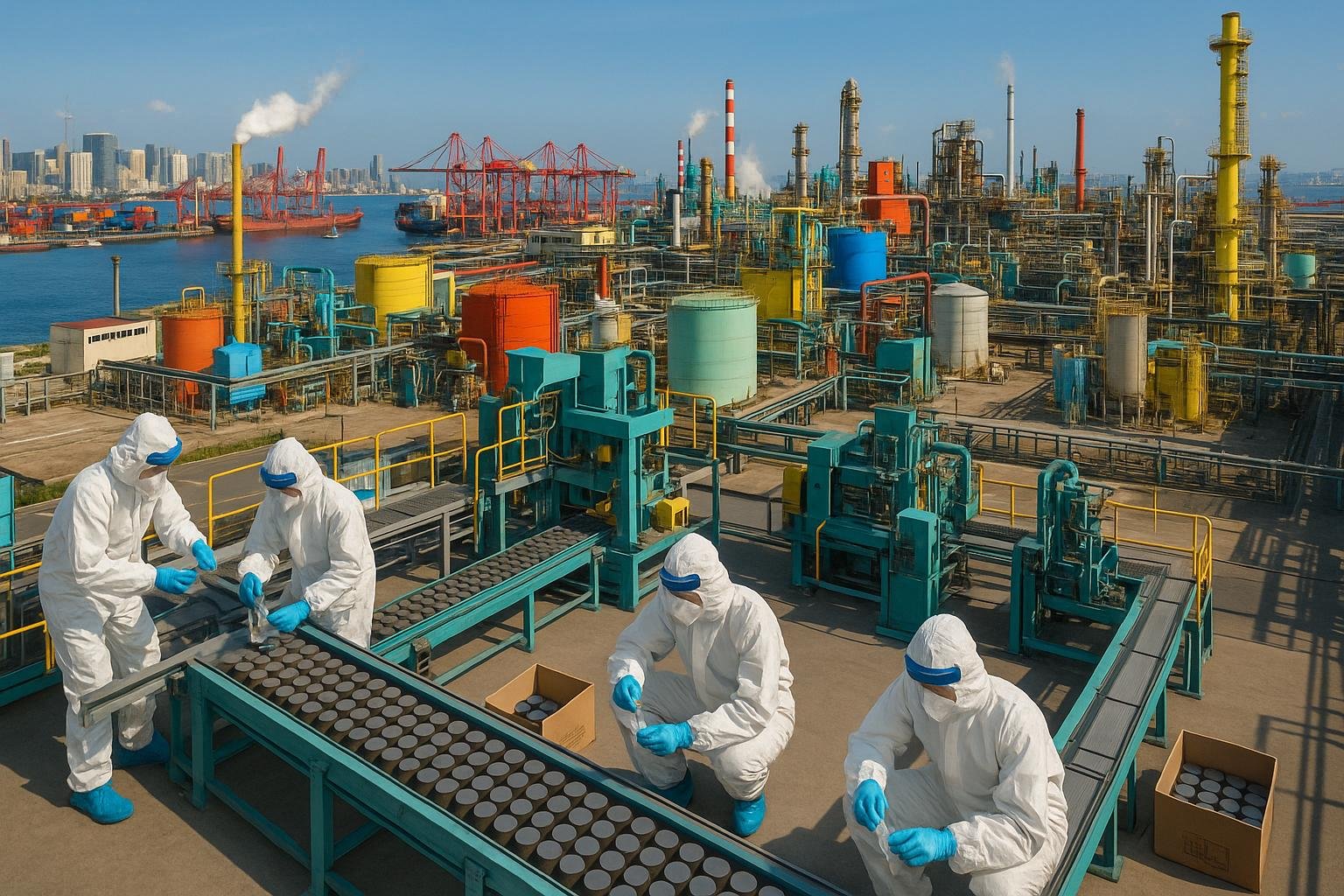
Allied governments seek to transform the critical minerals industry by securing multi-year offtake agreements and coordinated procurement strategies, aiming to reduce China’s overwhelming control over rare-earth magnet supply chains and attract private investment.

Allied governments seeking secure supplies of critical minerals face a financing problem that supply-side interventions alone cannot solve. Grants, subsidised loans and strategic stockpiles ease short-term p...
Continue Reading This Article
Enjoy this article as well as all of our content, including reports, news, tips and more.
By registering or signing into your SRM Today account, you agree to SRM Today's Terms of Use and consent to the processing of your personal information as described in our Privacy Policy.
China’s grip on processing and magnet production is extensive and enduring. According to reporting by CNBC, a sharp rise in Chinese rare-earth magnet exports in July 2025, driven by a trade framework that eased some export controls, sent about 353 metric tonnes to the United States in a single month, underscoring Beijing’s ability to meet global demand quickly. Industry analyses and specialised trackers show China controls between roughly 85% and more than 90% of magnet production and dominates rare-earth processing capacity; some estimates put Chinese control of processing at above 90%. Government and market studies also highlight China’s lead in patents, with tens of thousands of rare-earth-related intellectual property filings versus far fewer Western equivalents. These factors combine to make alternative supply projects high-risk propositions for private capital. According to the U.S.Department of Energy’s neodymium magnet supply-chain analysis, domestic magnet production is limited and restoring competitiveness requires investment across mining, processing and manufacturing.
The root of the financing shortfall is demand uncertainty. Heavy rare-earths and magnet-grade feedstocks trade in small, illiquid markets where annual volumes are measured in hundreds or low thousands of tonnes. Thin, opaque trading amplifies price swings and prevents reliable hedging; futures markets that support financing in other commodities are largely absent. Lenders and equity backers therefore treat uncontracted midstream projects as speculative; without predictable offtake they apply sharp discounts to revenue forecasts or refuse to proceed.
Original equipment manufacturers hold the lever to change that calculus. Automotive, aerospace, defence and white-goods producers define technical requirements and purchase volumes. When OEMs commit to multi-year purchase agreements they turn speculative projects into contracted assets with cash flows that banks and investors can underwrite. Electric-vehicle makers already accept long-term supply deals for lithium and battery precursor materials; extending the same purchasing discipline to rare-earth magnets and separated heavy rare-earth oxides would materially lower financing costs for new facilities.
Pooling demand across buyers magnifies the effect. Industry consortia or coordinated procurement approaches among Australia, Japan, the United States, Canada and EU members could aggregate volumes to levels capable of supporting commercial-scale processing and magnet plants. Defence procurement can be an important early anchor: long-term defence acquisition plans provide multi-decade visibility and carry credibility that reassures financiers. Government purchase commitments for certified, non-Chinese magnets and processed oxides would send strong market signals. However, governments must be careful not to crowd out private demand; if sovereign purchases absorb too much early output producers risk building supply chains dependent on state buying rather than diversified commercial customers. Balanced frameworks should ensure defence anchors initial demand while leaving room for EV, renewable and industrial buyers to scale alongside.
Complementary measures will help but cannot substitute for contracted sales. Strategic stockpiles and price floors can blunt predatory pricing and short-term shocks while capacity is nascent, yet they do not create the recurrent commercial transactions that sustain an industry once government support recedes. Standards and certification regimes are another prerequisite; harmonised rules across allied jurisdictions that verify processing location, chain-of-custody and security compliance reduce transaction costs and permit products processed in one country to be accepted in another’s defence and industrial supply chains. Procurement rules and incentive programmes should reference those standards to reinforce credible demand.
The international data underlines the urgency. Multiple industry and government sources indicate China supplies roughly nine out of ten rare-earth magnets worldwide and controls the lion’s share of processing capacity. That vertical integration, from separation through magnet manufacture, was built by aligning state-backed capital with guaranteed domestic and export demand. Western investors operate under different incentives; they require transparent, contract-backed revenue streams inside definable time horizons. Without such commitments, attempts to scale alternative processing and magnet production risk creating a narrow, politically fragile substitute rather than a resilient allied ecosystem.
If governments genuinely want resilient critical-mineral supply chains they must move beyond rhetoric and targeted subsidies to secure buyers. Policy should focus on aligning procurement frameworks with OEM purchasing practices, creating certified multi-year offtake commitments, and coordinating allied standards. Those steps convert strategic intent into the credible, bankable demand that will attract private capital and underwrite the industrial capacity needed to reduce dependency on a single supplier.
Source: Noah Wire Services
Subscribe to Industry Updates

