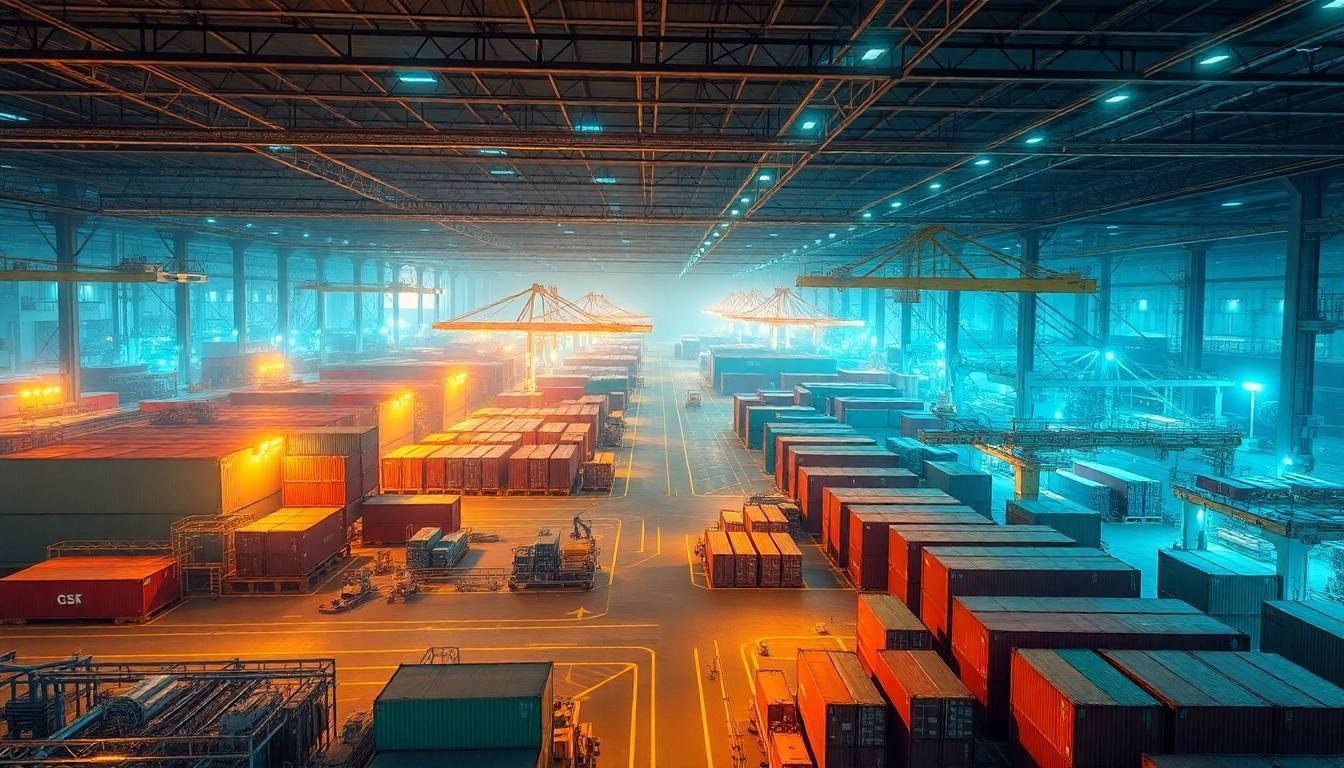
Vietnam is moving through a decisive phase in its economic integration, with its third-place showing in the Asia Manufacturing Index 2026 underlining how far the country has come as a production base. What was once seen largely as an alternative to China is now increasingly regarded by multinational companies as a strategic location for long-term investment.
That shift, however, comes with a higher bar. Surajit Rakshit, HSBC Vietnam’s country head for global trade solutions, ...
Continue Reading This Article
Enjoy this article as well as all of our content, including reports, news, tips and more.
By registering or signing into your SRM Today account, you agree to SRM Today's Terms of Use and consent to the processing of your personal information as described in our Privacy Policy.
argues that manufacturing scale alone will not be enough to secure that position. Vietnam, he says, must also build more advanced supply-chain finance tools and a trustworthy trade-data infrastructure if it wants to turn industrial strength into durable influence.
The broader backdrop is a manufacturing landscape that is becoming more selective and more complex. Companies are now choosing production sites not only on labour and property costs, but on logistics reliability, supplier quality, speed to market and resilience against geopolitical and climate-related shocks. Nike’s long-running reconfiguration of its production network is a case in point: after moving from Japan to China and then to south-east Asia, Vietnam has become the company’s largest manufacturing hub, accounting for about 51% of its global footwear output and 31% of its apparel production.
Trade itself is also changing shape. Services now account for roughly a quarter of global trade and have been growing at nearly twice the pace of goods trade. At the same time, more of the value in modern products lies in software, data and associated services rather than in hardware alone.
Digitalisation is the third force reshaping commerce. Data-driven platforms are becoming the new operating layer of supply chains, and firms that can reliably share information on orders, shipping, invoices, compliance and sustainability will have a clear advantage.
Rakshit says Vietnam is well aligned with those demands. After years of building a manufacturing base and supporting industrial ecosystem, the next phase will depend on raising productivity through automation, process improvement and workforce skills. The country’s competitive edge, in his view, is moving away from low cost and towards high value delivered at still-competitive cost.
He points to the textile sector, where Vietnamese companies have already demonstrated consistent production capability, and to electronics, where the country is taking on more value-added work rather than simply final assembly. In trade involving AI-related equipment, Vietnam’s global market share has risen from 1.2% in 2015 to 12.4% in 2025, while commerce in machinery and electrical equipment with partners such as Taiwan and South Korea has expanded sharply, reflecting the country’s growing role in regional technology supply chains.
Policy direction is also reinforcing that trend. Vietnam’s Resolution 10 identifies electronics, semiconductors, AI and high technology as priority areas for foreign direct investment. The challenge, according to HSBC, is to translate that intent into practical, stable and workable rules, which often determine whether major technology investors choose one Asian location over another.
The financing side of the supply chain is emerging as another competitive test. Rakshit says large multinational buyers now expect more than low-cost, on-time delivery. They want evidence of resilience, innovation capability and transparent data, including labour standards, traceability, ESG metrics and carbon emissions.
That pressure often falls hardest on second- and third-tier suppliers, many of which remain small and undercapitalised. HSBC says working capital is one of the key bottlenecks. Without the resources to finance raw materials, inventory or expansion, suppliers can struggle to keep pace with faster and more demanding purchasing requirements.
In that context, supply-chain finance is no longer just a support service. When structured well, it allows suppliers to be paid earlier at a cost based on the buyer’s credit strength, while the purchasing company preserves liquidity and helps stabilise the network around it. HSBC’s own supply-chain finance platforms are built around that model, offering web-based tools that speed up invoice approval and early payment while improving cash-flow management.
Rakshit says Vietnam now needs to modernise that ecosystem further. He calls for a more reliable trade-data backbone so that financing can be tied directly to verifiable transactions such as purchase orders, shipments and electronic invoices. He also argues for standardised definitions and documentation, which would reduce friction in cross-border programmes and limit disputes.
Another priority is to expand sustainability-linked working-capital solutions, using measurable transition indicators such as lower greenhouse-gas emissions, greater use of renewable energy and water reuse. Tying financing conditions to verified progress, HSBC says, would help capital support competitiveness rather than simply compliance reporting.
The scope of financing also needs to widen, from large anchor firms to smaller suppliers deeper in the chain. That would support localisation, reduce concentration risk and give smaller businesses more room to invest in technology and quality improvements.
For Vietnam, the message is clear: industrial capability has already been proved. The next test is whether the country can build a supply-chain environment in which capital, data and trust move as efficiently as goods do.
Source: Noah Wire Services