


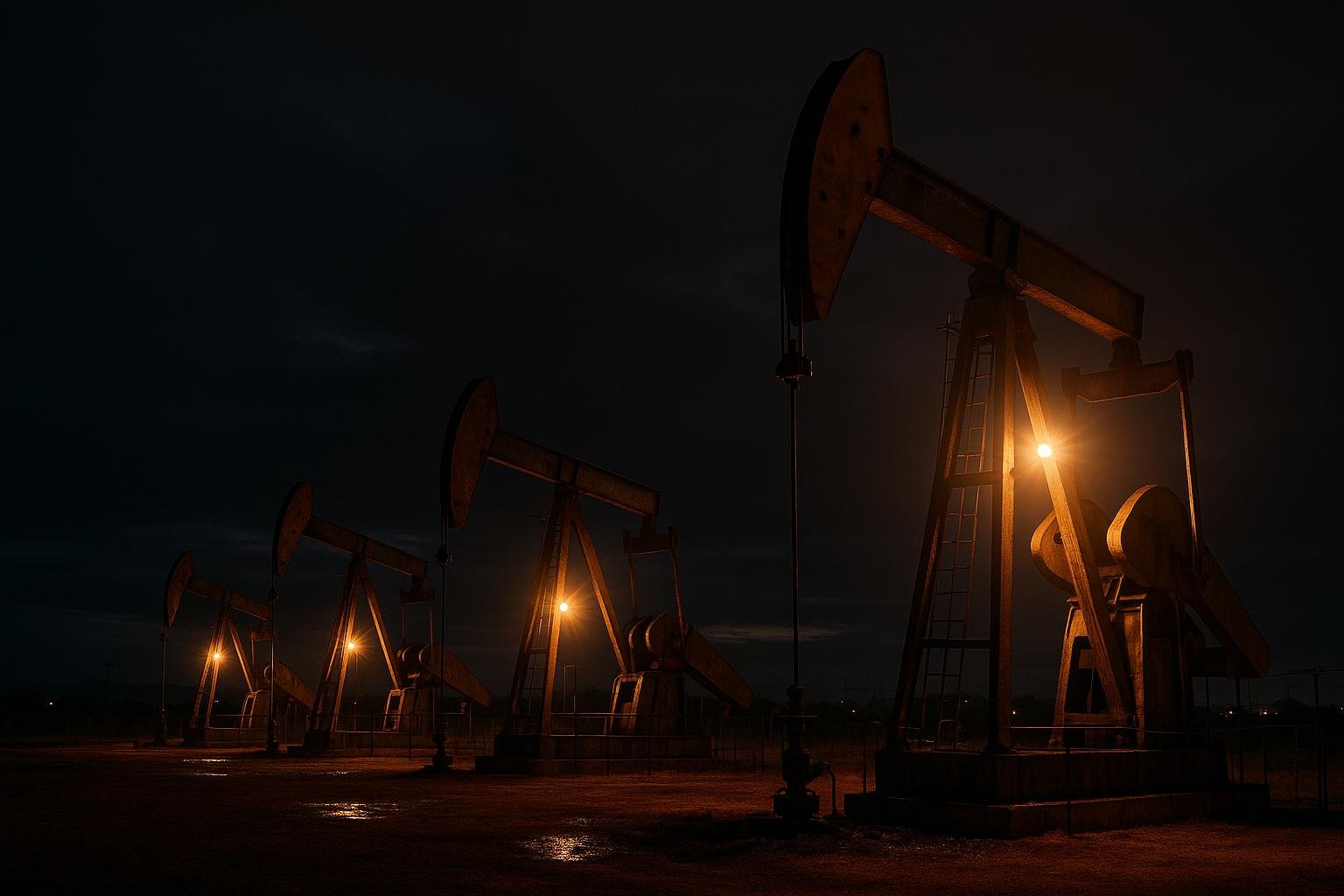
Despite having the world’s largest crude reserves, Venezuela’s oil industry remains in decline due to heavy crude extraction challenges, political instability, and sanctions. The Trump administration’s proposal to reinvest in the sector highlights a complex and lengthy path to revival, facing technical, legal, and geopolitical obstacles.

The dramatic capture of Venezuelan President Nicolás Maduro has thrust into sharp relief a long-standing paradox: t...
Continue Reading This Article
Enjoy this article as well as all of our content, including reports, news, tips and more.
By registering or signing into your SRM Today account, you agree to SRM Today's Terms of Use and consent to the processing of your personal information as described in our Privacy Policy.
Venezuela’s resource base is staggering. According to S&P Global, the country holds roughly 364 billion barrels of oil equivalent; Al Jazeera and other outlets note estimates commonly cited at more than 300 billion barrels, larger than those of Saudi Arabia. Yet production has tumbled from the multi‑million barrels‑per‑day levels seen in the 1990s to well under one million barrels a day today, a decline documented by Al Jazeera, NDTV and S&P Global. Industry analytics firm Kpler, cited in the Fox News report, put current output at about 800,000 barrels per day.
The technical challenge is fundamental. Venezuela’s commercially recoverable deposits are dominated by heavy and extra‑heavy crude that requires specialised extraction techniques, diluents and upgraded refining capacity. Years of underinvestment, ageing infrastructure and the erosion of technical expertise mean that rebuilding upstream capacity is a multi‑year, capital‑intensive task, as Forbes and Rigzone have argued. Even if foreign capital were rapidly mobilised, output gains would be gradual rather than immediate.
Political risk is the other towering barrier. The state’s reassertion of control over the oil sector under Hugo Chávez in the mid‑2000s, and subsequent disputes that drove firms such as ExxonMobil and ConocoPhillips out of the country, left a legacy of mistrust and unpaid arbitration awards, a history recounted in the Fox News account. Sanctions imposed by the United States further complicated trade and financing, pushing Caracas into deeper economic ties with Russia, China and Iran and fostering opaque trading practices such as the use of “ghost ships,” according to the Fox News analysis and Al Jazeera reporting.
Trump framed the coming intervention in starkly economic terms. “We are going to have our very large United States oil companies go in, spend billions of dollars, fix the badly broken oil infrastructure and start making money for the country,” he said during a news conference at Mar‑a‑Lago, as reported by Fox News. The administration’s proposal, according to that account, envisages mobilising U.S. energy capital to rebuild Venezuela’s oil industry and re‑direct crude flows toward U.S. refineries.
But private sector reactions have been cautious. Chevron, the sole remaining U.S. oil major with assets in Venezuela, told Fox News Digital it was following “relevant laws and regulations” and remained focused on employee safety and asset integrity. ConocoPhillips said it was monitoring developments and it would be premature to speculate on future business activities. Those responses underscore the legal, reputational and regulatory vetting companies would undertake before committing hundreds of millions or billions of dollars.
Sanctions policy will be decisive. Forbes and other analyses emphasise that restrictions on access to markets, financing and necessary equipment have been as important as geological realities in depressing Venezuelan output. Industry observers note that by late 2025 tanker movements had been severely disrupted by sanctions, curtailing exports even where crude remained available. Lifting or easing sanctions, and providing legal guarantees to investors, would be prerequisites for a large‑scale return of U.S. firms; without such changes, private capital is likely to remain wary.
Geopolitics complicates the economics. As U.S. and European firms retreated, state‑backed actors from Russia and China deepened their presence through loans, swaps and technical support, a shift documented in the Fox News analysis and corroborated by international reporting. Any U.S. attempt to reassert influence via energy investment risks a broader confrontation with those actors over market access, debt claims and diplomatic leverage.
There are also practical financial hurdles. Rehabilitating fields, restarting wells and restoring export logistics will demand sustained capital and an experienced workforce that has shrunk during years of crisis. Rigzone and S&P Global emphasise that reconstruction of the upstream sector will be measured in years and faces the added complication of Venezuela’s heavy crude requiring diluent supplies and specialised refining capacity that are not readily scalable.
In short, the raw scale of Venezuela’s reserves presents an alluring strategic prize, but converting that geological wealth into sustained production and export revenues will require a convergence of conditions that do not yet exist: clear and durable legal arrangements for investors, a phased easing of sanctions and guarantees, substantial new capital and a programme to restore technical capacity and infrastructure. As Al Jazeera, Forbes and India Today have all noted, reserves alone will not determine the country’s oil future; policy, money and time will.
The Trump administration’s plan to invite U.S. oil companies back therefore represents the opening of a complex political and commercial negotiation rather than an immediate fix. If Washington intends to amplify its influence in Caracas by leveraging energy, it will have to balance the promise of billions in investment against the practical, legal and geopolitical obstacles that years of decline and international entanglement have produced.
Source: Noah Wire Services
Subscribe to Industry Updates

