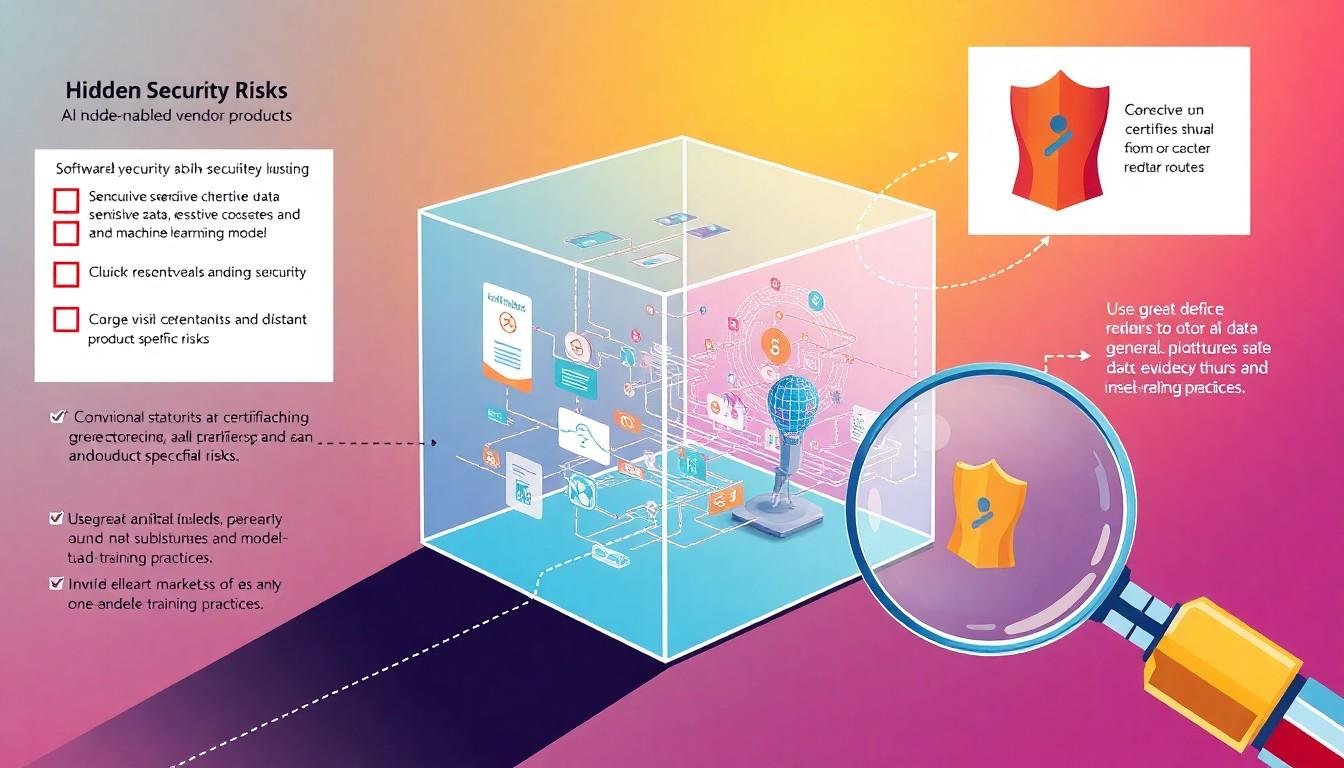
An enterprise security review can appear thorough while overlooking the risks introduced by a vendor’s AI features. A questionnaire may cover encryption, breach response and SOC 2 assurance, yet fail to establish which AI subprocessors handle company data, whether recordings are used to train models or which product features fall within an audit’s scope.
That gap matters because AI-related data flows do not necessarily follow the same routes as a vendor’s other services. ...
Continue Reading This Article
Enjoy this article as well as all of our content, including reports, news, tips and more.
By registering or signing into your SRM Today account, you agree to SRM Today's Terms of Use and consent to the processing of your personal information as described in our Privacy Policy.
Audio, video, screenshots and scripts may each be processed differently, with distinct retention periods and third-party providers. A vendor’s general security credentials cannot, on their own, show how every AI feature handles information.
The first step for procurement teams is to map what a tool captures, where each type of data is processed, how long it is retained and whether storage location can be selected. Questions should be asked about specific activities, such as transcription, voice generation and image analysis, rather than relying on a broad privacy statement.
The same scrutiny should be applied to subcontractors. For each AI feature, buyers should identify the third parties involved, the information transferred to them, the purpose of processing and the contractual terms that apply. A data-processing agreement with the main vendor does not automatically establish what protections bind each subprocessor.
Model training also requires a clear, documented answer. Organisations should establish whether customer recordings, scripts or other content can be used to train AI models, and whether any exceptions apply. The relevant terms should be located in a contract, data-processing agreement or data-use policy, with their scope checked against every feature under review. General assurances are difficult to verify if they do not point to a specific document.
Certifications need similar attention. The AICPA’s illustrative SOC 2 Type 2 report shows why the description of the audited system matters: an examination covers a defined system and specified controls, not every product or process a company may offer. Buyers should therefore check whether the product and AI-related processing activities being assessed are included in the report, and whether its reporting period is current.
Accessibility documentation has a different purpose. Section508.gov explains that a VPAT is a template used to produce an Accessibility Conformance Report, which describes how a particular product conforms to relevant accessibility standards. A current, product-specific report can support an accessibility review, but it does not establish how AI systems handle data or whether security controls are effective.
Automated privacy features can be assessed in the same evidence-led way. TechSmith says Snagit Smart Redact can identify nine categories in images: addresses, credit-card numbers, dates, email addresses, faces, IP addresses, phone numbers, Social Security numbers and URLs. Users can select which detected information to obscure and apply blur, pixelation or black bars. The company describes the feature as applying to still images and screenshots, not video. Its detection should be checked before an image is shared; automated tools should not be treated as infallible or as covering data types beyond their stated scope.
Access controls, audit logs and the ability to disable AI features are separate matters and should be assessed separately. Reviewers can ask whether logs identify who accessed, edited or shared AI-processed material, what actions were recorded and when. They should also establish whether permissions can be limited by role or team, and whether AI functions can be switched off for particular users or accounts.
Unapproved adoption makes these questions more pressing. IBM’s 2025 Cost of a Data Breach Report examined breach experiences at 600 organisations between March 2024 and February 2025. It found that one in five organisations had experienced a breach involving shadow AI, while 37 per cent had policies to manage AI or detect its use. Organisations with high shadow-AI exposure recorded average breach costs $670,000 higher than those with low or no such exposure. That is an average association within the study, not a forecast for any individual organisation, but it gives businesses a financial reason to identify unreviewed tools and establish controls before use.
NIST’s AI Risk Management Framework offers a vendor-neutral way to organise that work. Released in January 2023, the framework was supplemented in July 2024 by a Generative AI Profile intended to help organisations apply its principles across the design, development, use and evaluation of generative AI. It is voluntary guidance, not a certification or guarantee of safety, and does not replace legal, privacy or security review. Used alongside a conventional vendor questionnaire, it can help teams structure questions about governance, data, reliability, impact and dependencies.
Incident-response terms should also address subcontractors explicitly. Organisations should establish who must notify them if an AI subprocessor experiences an incident, when the notification period begins and what information the first notice must contain. A clear contractual deadline and defined scope provide stronger grounds for accountability than a general promise to notify customers promptly.
Documentation access can reveal how prepared a supplier is to support scrutiny. Reviewers should request current, product-relevant reports and policies, verify their dates and scope, and identify a security or privacy contact for unresolved questions. TechSmith’s Trust Center, for example, offers company materials on security, privacy, compliance, accessibility and subprocessors. As the company’s own resource, it is a starting point rather than independent verification; underlying reports, contracts and policies still need to be examined.
The practical test for any vendor is whether its claims can be tied to a named document, defined product and particular processing activity. A structured review should establish what data is captured and retained, which third parties receive it, whether it is used for training, what safeguards apply, which AI features can be disabled, and whether the relevant evidence is current. That turns AI vendor assessment from a general assurance exercise into a review of specific systems, commitments and controls.
Source: Noah Wire Services