


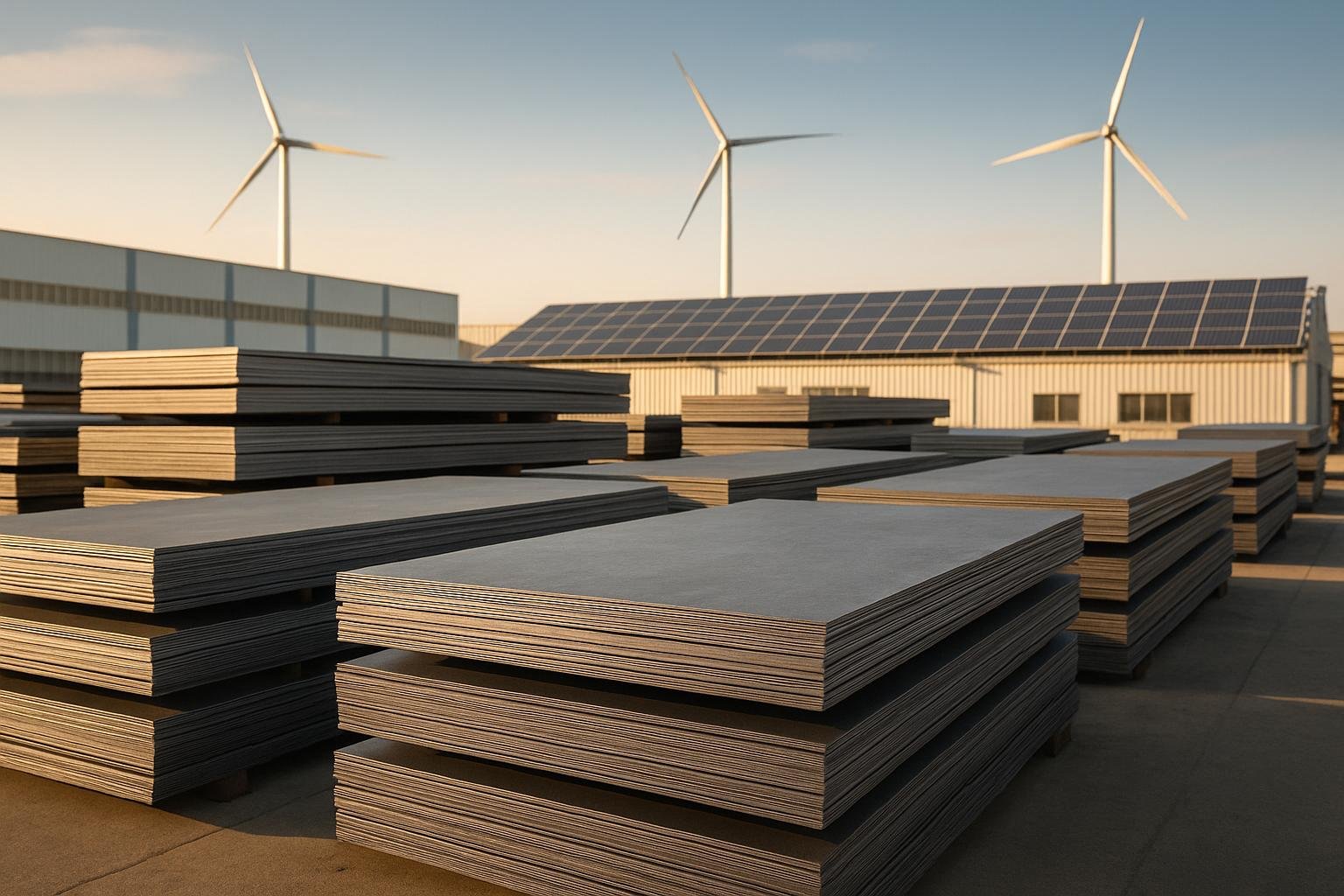
A new analysis reveals that six major US automakers command over 70% of the country’s primary steel demand, giving them significant power to drive the industry towards greener production methods amidst ongoing mergers and capacity expansions.

Primary, virgin steel , the grade forged from iron in coal‑fired blast furnaces , remains the backbone of vehicle construction in the United States, and a new supply‑chain analysis suggests automakers hold disproportionat...
Continue Reading This Article
Enjoy this article as well as all of our content, including reports, news, tips and more.
By registering or signing into your SRM Today account, you agree to SRM Today's Terms of Use and consent to the processing of your personal information as described in our Privacy Policy.
An investigation commissioned by the environmental group Mighty Earth and shared with Canary Media finds that at least 60% of U.S. primary steel is bought by the auto sector, concentrated among six manufacturers: Ford Motor Co., General Motors Co., Honda Motor Co., Hyundai Motor Group, Stellantis and Toyota Motor Corp. Those six companies together account for roughly 73% of new cars on U.S. roads, giving them outsized influence over demand for the steel produced in blast furnaces across the country. According to Matthew Groch, senior director of decarbonization at Mighty Earth, “The auto market drives blast furnaces in the U.S.,” and he added, “If they really cared and wanted to, they could put pressure on these companies they’re buying steel from. But they aren’t, and they don’t.”
The analysis, compiled by consultancy Empower LLC for Mighty Earth, pieced corporate procurement links from annual reports, investor materials, journalism and supply‑chain databases to map how finished vehicle makers connect to specific U.S. steel facilities. It highlights a simple leverage point: large, repeat purchasers can shift markets toward lower‑carbon production if they demand it, but the current pattern shows limited pressure from automakers to accelerate cleaner alternatives.
The push and pull in the sector is visible in recent corporate activity. Hyundai’s announcement of a multibillion‑dollar U.S. investment , including plans for a steel plant in Louisiana , drew a rapid response from Mighty Earth urging the company to ensure its EV supply chain avoids entrenching coal‑based production. The environmental group has framed such investments as pivotal inflection points: new capacity sited around blast‑furnace technologies risks locking in high emissions for decades, whereas directing capital toward low‑carbon processes could hasten sectoral decarbonization.
Pressure on purchasers has mounted alongside critiques of automakers’ public sustainability pledges. Mighty Earth has publicly questioned General Motors’ reporting and commitments, arguing the company has not shown sufficient progress in decarbonising its steel and aluminium supply chains despite membership of industry initiatives intended to spur early adoption of low‑carbon materials. Mighty Earth’s broader programme on decarbonising the auto supply chain notes that the automotive industry accounts for about 9% of global greenhouse‑gas emissions and that materials such as steel and aluminium are major contributors.
Market dynamics complicate the transition. Historically, automakers have favoured primary steel for external body panels and structural components because of perceptions of superior strength and quality. Improvements in recycled, electric‑arc‑furnace steel , often called secondary steel , have begun to narrow that gap, and scrap‑based mills say they are winning more business from vehicle makers. Nevertheless, production from coal‑fired blast furnaces still dominates the supply picture in the U.S., limiting the climate benefits of increased scrap use unless automakers make explicit procurement choices to privilege low‑carbon suppliers.
At the same time, steel industry consolidation and recent corporate transactions have reshaped incentives. Nippon Steel’s acquisition of U.S. Steel completed last year amid intense political and union scrutiny, and the merged entity has announced plans to invest heavily in modernising operations. The company said it would deploy approximately $11 billion across business segments by 2028 and pursue numerous cost‑saving and efficiency initiatives. Company statements frame these investments as both commercial and operational priorities; environmental groups caution that modernisation must prioritise decarbonising process technology rather than simply improving efficiency within coal‑based models.
Automakers’ public responses are mixed and often guarded. Inquiries to the six largest buyers elicited limited disclosure: Honda acknowledged efforts to reduce CO2 associated with procurement and manufacturing but declined to identify individual suppliers, stating in an emailed comment that “Honda is actively working to reduce CO₂ emissions associated with raw material procurement and manufacturing processes.” Other manufacturers did not provide detailed supplier‑level commitments for the analysis.
The policy and market context also matters. Investment cycles for large steel plants run decades long, so decisions taken now about the type of furnaces installed and the feedstock model chosen will determine emissions profiles for years. Industry data show some momentum toward electric‑arc furnaces and hydrogen‑based direct reduced iron processes, but scale and cost remain barriers. Meanwhile, automakers face competing pressures: controlling material costs, securing reliable supply for EV growth and meeting shareholder and regulatory expectations on climate performance.
The central takeaway from the Mighty Earth analysis is straightforward: the auto sector is a pivotal buyer whose procurement choices could accelerate or retard U.S. steel decarbonisation. If major vehicle manufacturers tightened sourcing standards, prioritised low‑carbon steel and channelled their purchasing power toward cleaner producers, demand signals could reconfigure investment plans across an industry that has recently shown renewed appetite for traditional blast‑furnace capacity. Conversely, without such customer pressure, companies building and modernising steel plants may default to technologies that perpetuate high emissions.
As the U.S. steel landscape evolves , through mergers, investment pledges and new domestic capacity announcements , the degree to which automakers translate climate commitments into concrete supplier requirements will determine whether those industry moves lock in legacy emissions or help usher in cleaner production methods.
Source: Noah Wire Services
Subscribe to Industry Updates

