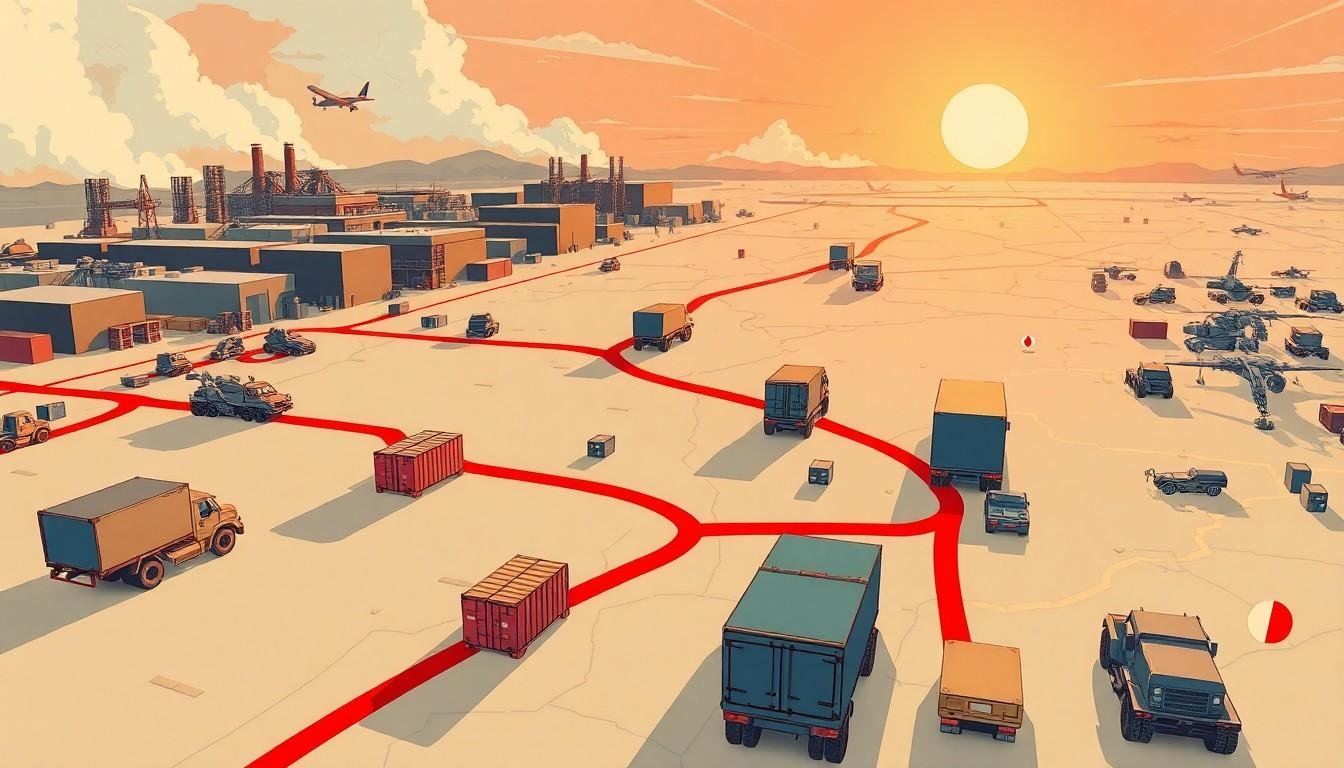
UK defence policy is increasingly treating industrial capacity and supply networks as components of military readiness, rather than as support functions that can be considered after operational plans are made. That shift reflects a strategic environment shaped by changing threats, fast-moving technology and the prospect that forces may need to sustain activity over a prolonged period.
The Ministry of Defence’s Defence Industrial Strategy 2025 sets out a programme to strengthe...
Continue Reading This Article
Enjoy this article as well as all of our content, including reports, news, tips and more.
By registering or signing into your SRM Today account, you agree to SRM Today's Terms of Use and consent to the processing of your personal information as described in our Privacy Policy.
n the industrial base, reform procurement, accelerate innovation and improve readiness. Its priorities include backing UK-based businesses, building more resilient supply chains and establishing enduring partnerships. The strategy also calls for a clearer understanding of supply-chain vulnerabilities and of what might prevent industry from scaling production quickly.
That policy direction gives added weight to the argument that no single organisation can provide every capability required to support defence. Government, large contractors, smaller businesses and specialist suppliers bring different expertise, infrastructure and resources. Procurement can help connect those contributions, but the Strategic Defence Review 2025 also recognises that collaboration can be impeded by issues such as complex regulations, intellectual property arrangements, security clearance and limited access to data or testing facilities.
The Ministry of Defence’s Defence Supply Chain Strategy describes the network as a shared national endeavour involving industry, allies and other government departments. It calls for integrated planning and a broader view of value that weighs reliability and service alongside cost. In its account, resilience means being able to prepare for disruption, respond to it and recover while maintaining continuity of operations.
A practical illustration of the partnership approach is Torus Defence Supply Chain, an alliance formed by GXO, Amentum, Accenture and A.P. Moller–Maersk. In a March 2026 announcement, the companies said they intended to combine expertise in logistics, procurement, programme integration, digital technology and global transport to support the UK defence sector. The partners describe the initiative as a way to improve the integration and visibility of supply chains. As a company announcement, it sets out their stated aims, rather than independent evidence of results.
The case for testing those ambitions is underscored by a Ministry of Defence exercise reported in 2026. Officials and five defence companies took part in a wargame examining how supply networks might cope with sustained demand for equipment during a prolonged conflict. The exercise was intended to identify potential constraints and inform further work on readiness and resilience. It also highlighted the importance of ensuring that smaller and innovative firms can contribute to the equipment supply base.
Collaboration can help create the capacity to adapt when demand changes: established networks and shared expertise may allow resources to be mobilised or activity expanded more quickly than isolated arrangements. Digital systems can support that effort by improving visibility across suppliers, helping organisations identify problems earlier and make decisions with better operational information. But technology alone cannot remove physical bottlenecks or guarantee that equipment and supplies will be available when needed.
For that reason, logistics, warehousing, inventory management and distribution belong within defence planning from the outset. The government’s strategies and exercises point to a growing emphasis on connecting policy with practical preparedness. Whether that translates into stronger operational support will depend on how effectively public bodies and industry address vulnerabilities, improve procurement and build supply networks capable of enduring disruption.
Source: Noah Wire Services