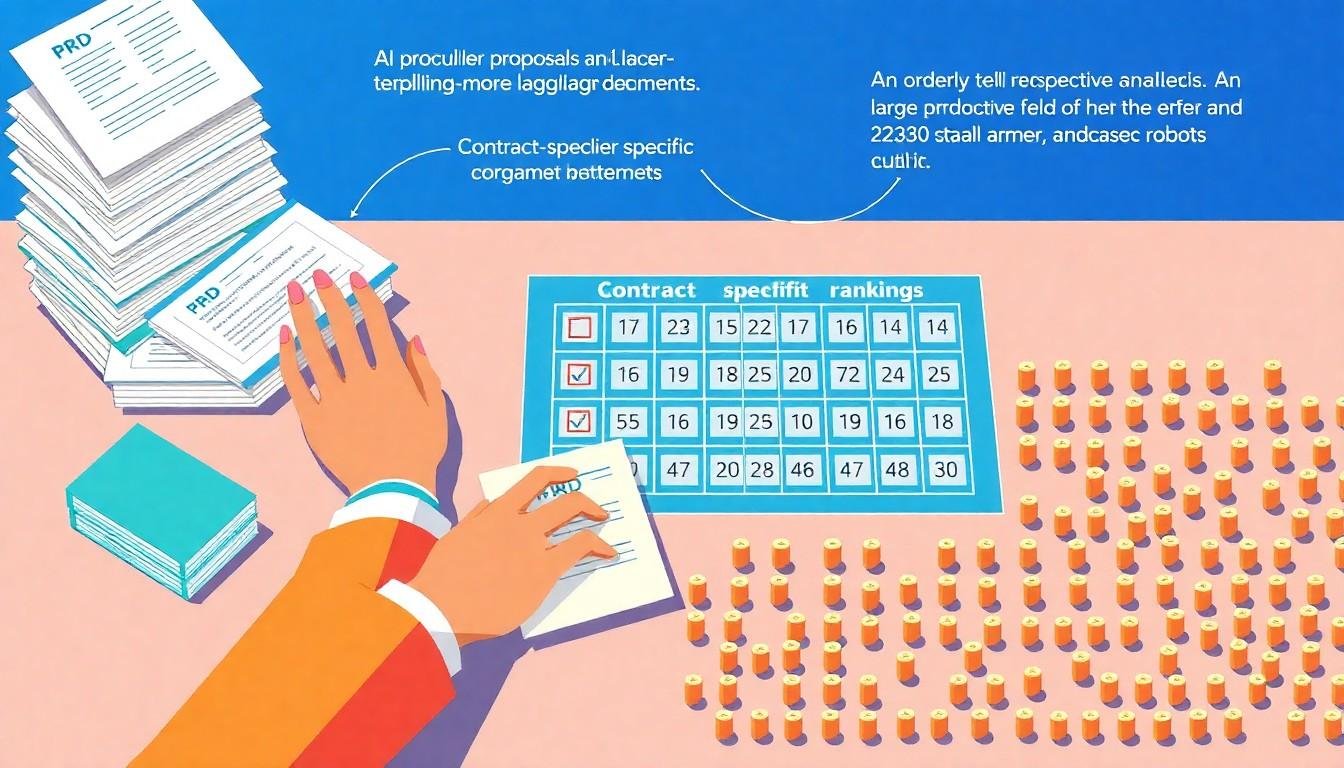
Procurement teams are being asked to judge suppliers against more than price, quality and delivery. Sustainability commitments, regulatory duties, resilience and exposure to operational risk can all shape a decision, while market conditions may change quickly. Researchers at Constructor University have proposed a framework that uses artificial intelligence to help process this complexity without handing it control of the final choice.
The study, published in Machine Learnin...
Continue Reading This Article
Enjoy this article as well as all of our content, including reports, news, tips and more.
By registering or signing into your SRM Today account, you agree to SRM Today's Terms of Use and consent to the processing of your personal information as described in our Privacy Policy.
g with Applications, was produced by Omid Fatahi Valilai, Mohammadreza Rezaei and Sridhar Sreemulnath Iyer. It divides the work between a large language model, conventional analytical tools and procurement professionals.
The language model can interpret a purchasing brief, organise claims from supplier documents and explain the resulting analysis in plain language. Separate, deterministic systems retain responsibility for calculations, applying constraints and producing supplier scores and rankings. People remain accountable for decisions with practical consequences.
The framework requires procurement staff to intervene at four points: checking the data, approving scenarios and weightings, judging whether evidence is relevant, and authorising the eventual decision. The research paper also proposes keeping unresolved or contradictory claims visible for human examination, rather than allowing the model to reconcile them without scrutiny.
That division is intended to make the process easier to inspect. As Valilai said, the research asks how organisations can benefit from AI’s flexibility while retaining transparency, traceability and human responsibility in industrial decisions. Rezaei said the system was designed to leave established numerical methods in place where these already exist.
The researchers tested the approach retrospectively against records from 22,230 European public-procurement cases. When supplier assessments included details specific to the purchase , such as relevant category experience, geographic suitability and a previous relationship with the buyer , the supplier originally chosen appeared among the framework’s top ten in about 32 per cent of cases. Using more general supplier characteristics, the figure was about 5 per cent.
The comparison suggests that rankings may be more useful when they reflect the particular requirements of a contract. It does not, by itself, show that the framework would improve outcomes in live procurement: the paper says further validation is needed beyond the controlled evaluation.
The language-model tests produced a valid structured-output rate of 1.000 and a mean F1 score of 0.928 for extracting relevant evidence. In explanation tests, the model preserved the rankings set by the analytical system in every case. These results support the proposed separation between interpreting documents, carrying out reproducible calculations and approving decisions, but do not remove the need to examine what the evidence actually says.
The researchers specifically identify incomplete, qualified and conflicting supplier information as a continuing challenge. In such cases, human review remains central to the framework, rather than an optional safeguard.
Source: Noah Wire Services