


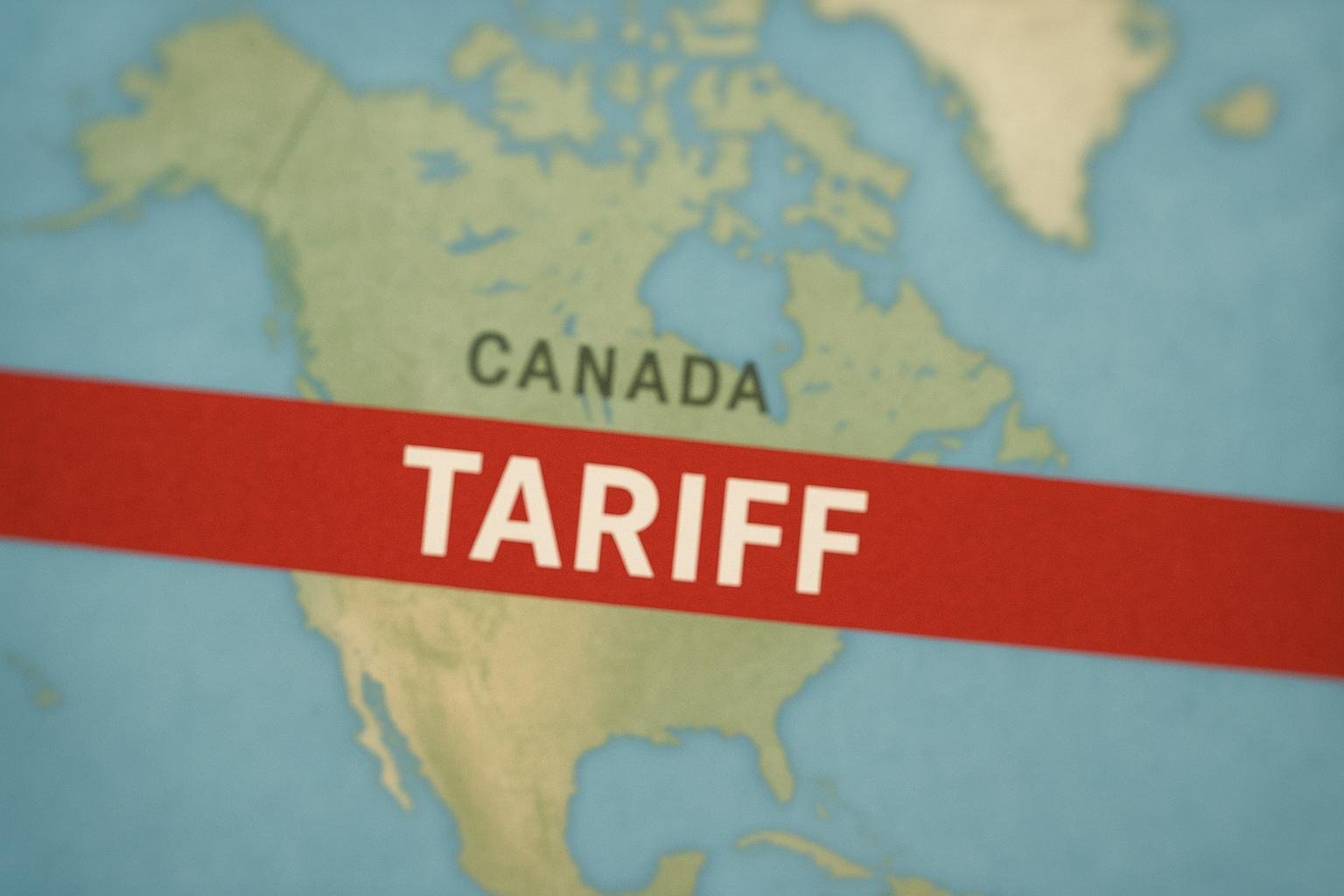
U.S. President Donald Trump has threatened to impose a sweeping 100% tariff on all Canadian imports if Ottawa pursues a trade agreement with China, risking further disruption to North American supply chains amid strained diplomatic relations.

U.S. President Donald Trump on Saturday threatened to slash bilateral commerce by imposing a 100% tariff on all Canadian imports if Ottawa moves ahead with what he described as a trade arrangement with Beijing. The warning followed...
Continue Reading This Article
Enjoy this article as well as all of our content, including reports, news, tips and more.
By registering or signing into your SRM Today account, you agree to SRM Today's Terms of Use and consent to the processing of your personal information as described in our Privacy Policy.
Trump posted on Truth Social: “If Canada makes a deal with China, it will immediately be hit with a 100% tariff against all Canadian goods and products coming into the U.S.A.” He added, “China will eat Canada alive,” and derided Carney by calling him “Governor,” echoing earlier barbs about Canada’s relationship with the United States. The comments come amid an already strained relationship since Trump returned to the White House in 2025.
Ottawa has pushed back. Dominic LeBlanc, Canada’s minister of intergovernmental affairs, said there is “no pursuit of a free trade deal with China,” and described the measures announced in Beijing as resolving “several important tariff issues.” Canadian officials have stressed that trade with the United States remains their primary priority and that efforts are focused on supporting shared prosperity across the border.
The episode has widened a diplomatic rift that has been building for months. At the World Economic Forum in Davos earlier in January, Mr Carney warned of a rupture in the international order, comments widely read as a critique of Washington’s foreign policy. In response to that intervention, Trump rescinded an invitation for Carney to join his so‑called “Board of Peace,” a forum the White House has positioned around post‑Gaza reconstruction and which Canadian officials view as potentially competing with the United Nations. Trump has also said publicly, “Canada lives because of the United States. Remember that, Mark.” Carney countered directly, saying, “Canada doesn’t live because of the United States. Canada thrives because we are Canadian.”
The economic stakes are substantial. U.S. trade in goods with Canada reached roughly $761.8 billion in 2024, with the United States exporting about $349.9 billion and importing $411.9 billion, producing a goods deficit of approximately $62 billion. Through the first ten months of 2025, bilateral merchandise trade totalled $606.7 billion, including $283.8 billion in U.S. exports to Canada and $322.8 billion in imports, leaving a near $39 billion deficit. Canada directs more than three quarters of its exports to the United States, making sectors such as autos, steel and agriculture particularly exposed to abrupt policy shifts.
Analysts warn that an across‑the‑board 100% tariff would be highly disruptive. Industry groups note that while some sectors have previously weathered targeted levies, the fabric of integrated North American supply chains could be severely damaged by sweeping duties. According to reporting by The Washington Post and Al Jazeera, observers see the threat as both economic pressure and a political signal aimed at deterring closer Canada–China commercial ties.
Media accounts from several outlets show Ottawa framing its China engagement as limited and technical rather than a comprehensive free trade accord. Forbes and The Philadelphia Inquirer have echoed Canadian assertions that the measures announced in Beijing address discrete tariff problems rather than constitute a full‑scale trade pact. Nevertheless, Washington’s assertion that reduced Chinese tariffs in Canada could create a backdoor for goods entering the U.S. market has been central to the White House rhetoric.
As negotiators prepare to resume talks on North American trade arrangements, the dispute adds a fresh complication to a relationship that remains heavily interdependent. Canadian officials emphasise continuity in cross‑border ties; Washington’s posture suggests it will press aggressively to prevent any perceived circumvention of U.S. trade protections. The unfolding standoff leaves businesses on both sides of the border facing heightened uncertainty about tariffs, supply chains and the political dynamics that now shape commercial policy.
Source: Noah Wire Services
Subscribe to Industry Updates

